UNIVERSITY OF WISCONSIN AT MADISON
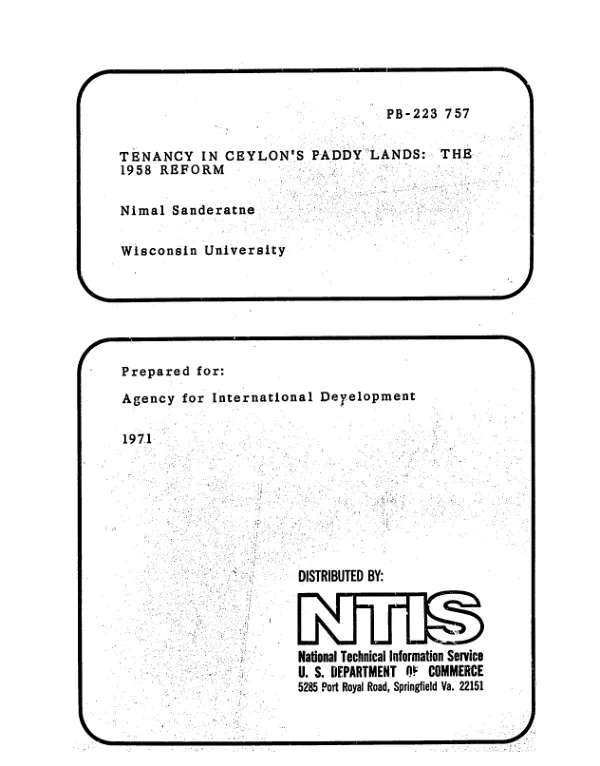
Tenancy in Ceylon"s Paddy Lands, the 1958 reform
Tenure reforms in Ceylon"s paddy lands are particularly important since rice cultivation covers the largest cropped area for any other single crop, and its cultivation is the largest single occupation.
Sanderatne, Nimal · 1970
Sign in to readA free account is required to download.
Abstract
The paddy land tenure problem and its reform are discussed, focusing attention on the following: Systems of tenure, their incidence and nature; objectives and provisions of the reform legislation; assessment of the effectiveness of the reforms; and suggestions for new reform directions. Types of paddy land tenure are summarized. Among the types discussed are: The ande form, or share-cropping, and the tattumaru system. The Paddy Lands Acts of 1953 and 1958 are reviewed, with particular attention given to the 1958 Act and its shortcomings. If judged by effectiveness in successfully altering the basic tenure conditions which surround paddy cultivation, the Paddy Lands Act of 1958 and its supporting amendments have had very limited success. A scheme is suggested which would convert existing tenancy to owner-cultivation through the medium of public purchase and retransfer of landlord holdings. The advantages and disadvantages of this scheme are briefly discussed.
Connected topics