USAID. MISSION TO THAILAND
Thailand : sericulture/settlements project
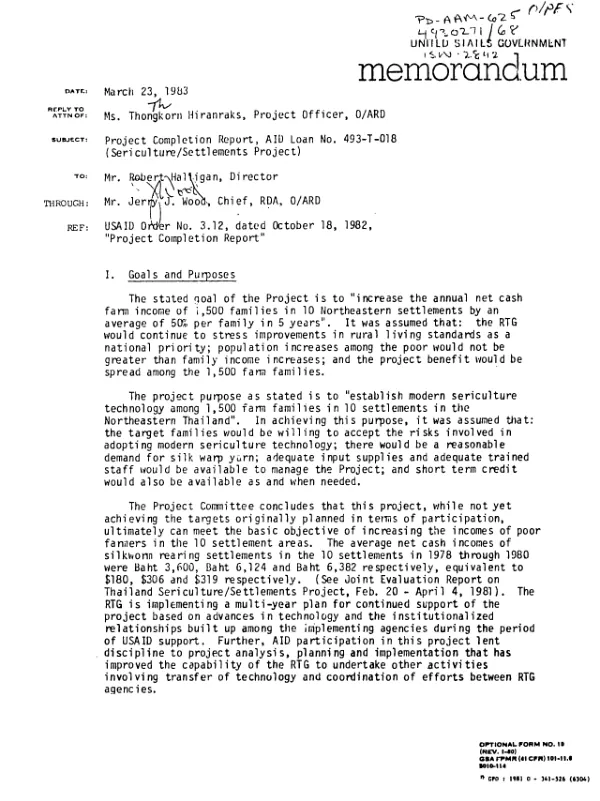
Provides final Mission report (l976-82) on a project to increase income among 1,500 farm families in 10 settlements in Northeast Thailand by introducing modern sericulture technology.
Halligan, Robert · 1983
Sign in to readA free account is required to download.
Abstract
Accepting the findings of a 2-4/81 evaluation, USAID/T reduced the targeted number of farmers from 1,500 to 1,000 and extended the project a year to improve administration and management, training, credit and input supply, and various technical areas. At the project's end, targets had been met for trained sericulture supervisors (10/10) and exceeded for area of central mulberry plantations (1,325/1,000 rai) and number of functioning cooperatives (13/10), but shortfalls had been experienced regarding number of central and farmer old silkworm rearing houses completed (27/30 and 709/1500, respectively), area of farmer mulberry plantations (3,544/6,000), amount of fresh cocoons marketed per year (80/311 MT), and number of trained extensionists helping farmers (30/70). The shortfall in farmer participation was due to problems in farmer recruitment, a shortage (or non-availability) of inputs, a shortage of adequately trained staff, and procedural problems in farmer selection. The project helped 544 farm families earn a total net cash income of $237,804 from the sale of fresh cocoons. Although the average net cash income per family was only $437 against a target of $550, the income situation has improved 200% since 1978. As a result of changes made during the extension period, it is expected that all 709 original project farmers will continue to be active. The project demonstrated that modern sericulture technology can be transferred successfully, even to nonproject farmers, and thus showed a good potential for replication. The project taught that sericulture can benefit the poor, but not the very poorest. It also taught the need: for realism in designing technology transfer projects; to train Public Welfare Department (PWD) staff to identify suitable farmer/applicants among the settlers; for farmers to repay development bank loans so as to ensure continued credit for good projects; and for the PWD to effectively coordinate and monitor input by other agencies and organizations.
Related documents