USAID DEC
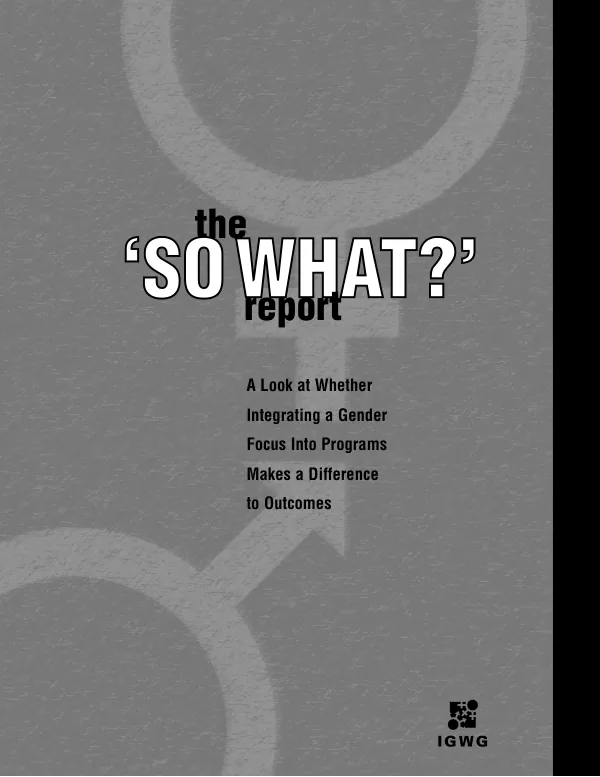
The "so what" report : a look at whether integrating a gender focus into programs makes a difference
Sign inPOPULATION REFERENCE BUREAU, INC. (PRB)
The "so what" report : a look at whether integrating a gender focus into programs makes a difference
Does taking a gender-based approach to policy and programming have an effect on reproductive health (RH) outcomes?
Boender, Carol; Santana, Diana · 2004
Sign in to readA free account is required to download.
Abstract
This paper reviews 25 RH programs in an effort to answer this question, focusing on four components of RH programs, including interventions to: reduce unintended pregnancy and abortion; reduce maternal morbidity and mortality; control sexually transmitted infections (STIs)/HIV/AIDS; and improve quality of care. The review notes gender-related barriers to each of these components and the strategies undertaken by programs to address the barriers. The review generated eight main conclusions: (1) Evaluations of RH programs that promote gender equity are few and limited in scope. Relatively few programs that seek to transform gender relations to promote equity have undergone systematic evaluation. Gender impact is rarely measured. (2) It is difficult to isolate the effects of a gender perspective in programming. (3) Evaluations are typically short-term, while changing gender relations is a long-term process. (4) The strongest evidence comes from evaluations comparing the same interventions with and without the addition of a gender component. (5) Among interventions promoting gender equity, there are more initiatives with demonstrated results in STI/HIV prevention than in other health areas. (6) Many programs seeking to transform gender relations combine it with a community participation or community empowerment strategy. (7) The 25 reviewed interventions that integrate gender reported positive RH and HIV outcomes. (8) Among the 20 interventions that measured gender impact, gender outcomes were positive. Includes recommendations.
Related documents
Documents in this collection
 1970
1970USAID DEC
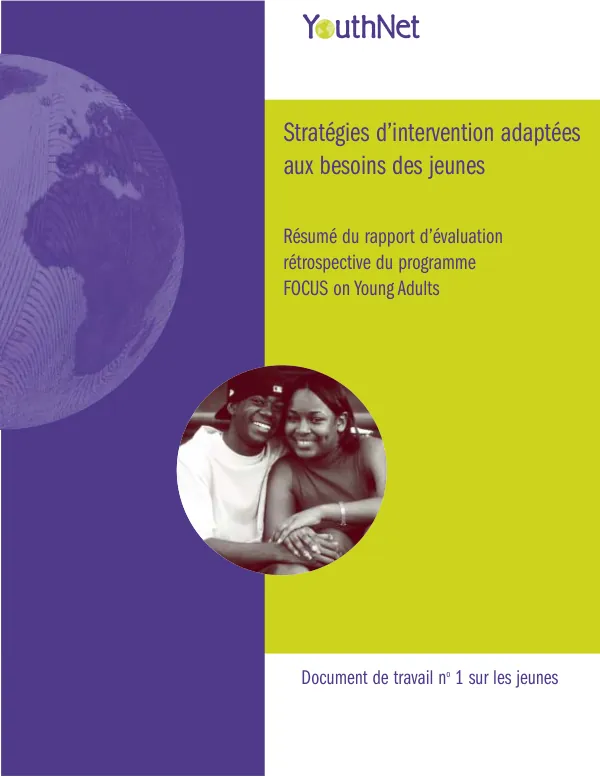
Strategies d"intervention adaptees aux besoins des jeunes : resume du rapport d"evaluation retrospective du programme FOCUS on young adults
Open record 1970
1970USAID DEC