COOPERS AND LYBRAND
The WEB : measuring development performance
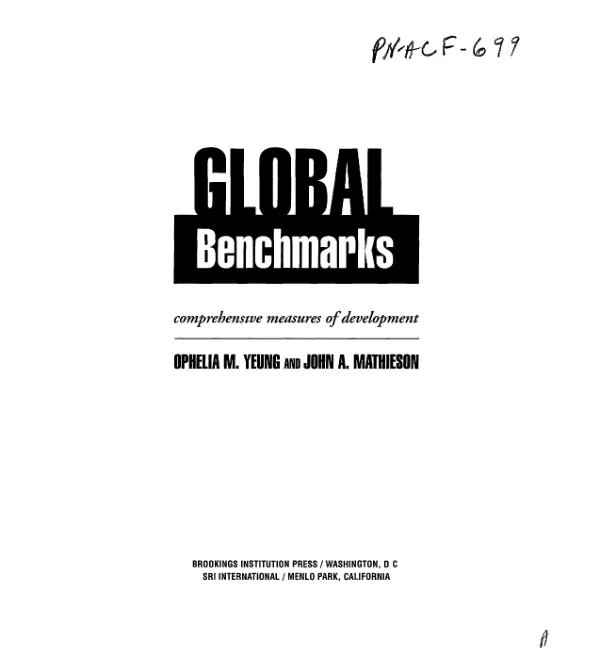
This document describes a comprehensive, multidimensional system, called the WEB model, for assessing development status across countries.
1996
Sign in to readA free account is required to download.
Abstract
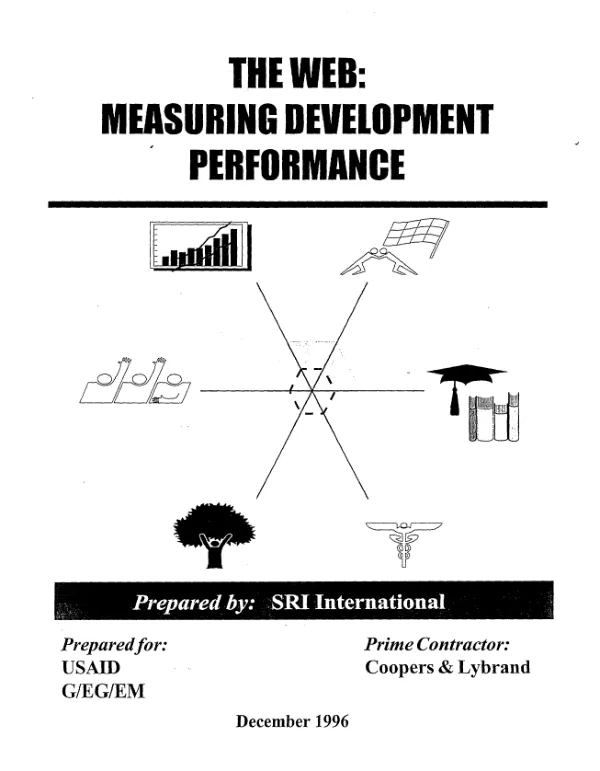
The model was developed by SRI International, building on its earlier Commercial Policy Model, which measured commercial policy environment and economic performances. The WEB model was designed to cover not only traditional indicators of economic development, but also new factors which have emerged as important parts of the development process. In fact, six kinds of development indicators are included in the WEB model: economic performance, competitiveness, education, health, environment, and democracy and freedom. Visually, the model is presented as a hexagon, with each of its six axes representing one of the six development indicators. A country"s scores in each of these areas can be measured against regional averages, world averages, or a competitor country"s score. This report discusses the development of the WEB model and its methodology and reports the worldwide distribution of scores for each of the six development areas. In Economic Performance and Competitiveness vectors, the Asian newly industrialized economies (NICs) received the highest scores as a group. For most other vectors, industrialized countries are the top performers. African countries tend to rank in the bottom in most development categories, while countries in non-NIC Asia, Latin America, non-industrial Europe, and the Middle East mostly fall somewhere in between. Two exceptions are seen in the Environment and the Democracy and Freedom vectors: non-industrial European countries on average received the highest scores in Environment, performing slightly better than industrial countries; (2) in the Democracy and Freedom vector, Middle Eastern countries scored the worst. Scores for 108 developing and industrialized countries in all six vectors are included among the appendices. Includes references.