ACADEMY FOR EDUCATIONAL DEVELOPMENT
To Protect our Flocks From Bird Flu
Protecting domestic flocks from bird flu requires vigilance and adherence to established guidelines.
1 pages
Sign in to readA free account is required to download.
Abstract
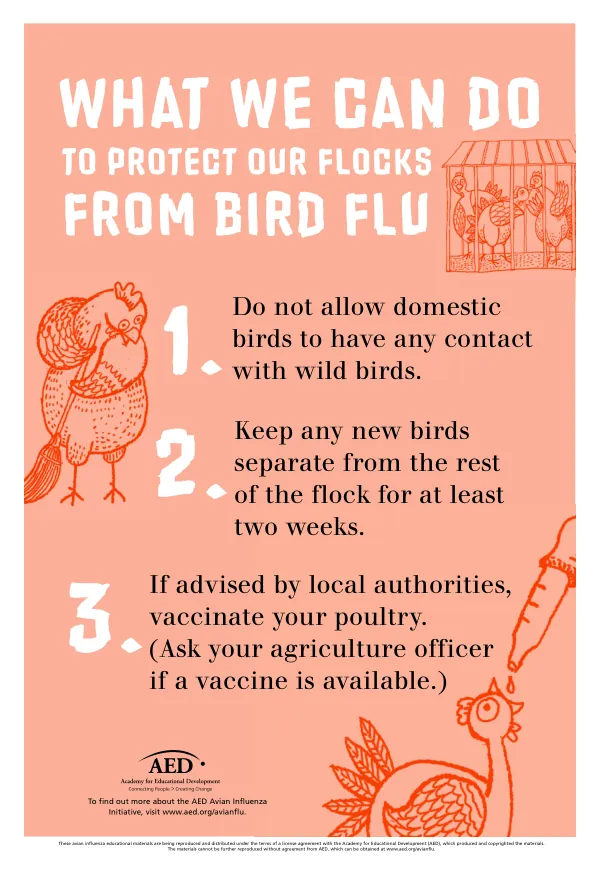
One critical measure is to prevent contact between domestic birds and wild birds, as this can facilitate the transmission of the virus. Domestic birds should be kept in a secure environment, isolated from potential sources of infection. New additions to a flock should be quarantined for a minimum of two weeks before being integrated with the existing birds. This precautionary measure helps to prevent the introduction of the virus into the flock. Local authorities may also advise vaccinating poultry, and individuals should consult with their agriculture officer to determine if a vaccine is available. The Academy for Educational Development (AED) has developed educational materials on avian influenza, which are available online at www.aed.org/avianflu. These resources provide valuable information on the AED Avian Influenza Initiative and offer guidance on protecting domestic flocks from the virus. However, reproduction of these materials requires permission from AED, which can be obtained through their website. Preventing the spread of bird flu requires a multi-faceted approach, including education, vaccination, and biosecurity measures. By taking these steps, individuals can help to protect their domestic flocks and prevent the spread of the virus in their communities. Effective management of domestic bird populations is essential for mitigating the risks associated with avian influenza. The AED Avian Influenza Initiative aims to provide support and resources to individuals and communities affected by the virus. By working together and adhering to established guidelines, it is possible to reduce the risks associated with bird flu and protect domestic flocks from this significant public health concern.