ACADEMY FOR EDUCATIONAL DEVELOPMENT
Environmental Impacts of Emerging Infectious Disease Resource Guide
Emerging Infectious Disease and the Environment is a critical area of concern that requires a comprehensive understanding of the complex relationships between human, animal, and environmental health.
2022 · 2 pages
Sign in to readA free account is required to download.
Abstract
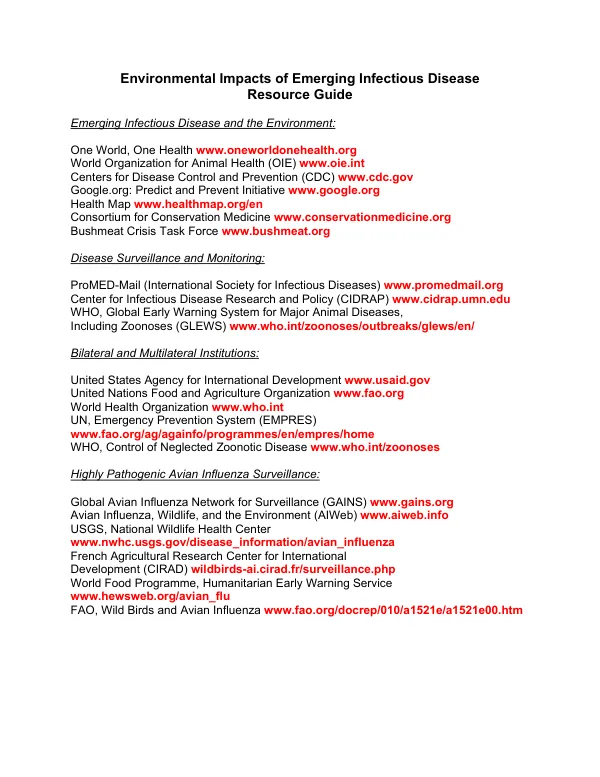
The World Organization for Animal Health (OIE) and the Centers for Disease Control and Prevention (CDC) have identified the need for a One Health approach, which recognizes the interconnectedness of human, animal, and environmental health. Disease surveillance and monitoring are essential components of emerging infectious disease management. ProMED-Mail, a global online reporting system, provides real-time information on disease outbreaks and events. The Center for Infectious Disease Research and Policy (CIDRAP) and the World Health Organization's (WHO) Global Early Warning System for Major Animal Diseases, Including Zoonoses (GLEWS) also play critical roles in disease surveillance and monitoring. Bilateral and multilateral institutions have established programs and initiatives to address emerging infectious diseases. The United States Agency for International Development (USAID) and the United Nations Food and Agriculture Organization (FAO) have implemented programs to prevent and control emerging infectious diseases. The WHO's Control of Neglected Zoonotic Diseases program aims to reduce the burden of zoonotic diseases, which are diseases that can be transmitted between animals and humans. Highly pathogenic avian influenza (HPAI) surveillance is a critical component of emerging infectious disease management. The Global Avian Influenza Network for Surveillance (GAINS) and the Avian Influenza, Wildlife, and the Environment (AIWeb) program provide critical information on HPAI outbreaks and trends. The USGS National Wildlife Health Center and the French Agricultural Research Center for International Development (CIRAD) also contribute to HPAI surveillance and research. Effective communication, education, and outreach are essential for managing emerging infectious diseases. InterAction, the Academy for Educational Development (AED), and the Communication Initiative Network have developed resources and guides to support communication and education efforts. Preparedness and response are also critical components of emerging infectious disease management. The Department of Health & Human Services (PandemicFlu) and the OIE/FAO Network on Avian Influenza (OFFLU) provide critical information and resources for preparedness and response efforts. The Africa Biodiversity Collaborative Group (ABCG) has compiled a comprehensive resource guide on emerging infectious diseases and the environment. The guide provides access to a wide range of resources, including reports, articles, and websites. The Framework for Conservation Medicine also provides information on emerging infectious diseases and conservation.