ROBERT NATHAN ASSOCIATES
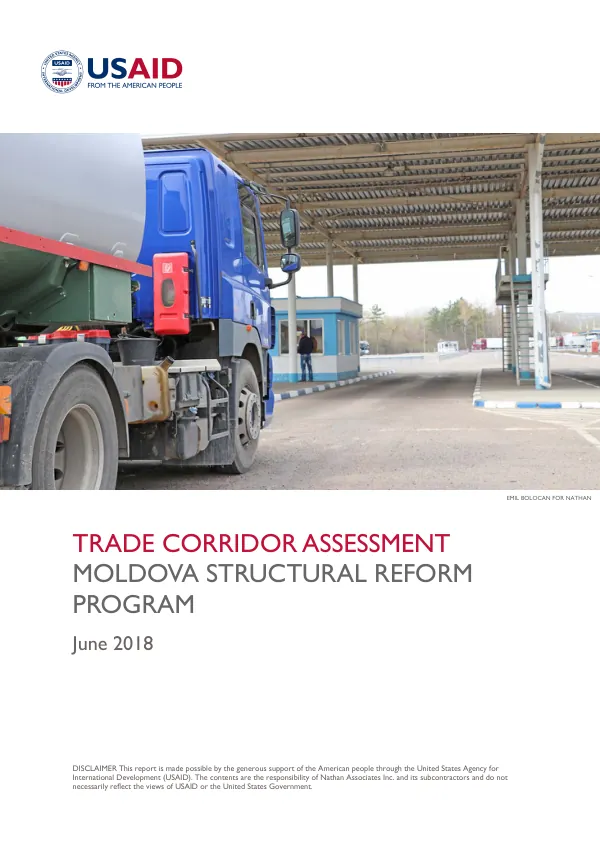
Trade Corridor Assessment: Moldova Structural Reform Program
Moldova's trade corridors play a crucial role in the country's economic development, connecting it to major markets in Europe and beyond.
2018 · 256 pages
Sign in to readA free account is required to download.
Abstract
The country's trade corridors are primarily composed of road, rail, maritime, and air transport routes. Moldova's main road corridors include the Chișinău-Bălți, Chișinău-Ungheni, and Chișinău-Orhei routes, which connect the capital city to major trade hubs in the country. The rail sector is also an essential component of Moldova's trade corridors, with the country's rail network stretching over 1,300 kilometers. The rail sector is primarily used for the transportation of goods, with the majority of cargo being transported to and from the ports of Giurgiulești and Izmail. The maritime sector is also significant, with the Giurgiulești port being the primary gateway for international trade. Moldova's trade facilitation environment is governed by the Customs Service, which is responsible for ensuring compliance with international trade regulations. The Customs Service is organized into several departments, including the Customs Organization and Structure, Human Resources and Training, Risk Management, and Border and Inland Controls. The Customs Service also has a legal framework in place, which outlines the procedures for customs clearance, compliance, and post-clearance controls. The assessment of Moldova's trade corridor performance reveals several bottlenecks and constraints. The road sector is plagued by infrastructure issues, including poor road conditions and inadequate lighting. The rail sector faces similar challenges, including outdated infrastructure and inadequate maintenance. The maritime sector is also affected by infrastructure issues, including the lack of adequate storage facilities and inadequate port equipment. The trade facilitation environment is also a major constraint, with border waiting times and costs being a significant issue. The Customs Service is working to address these issues through the implementation of new technologies and procedures, including the use of electronic data interchange and the introduction of a risk management system. A commodity-specific analysis reveals that perishable fruits, wine, textiles, and auto parts are among the most significant commodities traded through Moldova's trade corridors. The logistics chain for these commodities is complex, involving multiple stakeholders and requiring specialized equipment and expertise. The key issues with trading these commodities include the lack of adequate storage facilities, inadequate transportation infrastructure, and inadequate customs procedures. The report recommends a seven-part strategy for improving logistics sector performance, including improving institutional effectiveness, ensuring supportive policies and legislative and regulatory frameworks, facilitating legitimate trade, developing efficient and productive infrastructure, providing an efficient transport logistics system, facilitating sustainable financing and industry access to credit, and logistics sector promotion. The report also outlines 32 projects aimed at addressing the bottlenecks and constraints identified in the assessment, including the development of a national freight logistics master plan, the implementation of mobile weighing points for heavy goods vehicles, and the enhancement of customs inland clearance systems and procedures.