USAID DEC
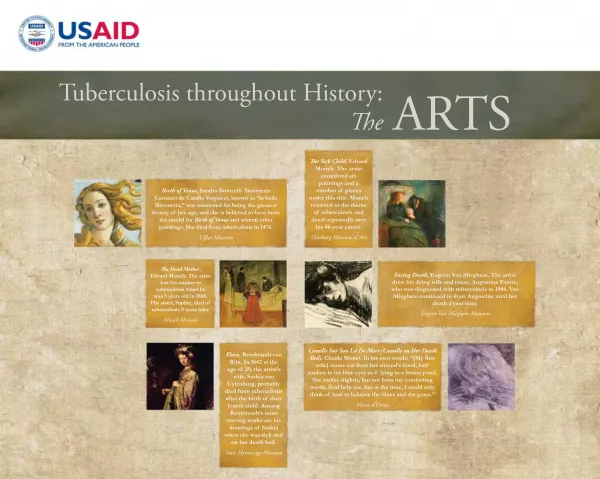
Tuberculosis throughout History: The Arts
The global burden of tuberculosis (TB) remains a significant public health concern.
2013 · 1 pages
Sign in to readA free account is required to download.
Abstract
According to the World Health Organization (WHO), TB is the leading cause of death from a single infectious agent, accounting for over 1.5 million deaths annually. The disease is particularly prevalent in low- and middle-income countries, where access to healthcare services is often limited. TB is a bacterial infection caused by Mycobacterium tuberculosis, which primarily affects the lungs but can also affect other parts of the body. The disease is transmitted through the air when an infected person coughs, sneezes, or talks, releasing droplets that contain the bacteria. People with compromised immune systems, such as those with HIV/AIDS, are more susceptible to developing active TB disease. The WHO estimates that approximately 10 million new TB cases occur worldwide each year, with the majority of cases reported in Southeast Asia and Africa. The disease is often diagnosed using a combination of clinical symptoms, radiographic imaging, and laboratory tests, including sputum smear microscopy and geneXpert MTB/RIF testing. Treatment of TB typically involves a combination of antibiotics, including isoniazid, rifampicin, pyrazinamide, and ethambutol, which are administered for a minimum of six months. Adherence to treatment is critical to prevent the development of drug-resistant TB strains. The WHO recommends a patient-centered approach to TB care, which includes regular follow-up appointments, education on TB transmission and treatment, and support for patients to ensure successful treatment outcomes. The global response to TB is guided by the WHO's End TB Strategy, which aims to reduce TB incidence by 80% and mortality by 90% by 2035. The strategy emphasizes the importance of integrated TB care and prevention, including the use of new diagnostic tools, improved treatment regimens, and enhanced community engagement and participation.
Related documents