USAID
Tujikinge na Malaria
In contrast, the children's book "Tujikinge na Malaria" is a resource designed to help early learners develop a habit of reading through interactive storytelling.
2018 · 13 pages
Sign in to readA free account is required to download.
Abstract
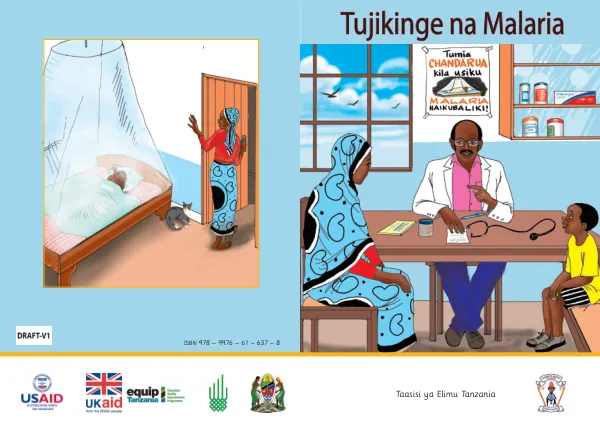
The book is intended to be read aloud by a teacher, who then engages the children in discussions and activities to reinforce their understanding of the story. The book's purpose is to promote a love of reading, improve language skills, and enhance comprehension. The book's approach involves several key strategies. Before reading, the teacher introduces the book to the children, asks predictive questions, and connects the story to their everyday lives. During reading, the teacher guides the children through the text, encourages them to follow along, and asks additional predictive questions. After reading, the teacher reviews the story, asks children to retell it, and encourages them to ask questions like "Why?" to deepen their understanding. The story itself revolves around Mode, a young boy who lives in a neighborhood called Majengo with his mother. Mode enjoys playing soccer with his friends but struggles with a persistent headache. His mother takes him to the hospital, where the doctor diagnoses him with malaria. The doctor prescribes medication and advises Mode's mother to ensure good hygiene and use a mosquito net to prevent future infections. Mode recovers and is happy to be back to his normal self. He and his siblings work together to improve the cleanliness of their home. The book's content is designed to be engaging and accessible for early learners. The story is simple and easy to follow, with colorful illustrations and a clear structure. The language is straightforward, and the vocabulary is introduced gradually to help children build their comprehension skills. The book's tone is informative and reassuring, providing children with a positive and empowering message about the importance of taking care of their health.