EVALUATION TECHNOLOGIES, INC.
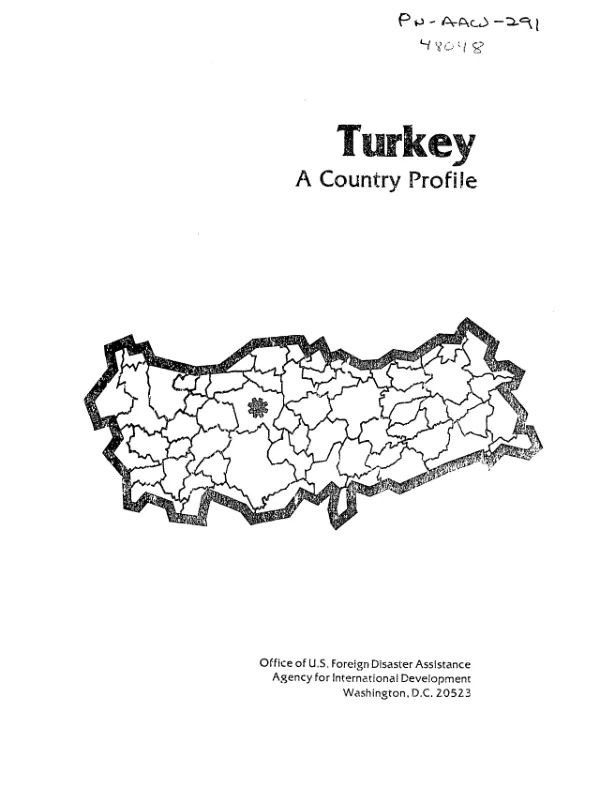
Turkey : a country profile
Located on the Alpine Belt of seismicity, Turkey is one of the most active earthquake regions in the world.
1982
Sign in to readA free account is required to download.
Abstract
In this century, over 700 earthquakes with a magnitude greater than 4.0 on the Richter Scale have struck the country. This document provides information on these and other disasters in Turkey as well as background data on the country"s environment, population, health, housing, economy, agriculture, and transportation, energy, and communication infrastructure. Over 80% of Turkey"s terrain is mountainous and of little agricultural value. In the Central Plateau, considered the heartland of Turkey, livestock grazing is the primary economic activity. However, overgrazing has caused soil erosion and, in the summer, dust storms are frequent. Turkey is also subject to drought, particularly along the Mediterranean coast and in the Central Plateau. In the eastern highlands, floods, landslides, rock erosion and avalanches, and severe snowstorms are common. Although 26% of the country"s area is classified as forestland, forest productivity is below potential because many of Turkey"s forests are inaccessible and overmature, and others have been degraded. Over half of forest wood is used for fuel (domestic heating and cooking), and this constitutes the sole source of domestic energy for about 35% of the rural population, who are among the lowest income group in the country.
Related documents