USAID. BUR. FOR EUROPE AND THE NEW INDEPENDENT STATES
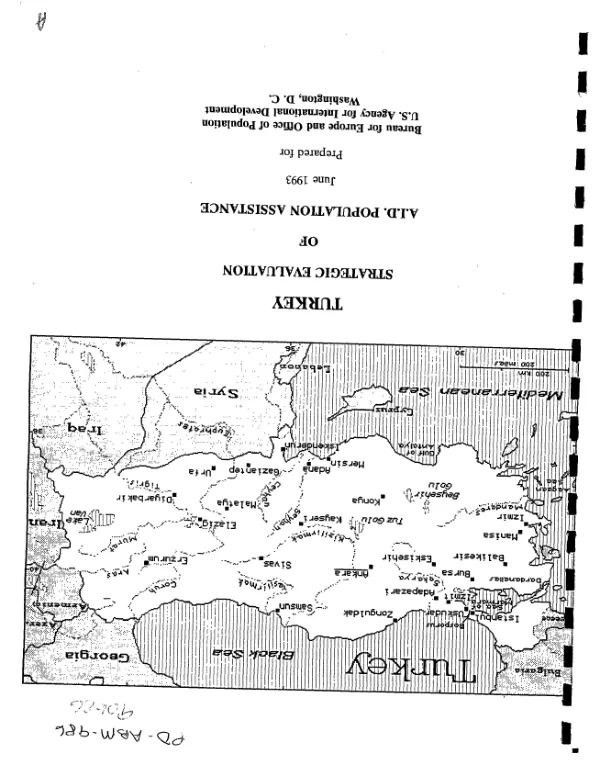
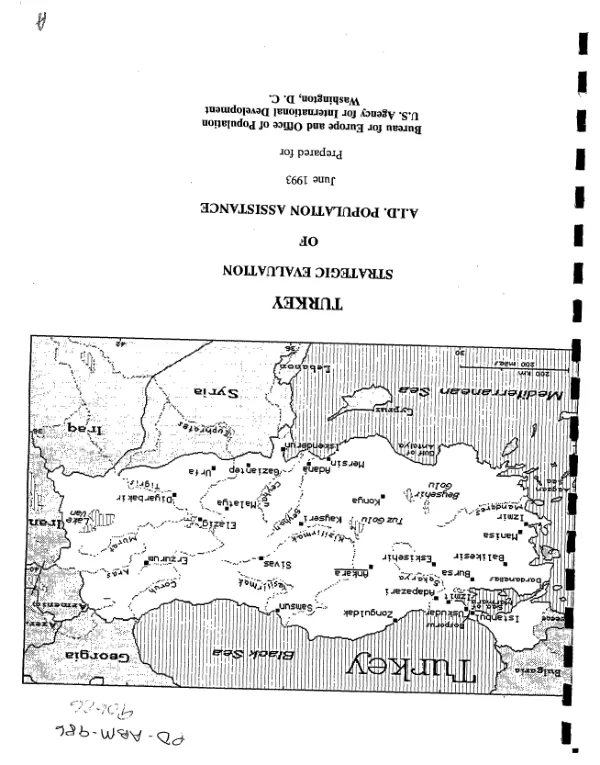
Turkey : strategic evaluation of AID population assistance
Evaluates population and family planning (P/FP) assistance provided to Turkey through centrally funded Cooperating Agencies (CAs) since 1976, when bilateral assistance to Turkey ended.
1993
Sign in to readA free account is required to download.
Abstract
USAID"s P/FP assistance has promoted appropriate strategies and programs in both the public and private sectors. Impact of assistance is unrelated to length of time in-country; some of the newer activities are already having major impact, while older ones are having less of an impact. CAs" approaches have differed, with some CAs taking more of an overall systems approach than others. The Government of Turkey values USAID assistance, especially its role in keeping P/FP a priority and in stimulating appropriate response. Although Turkey is in many ways an advanced developing country, its demographic characteristics and FP situation are more like those found in far less developed countries. Even so, there is tremendous potential for rapid advances to meet demographic goals, due both to the extensive public and private infrastructure and to the very high demand for FP. The legal and policy framework is generally supportive of a modern FP program, but neither public nor private sector channels for FP service delivery have been adequately developed. The quality of FP service delivery is low because of a number of interrelated factors, including inadequate pre- and in-service training, shortage of equipment and supplies, administrative limitations on services organization, personnel practices that support high staff turnover, poor or no supervision, weak logistical systems, lack of a management information system and of overall strategic or implementation plans, lack of counseling or counselors, provider bias, and lack of provider or client IEC materials. Largely as a result of these factors, client misinformation, dissatisfaction, and discontinuation of modern contraception is a major problem. While over 70% of all married and fecund couples say they want no more children, only 42% of these couples are using an effective modern method; 40% are using an ineffective method, and 16% are not using any method. Abortion rates are so high (abortion is legal through the tenth week), that it appears many women may be using abortion as a principal means of fertility control. At present, no FP counseling is given to women presenting for abortion. Because of Turkey"s advanced socioeconomic level, opportunities for stimulating programs that will be cost-effective and sustainable are great. Continued and intensified USAID assistance will be needed for an interim period to develop sustainable programs in both the public and private sectors; the need for USAID assistance will be greatly diminished by the year 2000. USAID management of the program through its in-country contract employee, its CAs, and the USAID/W Turkey Working Group has been generally acceptable, but will need significant strengthening in order to carry out the recommendations in this report. (Author abstract)
Related documents