USAID. BUR. FOR AFRICA. REGIONAL ECONOMIC DEVELOPMENT SERVICES OFC. (REDSO) EAST AFRICA
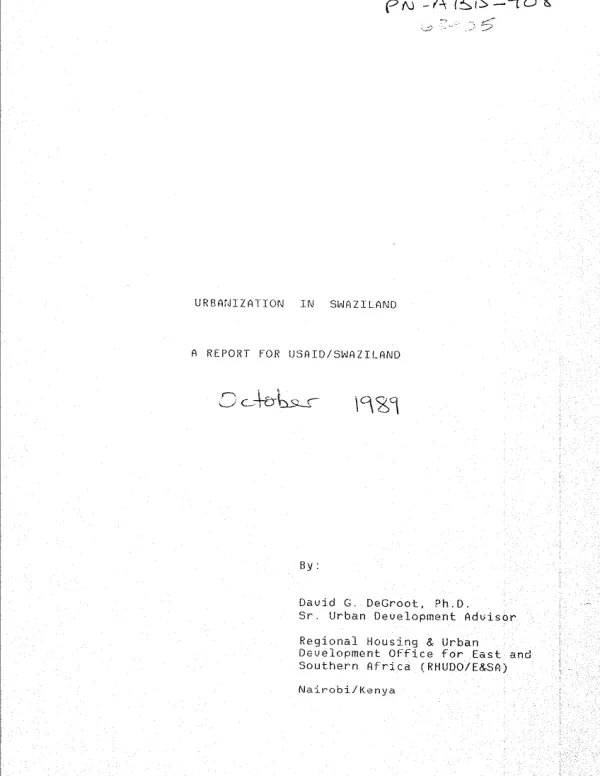
Urbanization in Swaziland
The population of Swaziland"s urban Manzini-Matsapha-Mbabane corridor is growing at about twice the rate of the country"s rural areas.
DeGroot, David G. · 1989
Sign in to readA free account is required to download.
Abstract
However, this growth, which is largely due to the government"s encouragement of industrialization at Matsapha and which is expected to last at least another decade, has generally been unplanned, unserviced, and uncontrolled. It is estimated that at least 60,000 residents of the corridor live in informal or squatter settlements lacking access to all or most basic urban services and infrastructure. A major perceived cause of this problem is the squatter"s lack of secure land tenure. Moreover, critical services to the urban population in general are at or beyond capacity, with pollution from inadequate sewerage treatment, degradation of watersheds, and unsanitary abattoirs presenting clear health threats. According to the report, construction of basic infrastructure including serviced homesites could provide a major source of economic activity and employment in the corridor. Although government institutions currently lack the capacity to address these challenges, many of these constraints could be removed through a modest but consistent program of middle- and senior-level expert assistance. A wide range of necessary institutional reforms and initiatives is recommended.
Connected topics
Related documents