USAID DEC
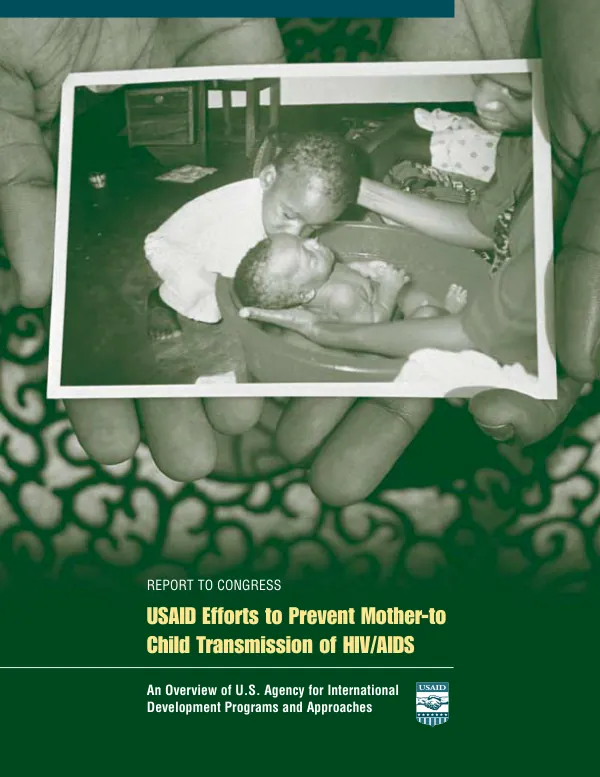
USAID efforts to prevent mother-to-child transmission of HIV/AIDS : an overview of U.S. Agency for International Development programs and approaches
Sign inU.S. AGENCY FOR INTERNATIONAL DEVELOPMENT (USAID)
USAID efforts to prevent mother-to-child transmission of HIV/AIDS : an overview of U.S. Agency for International Development programs and approaches
Worldwide, 10% of those newly infected with HIV are children under age 15, the vast majority of whom contract HIV through mother-to-child transmission (MTCT) during pregnancy, labor, delivery, or breastfeeding.
2001
Sign in to readA free account is required to download.
Abstract
This report to Congress documents USAID"s progress to date in reducing MTCT. The report outlines the challenges to developing comprehensive MTCT prevention programs, important steps USAID has already taken in this field, and Agency plans to accelerate and replicate these activities within Africa and in other regions. USAID"s strategy for preventing MTCT is to support: improved antenatal services; voluntary and confidential counseling and testing services (VTC); short-course antiretroviral (ARV) prophylaxis for HIV-infected pregnant women; counseling and support for safe infant feeding practices; and strengthened reproductive health, family planning, and safe motherhood programs. Specific efforts to facilitate the introduction of ARV in developing countries include advocacy for government policies on MTCT and regulatory criteria for the use of ARV therapy; needs assessments and upgrading of sites to assure minimum standards of care; determination of the knowledge, attitudes, and practices of health workers, as well as communities, with regard to MTCT; development of guidelines for ARV therapy and infant feeding; and development of communications strategies, health worker training, community mobilization, and monitoring and evaluation systems. Since 1998, USAID has made real advances in determining the best methods to preventing MTCT in the developing world. The Agency has invested in operations research by establishing comprehensive MTCT pilot projects in Kenya and Zambia in partnership with African governments, UNICEF, the Joint United Nations Programme on HIV/AIDS (UNAIDS), African researchers, and other USAID-funded projects. These pilot projects are producing critically needed "best practices" for the prevention of MTCT, while teaching policymakers what pitfalls to avoid. Advances from these and other projects include feasibility studies on breastfeeding counseling; assessments of costs, acceptability, and operational barriers of MTCT programs; a new computer model to analyze various components of MTCT programs; new program guidance for USAID Missions on how to approach MTCT; MTCT research and service delivery support at antenatal care hospitals, such as the Chris Hani Baragwanath Hospital in South Africa; and MTCT information sharing among donors and developing country partners. The pilot projects in particular have yielded important lessons about MTCT prevention in developing world settings, e.g., community involvement is essential; the stigma of HIV/AIDS has a negative impact on acceptance of MTCT prevention; and the cultural relevance of breastfeeding is critical to providing sound breastfeeding advice to women with a limited range of viable choices. Guided by this knowledge, USAID now plans to expand high-quality, sustainable, and effective programs to prevent MTCT. (Author abstract, modified)
Related documents
![Evaluation of voluntary counselling and testing in the national prevention of mother to child transmission [MTCT] [of HIV/AIDS] programme in Thailand](https://covers.devme.ai/gen/105974.webp)
![Zimbabwe mother-to-child HIV transmission [MTCT] : prevention project : situation analysis](https://covers.devme.ai/gen/46259.webp)
![HIV voluntary counselling and testing : a gateway to prevention and care -- five case studies related to prevention of mother-to-child transmission [MTCT] of HIV, tuberculosis, young people, and reaching general population groups](https://covers.devme.ai/gen/44251.webp)