CATHOLIC RELIEF SERVICES ORGANIZATION
USAID Ejo Heza Quarter 4 Report
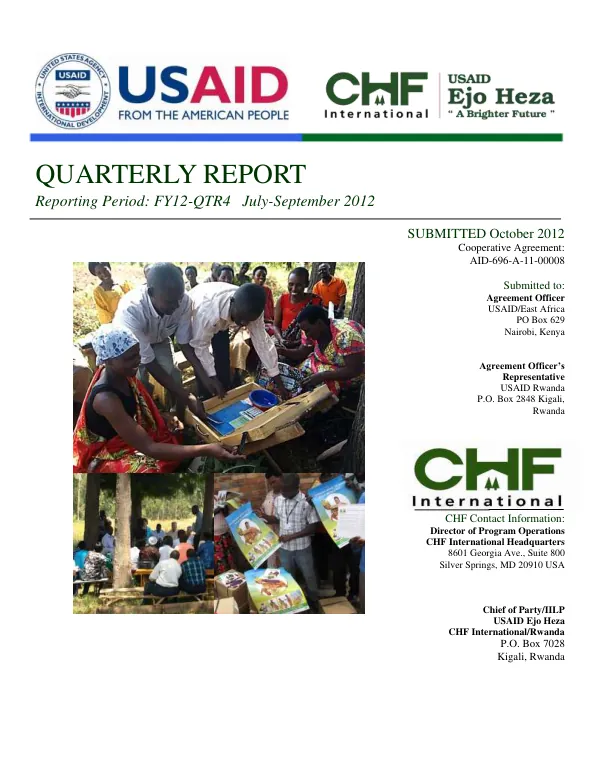
The USAID Ejo Heza program in Rwanda began in 2012 with the goal of improving the livelihoods of rural communities through integrated interventions in agriculture, nutrition, savings group formation, and basic literacy.
2012 · 19 pages
Sign in to readA free account is required to download.
Abstract
The program is implemented by CHF International and is funded by the United States Agency for International Development (USAID). Agriculture is a key component of the program, with a focus on increasing crop yields and improving food security. Farmers in cooperatives have received training in agricultural techniques and have seen significant improvements in their harvests. For example, maize yields have increased, and farmers are expecting an even higher harvest in the coming quarter. The program also places a strong emphasis on nutrition, with a focus on promoting the establishment of kitchen gardens and improving food utilization. Program beneficiaries are being trained in agriculture techniques and are being linked to nutrition groups to promote healthy eating habits. The program is also involved in the Government of Rwanda's nationwide nutrition campaign. In addition to agriculture and nutrition, the program is also working to improve financial inclusion through the formation of internal savings and lending groups (ISLGs). Program beneficiaries have been trained in the CHF ISLG methodology and are beginning to make deposits within their respective groups regularly. This has helped to increase access to financial services for rural communities. Basic literacy is also a key component of the program, with a focus on improving reading and writing skills among program beneficiaries. The program has graduated its first literacy class this quarter and is currently accepting new participants. The program's integrated nature has been key to its success, with learners being served with nutrition messages and being able to join saving groups. The program has also conducted a Knowledge, Attitudes, and Practices (KAP) survey to guide its behavior change activities. A Behavior Change and Communication (BCC) strategy has been developed to promote positive behaviors among program beneficiaries. The program has also commissioned a radio program to raise awareness about the benefits of saving. To ensure the sustainability of the program, "Be the Change Volunteers" (BCVs) have been used to facilitate grassroots program activities. BCVs have assisted in training individual beneficiaries and have mentored them on different aspects of the program. They have also collected data on services provided to the community. Overall, the USAID Ejo Heza program has seen significant results across all program elements, with over 21,639 people reached to date. The program's integrated nature and focus on behavior change have been key to its success, and it is expected to continue making a positive impact in rural Rwanda.