ADRA
ASOTRY Quarterly Report FY2018 Q2 January–March 2018
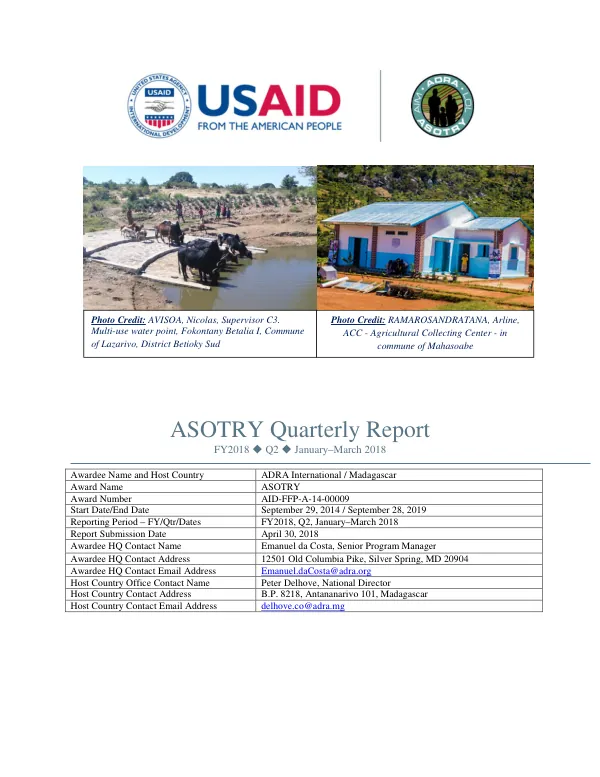
The ASOTRY project in Madagascar is a multi-component initiative aimed at reducing food insecurity among targeted communities in the Amoron'i Mania, Haute Matsiatra, and Atsimo Andrefana regions.
2018 · 30 pages
Sign in to readA free account is required to download.
Abstract
The project's overall goal is to improve the health and nutrition status of women of reproductive age and children under five, increase sustainable access to food for vulnerable households, and improve disaster mitigation, preparedness, and response in vulnerable communities. The project's health and nutrition component focuses on improving health and nutrition behaviors of caregivers and children under five, increasing utilization of health and nutrition services, and reducing incidence of water- and hygiene-related illnesses. The project implemented a series of trainings and refresher trainings to staff, community health volunteers, and Leader Mothers in support of their activities. Regular growth monitoring, household visits, and sensitization activities were ongoing, and the project was able to focus more attention on hygiene promotion activities. The agriculture and livelihoods component of the project undertook significant livestock activities, including the provision of solar freezers to community livestock workers, trainings on processing animal products, and transfer of goats from beneficiaries to other beneficiaries. Agricultural activities with farmer field school groups proceeded as planned, although some were delayed due to the cyclone in January. The project continued to work on agricultural collecting centers, leading to the inauguration of four centers during the period. The resilience component of the project was involved in reacting to the effects of the cyclone, but was also able to carry out much of the planned reforestation, follow up on the disaster preparedness management plan and early warning system implementation, and lead trainings on First Aid to disaster relief and rehabilitation members. The team also continued to implement road rehabilitation projects. The project team received all remaining commodities for the year, and distributions continued as planned. However, a break in the pipeline of Corn-Soya Blend (CSB+) took place in late December, and the project was unable to distribute to 60 communities due to damaged bridges. The project borrowed CSB+ from Catholic Relief Services (CRS) to carry out distributions during the quarter until more CSB+ arrived from the United States. The project also achieved several other important quarter accomplishments, including the visit of the Agreement Officer's Representative (AOR) and a team from the USAID Mission to project areas in the central highlands, and the visit of four representatives from ADRA International to the project. The project also carried out refresher trainings for staff on the use of tablets and how the database functions, and led data quality assessment (DQA) activities in the southwest.