ECODIT, INC.
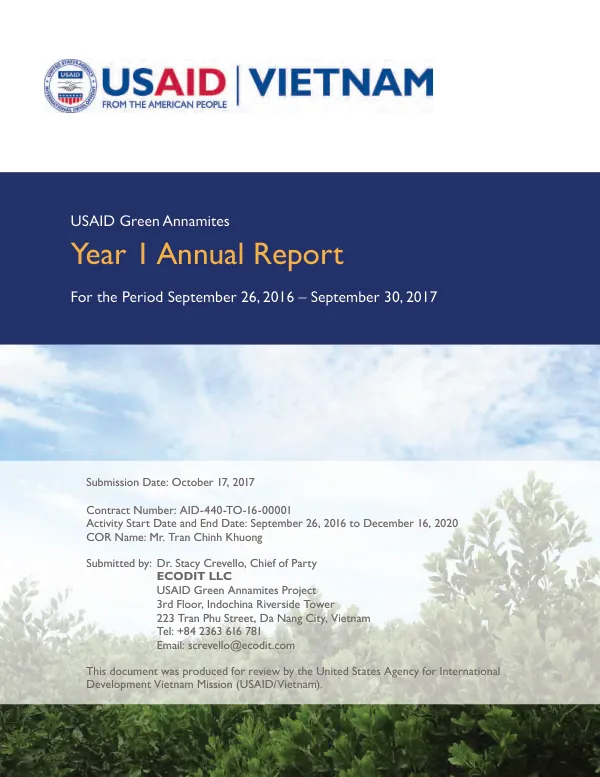
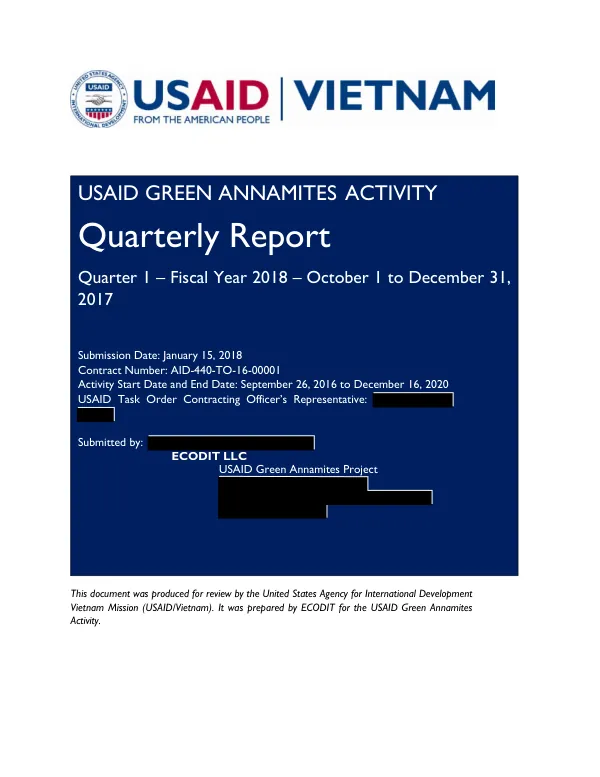
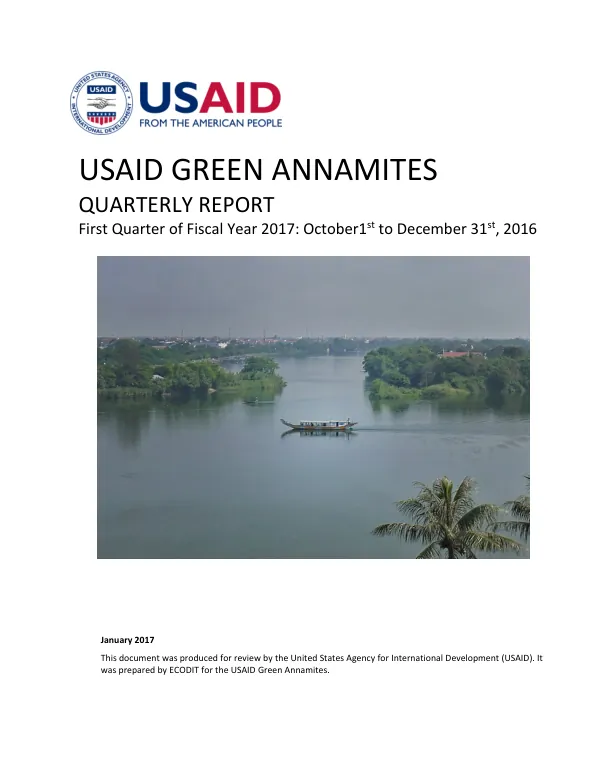
USAID Green Annamites Quarterly Report: Q1/FY2017
The USAID Green Annamites Activity is a project aimed at assisting Vietnam's transition to climate-smart, low-emission, and resilient development that protects people, landscapes, and biodiversity in Vietnam's priority forested provinces.
2017 · 16 pages
Sign in to readA free account is required to download.
Abstract
The project's period of performance is September 26, 2016, to December 16, 2020. The overarching objective of the project is to increase the application of climate-smart development practices and enhance biodiversity conservation in the Central Annamites. The project's scope is primarily limited to two target geographies: Quang Nam and Thua Thien Hue provinces. These provinces are two of three in Vietnam with the highest carbon density and where the last globally-significant remnants of primary forest still exist. The project will primarily benefit marginalized rural populations, particularly vulnerable ethnic minority populations, women, and the poor who rely on protected forests for their livelihood. The project is structured into three tasks: increasing the application of low emission land-use practices, strengthening biodiversity conservation, and increasing resilience for vulnerable communities. To achieve the expected results, the project will conduct various activities, including desk reviews, baseline assessments, capacity development, sustainable financial base establishment, livelihood improvement, forest management improvement, biodiversity conservation, and community awareness-raising activities. During the first quarter of Fiscal Year 2017, the project made significant progress in staffing and mobilization. ECODIT's Home Office team secured and mobilized key personnel and support staff, including the Biodiversity Conservation Lead, who was approved as a Key Personnel on October 4, 2016. The Biodiversity Conservation Lead attended a workshop hosted by the United States Forest Service during the 3rd and 4th weeks of October, 2016, and provided inputs to and review of deliverables throughout the quarter. The project also made progress in developing multi-stakeholder planning groups and landscape-scale low emission land-use plans. Additionally, the project supported the development of REDD+ and expanded Payment for Forest Environmental Services (PFES). The project also conducted a baseline assessment and developed an action plan for improving existing livelihoods. The project's implementation plans for the following quarter include staffing and management, activities, Short-Term Technical Assistance (STTA), subcontracts, and grants. The project will continue to develop capacity for low emission land-use practices, strengthen biodiversity conservation, and increase resilience for vulnerable communities. The project will also conduct community awareness-raising activities and promote biodiversity corridor approaches. The project's environmental compliance and gender considerations are also being addressed. The project will conduct environmental assessments and develop strategies to mitigate potential environmental impacts. The project will also mainstream gender considerations into its implementation activities and ensure that vulnerable populations, particularly women and ethnic minority groups, are involved in the decision-making process. Overall, the USAID Green Annamites Activity is making significant progress in its first quarter of implementation. The project's activities are focused on increasing the application of climate-smart development practices, enhancing biodiversity conservation, and increasing resilience for vulnerable communities. The project's implementation plans for the following quarter are well underway, and the project is expected to continue making significant progress in the coming months.