USAID DEC
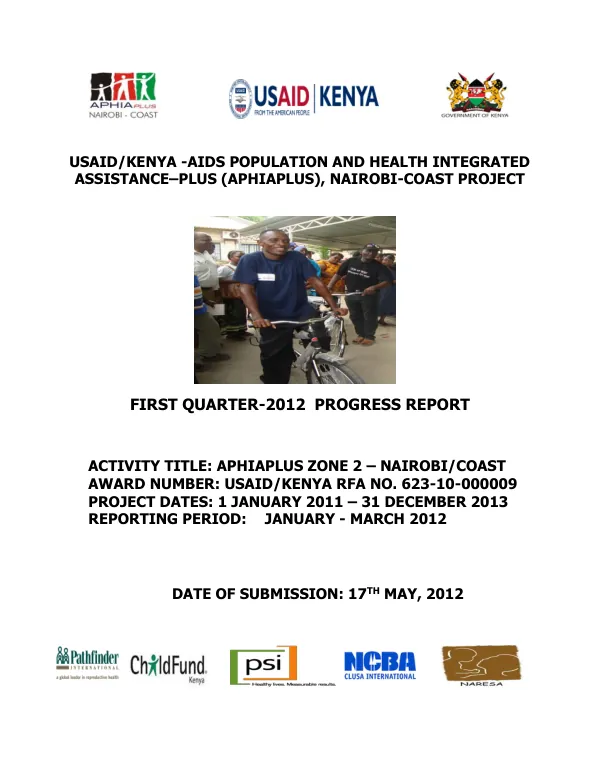
USAID/KENYA -AIDS POPULATION AND HEALTH INTEGRATED ASSISTANCE–PLUS (APHIAPLUS), NAIROBI-COAST PROJECT FIRST QUARTER-2012 PROGRESS REPORT
Sign inUSAID/KENYA
USAID/KENYA -AIDS POPULATION AND HEALTH INTEGRATED ASSISTANCE–PLUS (APHIAPLUS), NAIROBI-COAST PROJECT FIRST QUARTER-2012 PROGRESS REPORT
The APHIAplus Nairobi-Coast project is a USAID-funded initiative aimed at improving health outcomes in the Nairobi-Coast region of Kenya.
2012 · 78 pages
Sign in to readA free account is required to download.
Abstract
The project began on January 1, 2011, and is set to conclude on December 31, 2013. The first quarter progress report for 2012 highlights the project's achievements and challenges during the period from January to March 2012. The project's main goal is to increase the use of quality health services, products, and information among the target population. To achieve this, the project has implemented several interventions, including the increased availability of an integrated package of quality high-impact interventions at community and health facility levels. The project has also focused on increasing demand for these interventions through community-based activities and health facility strengthening. The project has made significant progress in increasing the adoption of healthy behaviors among the target population. For instance, the project has implemented a community-based health action plan, which has led to an increase in the use of antenatal care services and the adoption of healthy behaviors such as exclusive breastfeeding. The project has also implemented a home-based care program, which has improved the health and well-being of people living with HIV/AIDS. In addition to health services, the project has also focused on addressing social determinants of health. The project has implemented economic strengthening programs, which have improved the economic security of marginalized, poor, and underserved groups. The project has also implemented food security and nutrition programs, which have improved the nutritional status of the target population. The project has also made significant progress in strengthening health systems. The project has supported the development of community-based health information systems, which have improved the collection and analysis of health data. The project has also supported the development of health management information systems, which have improved the management of health services. The project has also implemented several innovative approaches to improve health outcomes. For instance, the project has implemented a community-based HIV/AIDS activities reporting form, which has improved the reporting of HIV/AIDS-related data. The project has also implemented a client-oriented provider efficient system, which has improved the efficiency of health services. Overall, the APHIAplus Nairobi-Coast project has made significant progress in improving health outcomes in the Nairobi-Coast region of Kenya. The project's focus on increasing the use of quality health services, addressing social determinants of health, and strengthening health systems has led to improved health outcomes among the target population. The project has also made significant progress in improving food security and nutrition among the target population. The project has implemented several programs aimed at improving food security and nutrition, including the distribution of food assistance to vulnerable populations and the implementation of nutrition education programs. In addition to health services and food security, the project has also focused on improving education and life skills among the target population. The project has implemented several programs aimed at improving education and life skills, including the provision of education and training to community health workers and the implementation of community-based education programs. The project has also made significant progress in improving access to safe water, sanitation, and hygiene among the target population. The project has implemented several programs aimed at improving access to safe water, sanitation, and hygiene, including the construction of water and sanitation facilities and the implementation of hygiene education programs.