ACDI/VOCA
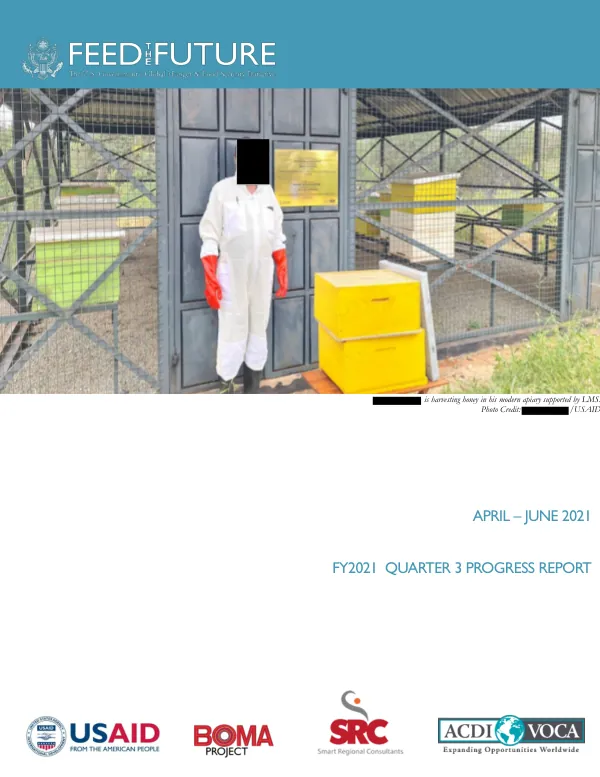
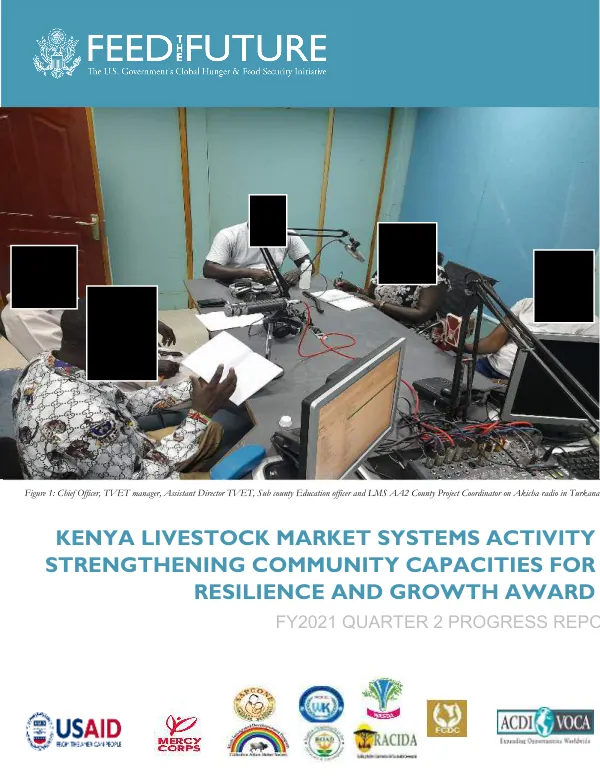
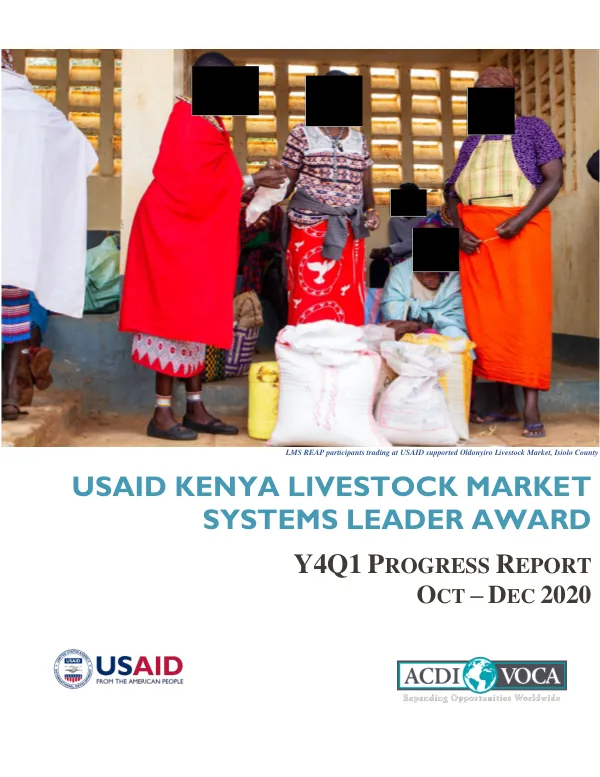
USAID/Kenya Livestock Market System Leader Award FY2021 Q1 Progress Report
Kenya is one of the fastest-growing economies in Africa, yet nearly half of the 50 million residents live below the poverty line.
2021 · 28 pages
Sign in to readA free account is required to download.
Abstract
Two-thirds of Kenyans do not have access to basic financial services such as bank accounts. The country's main engine of economic growth is agriculture, with about 75 percent of Kenyans earning all or part of their income from the sector. Agriculture accounts for 23.3 percent of the nation's gross domestic product (GDP). Despite significant political, structural, and economic reforms over the past decade, Kenya still faces key development challenges including poverty, inequality, climate change, weak private sector investment, and economic vulnerability to internal and external shocks. The Feed the Future funded Livestock Market Systems (LMS) has collaborated with County Governments to identify areas of support to address key challenges in improving the efficiency and effectiveness of their service delivery to communities. LMS has focused its activities on supporting counties to benefit from their growing youthful population, dynamic private sector, highly skilled workforce, improved governance, and service delivery. Through collaborative approaches, LMS has worked with counties to address challenges in the livestock sector, with a focus on improving market access, increasing productivity, and enhancing the overall competitiveness of the sector. The LMS has made significant progress in supporting counties to improve their livestock market systems. In the quarter under review, LMS worked with the Frontier Counties Development Council (FCDC) to strengthen the capacity of county governments to manage and coordinate livestock market systems. The LMS also supported the development of a county-level livestock market information system, which aims to improve market access and increase productivity for smallholder farmers. Additionally, LMS provided training and capacity-building support to county extension officers and other stakeholders to enhance their knowledge and skills in livestock market development. The LMS has also made progress in supporting the development of a robust and competitive livestock market system in Kenya. In the quarter under review, LMS worked with the Kenya Livestock Market Association (LMA) to develop a national livestock market information system, which aims to improve market access and increase productivity for smallholder farmers. The LMS also supported the development of a livestock market development strategy for the country, which aims to enhance the overall competitiveness of the sector. The LMS has also made significant progress in supporting the development of a robust and competitive livestock market system in Kenya. In the quarter under review, LMS worked with the Kenya Investment Mechanism (KIM) to develop a livestock market investment plan, which aims to attract investment in the sector and enhance its competitiveness. The LMS also supported the development of a livestock market development policy framework for the country, which aims to enhance the overall competitiveness of the sector.