USAID DEC
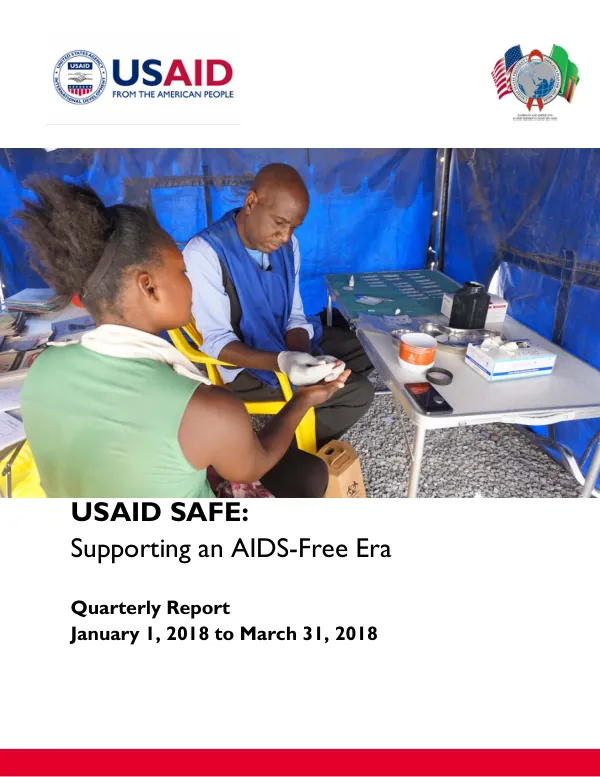
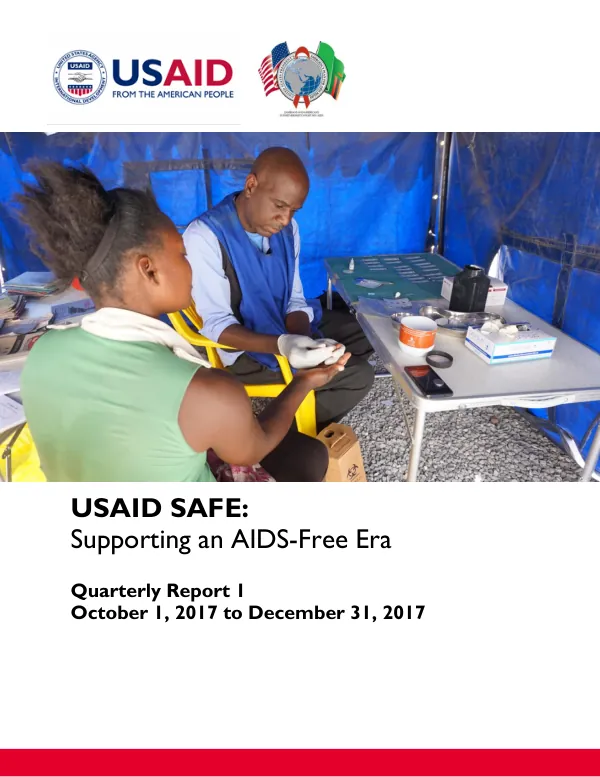
USAID SAFE: Supporting an AIDS-Free Era Quarterly Report 1 October 1, 2017 to December 31, 2017
Sign inABT ASSOCIATES
USAID SAFE: Supporting an AIDS-Free Era Quarterly Report 1 October 1, 2017 to December 31, 2017
The USAID SAFE program operates in three provinces of Zambia: Central, Copperbelt, and North-Western.
2017 · 31 pages
Sign in to readA free account is required to download.
Abstract
The program aims to reduce HIV mortality, morbidity, and transmission, while improving nutrition outcomes and family planning integration. USAID SAFE is implemented by John Snow, Inc. (JSI) in partnership with Abt Associates, Inc. (Abt), mothers2mothers (m2m), and the Catholic Medical Mission Board (CMMB) for a period of five years. During the reporting period, USAID SAFE continued start-up activities, including the rapid recruitment of key and support project staff. The program established two offices for program operations, one in Lusaka and the other in Kabwe. These offices manage the day-to-day program activities and operations for the Central Province. The USAID SAFE Lusaka-based team initiated recruitment of all technical, program, and operations staff for both offices, hiring a total of 27 full-time positions with an additional 110 full-time consultants by the end of the reporting period. The program also initiated processes for large-scale procurements for office vehicles, supplies, and equipment. In an effort to complete the handover and transition of facilities from ZPCTIIB to USAID SAFE within a condensed timeframe of six weeks, the program hired 30 temporary expert personnel to maintain service provision at both facilities and communities. These personnel included technical advisors, doctors, clinical officers, nurses, lab personnel, and community mobilization specialists. The temporary staff provided direct technical support to clinicians, community volunteers, Provincial Health Office (PHO), and District Health Office (DHO) and extended additional human resources to facilities that required supplemental surge support when needed. Key achievements include the consolidation of program operations at the Lusaka head office and Kabwe provincial office. The program successfully maintained, enhanced, and scaled-up service provision in Central Province. Temporary expert staff were deployed to ensure continuity of service delivery during start-up, and intensified mentoring and monitoring of sites throughout Central Province sites were introduced. The program also engaged a further 80 Data Entry Clerks (DECS) who were also engaged as consultants to continue with data collection and entry into DATIM. The program's objectives include ensuring that 95 percent of HIV positive individuals know their HIV status, initiating 95 percent of those who tested positive on ART, ensuring that 95 percent of those on ART are virally suppressed, strengthening the health system to support the objectives of 95/95/95, providing voluntary medical male circumcisions to priority populations to avert new infections, integrating family planning services into 95 percent of HIV service delivery locations, reaching 90 percent of eligible HIV positive adults and children with NACS, strengthening M&E capacity at the facility, district, and provincial levels for improved program management, and strengthening the public financial management systems of the Ministry of Health (MOH) and Ministry of Finance to enable the efficient use of direct G2G funds from USAID. The program operates in a complex environment, with multiple stakeholders and partners involved in the implementation of the program. The program's success depends on the effective coordination and collaboration among these stakeholders, as well as the availability of resources and funding. The program's progress will be monitored and evaluated regularly to ensure that it is meeting its objectives and making a positive impact on the lives of the people it serves.