DAI GLOBAL, LLC
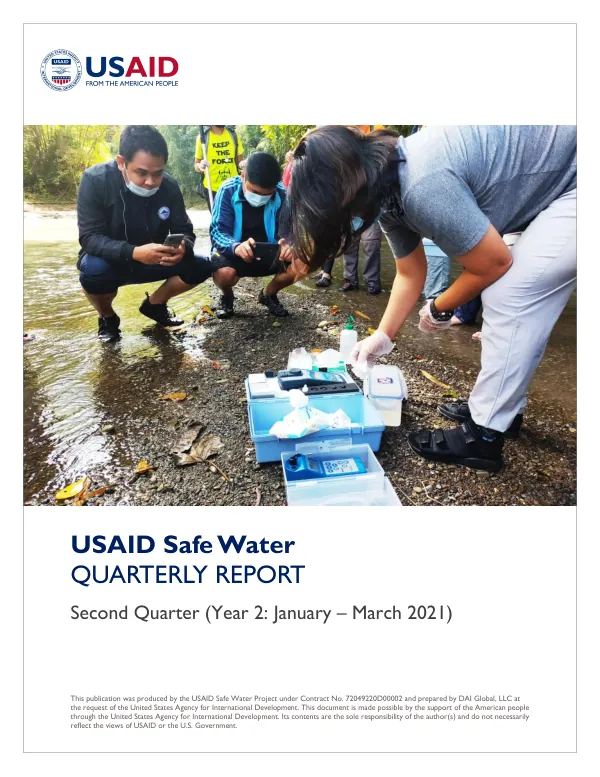
USAID Safe Water Quarterly Report: Year 2: Jan – Mar 2021
The Safe Water Project is a USAID-funded initiative aimed at improving water security in the Philippines.
2021 · 47 pages
Sign in to readA free account is required to download.
Abstract
The project is implemented by DAI Global, LLC, in partnership with five local organizations. The project's overall goal is to increase access to resilient water supply and sanitation services, improve sustainable management of water resources, strengthen water sector governance, and address cross-cutting activities. The project focuses on five objectives: increased access to resilient water supply and sanitation services, improved sustainable management of water resources, strengthened water sector governance, cross-cutting activities, and project operations and administration. The project targets 15 cities and municipalities in the provinces of Palawan, Negros Occidental, and Sarangani. The project's quarterly report for the second quarter of its second year of implementation highlights several key achievements. The report notes that the project has made significant progress in achieving its objectives, including the completion of hydrologic studies in Montible in Palawan, Bago and Malogo in Negros Occidental, and Buayan-Malungon and Siguel in Sarangani. The studies have provided valuable insights into the water resources of the provinces and have identified areas where immediate intervention is needed to prevent further degradation of water resources. The report also highlights the project's efforts to strengthen water sector governance, including the establishment of a Provincial Integrated and Inclusive Water Security Framework (PIIWSF) in Palawan and the development of a Provincial Integrated Water Security Plan (PIWSP) in Negros Occidental. The project has also provided technical assistance to local government units (LGUs) to improve their capacity to manage water resources. In terms of project operations and administration, the report notes that the project has made significant progress in implementing its activities, including the recruitment of staff, procurement of goods and services, and provision of training to project staff. The report also highlights the project's efforts to monitor and evaluate its progress, including the establishment of a monitoring and evaluation system and the conduct of regular project reviews. The project's quarterly report also highlights several challenges that it has faced, including the impact of climate change on water resources, the need for more effective governance and management of water resources, and the need for increased investment in water infrastructure. The report notes that the project is working to address these challenges through its activities and is committed to making a positive impact on the lives of the people in the project areas. The project's quarterly report for the second quarter of its second year of implementation provides a comprehensive overview of the project's progress and achievements. The report highlights the project's efforts to improve water security in the Philippines and its commitment to making a positive impact on the lives of the people in the project areas. The hydrologic studies conducted in the project areas have provided valuable insights into the water resources of the provinces. The studies have identified areas where immediate intervention is needed to prevent further degradation of water resources. The project's efforts to strengthen water sector governance, including the establishment of a Provincial Integrated and Inclusive Water Security Framework (PIIWSF) in Palawan and the development of a Provincial Integrated Water Security Plan (PIWSP) in Negros Occidental, are also highlighted in the report. The project's quarterly report also highlights the importance of evidence-based planning for water security. The report notes that the project's efforts to improve water security in the project areas are based on scientific evidence and data, and that the project is committed to using this evidence to inform its decision-making and activities.