USAID DEC
USAID/Solomon Islands SCALE A&E
Agricultural Development in Malaita, Solomon Islands.
2021 · 3 pages
Sign in to readA free account is required to download.
Abstract
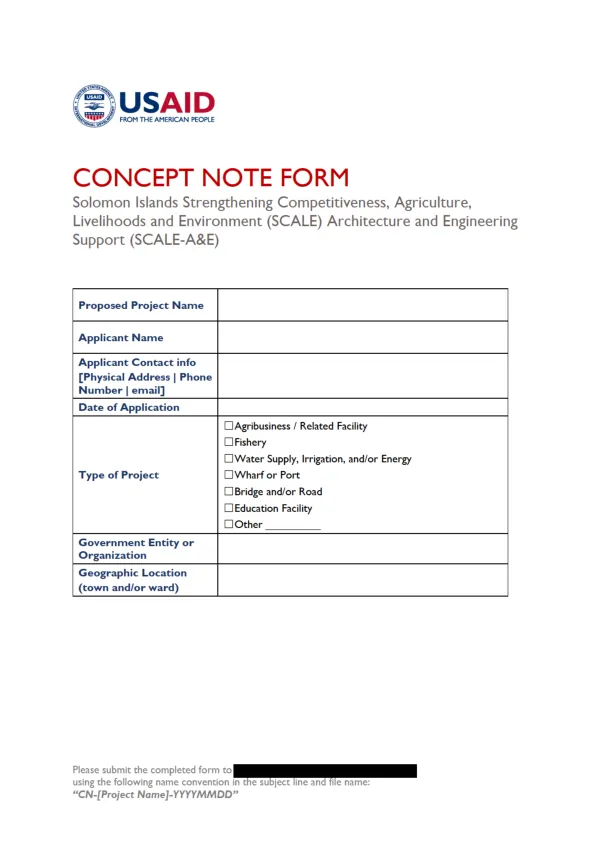
The project aims to contribute towards Malaita's agricultural development goals. The intervention targets Malaita's agricultural sector, which faces challenges in terms of low productivity and limited market access. The project seeks to address these challenges by improving agricultural productivity and increasing market access for farmers. The project will focus on linking farmers to markets, improving agricultural practices, and enhancing market access. This will be achieved through the establishment of a market information system, which will provide farmers with real-time market information. Additionally, the project will provide training and capacity-building programs for farmers, extension agents, and other stakeholders. These programs will focus on improving agricultural practices, such as crop and animal husbandry, and enhancing market access through the development of value chains. The project will also focus on improving the business environment for farmers and other stakeholders. This will be achieved through the development of policies and regulations that support agricultural development, as well as the establishment of a business incubator to support the growth of small and medium-sized enterprises (SMEs) in the agricultural sector. The project will be implemented in the Malaita Province, with a focus on the following districts: Auki, Auki Urban, and Malaita. The project will be implemented over a period of five years, with the following key milestones: year one: project inception and project establishment; year two: project implementation and capacity-building; year three: project expansion and scaling up; year four: project evaluation and project evaluation report; and year five: project closure and project closure report. The project will be implemented by a consortium of local and international partners, including the Government of Solomon Islands, the Solomon Islands Agricultural Research Institute, and the International Fund for Agricultural Development (IFAD). The project will be funded by USAID, with a total budget of $10 million over five years. The project will have several key outcomes, including improved agricultural productivity, increased market access for farmers, and enhanced business environment for farmers and other stakeholders. The project will also have several key indicators, including the number of farmers trained, the number of farmers linked to markets, and the value of agricultural exports. The project will also have several key risks, including the risk of project delays, the risk of project budget overruns, and the risk of project implementation challenges. The project will also have several key opportunities, including the opportunity to improve agricultural productivity, the opportunity to increase market access for farmers, and the opportunity to enhance the business environment for farmers and other stakeholders. The project will require several key data, including data on agricultural productivity, data on market access, and data on the business environment. The project will also require several key data deficiencies to be addressed, including data on the number of farmers trained, data on the number of farmers linked to markets, and data on the value of agricultural exports. The project will be implemented in accordance with the USAID SCALE A&E project selection process, which requires that the project demonstrates a clear logical framework or theory of change, and provides information on how the project serves to address the development in line with local agricultural goals and objectives. The project will also be implemented in accordance with the USAID project management framework, which requires that the project is implemented in a transparent and accountable manner, and that the project is subject to regular monitoring and evaluation.
Related documents