MANAGEMENT SYSTEMS INTERNATIONAL
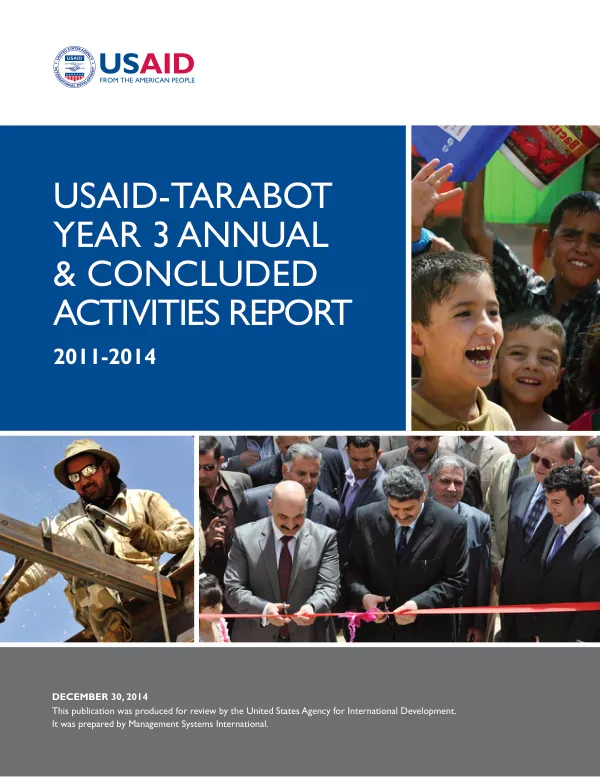
USAID-TARABOT YEAR 3 ANNUAL & CONCLUDED ACTIVITIES REPORT 2011-2014
The Tarabot Iraq Administrative Reform Project was established in 2006 as a successor to the National Capacity Development Project, known as Tatweer.
2014 · 51 pages
Sign in to readA free account is required to download.
Abstract
The project's roots date back to the beginning of the predecessor project in 2006. Over the eight-year period of these two projects, the political context and security climate in Iraq evolved rapidly and sometimes unpredictably. The project's funding experienced significant fluctuations, with unexpected increases and sudden de-obligations. In 2008, Tatweer received an additional $130 million, while Tarabot faced a $50 million reduction in funding in 2012, followed by a partial re-obligation in 2014. These funding changes required the project to adapt and respond to changing circumstances. The project's scope of work also underwent significant changes. Tatweer expanded its focus from training to systems introduction and increased its coverage from 10 central line ministries to over 100 ministry offices in 15 provinces. Tarabot, on the other hand, was forced to cancel its Civil Service Reform component and end its administrative decentralization activities with numerous important ministries. The security environment in Iraq posed significant challenges to the project. The "surge" of the US military presence from 2007-2008 led to a 90% reduction in security events, allowing for a sense of normalcy to return to people's daily lives and work. However, the sudden withdrawal of the US military presence in 2010 left large projects dependent solely on the Iraqi police and army for security. The project's design was influenced by the experience of the preceding Tatweer project, building on its successful activities while restructuring the approach to allow Tarabot to operate on less than half the resources of its predecessor. The project's goal was to support the Government of Iraq in implementing administrative reforms, with a focus on improving the business environment, enhancing public services, and promoting good governance. The Tarabot project's activities were implemented in three main areas: Iraq Solutions for Regulatory and Administrative Reform (ISRAR), Services: Administrative Decentralization, and People: Civil Service Reform. ISRAR aimed to improve the business environment by addressing regulatory and administrative barriers, while Services: Administrative Decentralization focused on improving public services and promoting decentralization. The People: Civil Service Reform component aimed to improve the efficiency and effectiveness of the civil service system. Throughout its implementation, the Tarabot project faced significant challenges, including security concerns, funding fluctuations, and changes in the project's scope of work. Despite these challenges, the project made significant progress in supporting the Government of Iraq in implementing administrative reforms and improving the business environment. The project's achievements included the development of a comprehensive regulatory reform package, the establishment of a public procurement reform system, and the implementation of a project management reform program. The project also supported the development of a social safety net system and the establishment of one-stop-shop service centers. The Tarabot project's legacy includes the development of a national development plan, the establishment of a public sector management committee, and the implementation of a civil service reform program. The project's achievements have contributed to the improvement of the business environment, the enhancement of public services, and the promotion of good governance in Iraq. The project's conclusion marked the end of a significant chapter in the history of the Tarabot project, which had been implemented over a period of eight years. The project's legacy will continue to shape the development of the Government of Iraq and the improvement of the business environment in the country.