USAID DEC
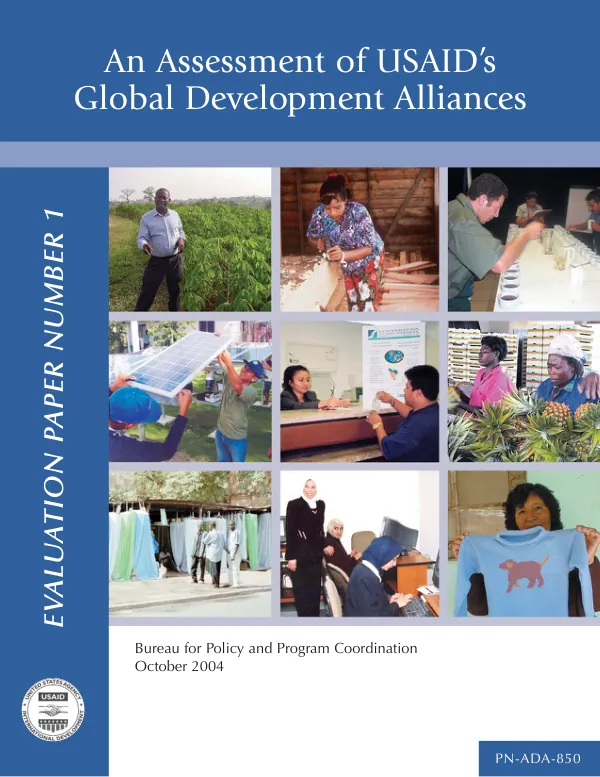
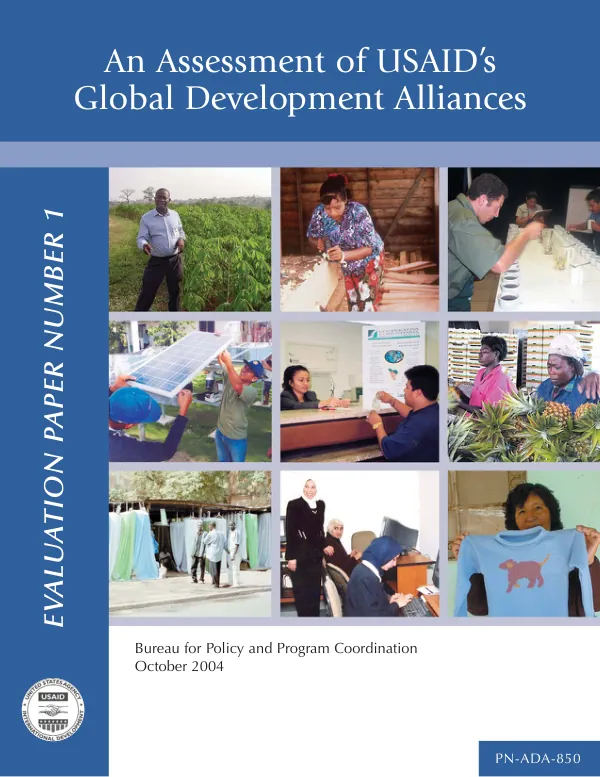
USAID"s experience with multisectoral partnerships and strategic alliances : an analysis of best practices and lessons learned
Sign inACADEMY FOR EDUCATIONAL DEVELOPMENT, INC. (AED)
USAID"s experience with multisectoral partnerships and strategic alliances : an analysis of best practices and lessons learned
To further the implementation of USAID"s new Global Development Alliance strategy, this document systematically reviews Development Experience Clearinghouse (DEC) documentation on Agency experiences from 1990 to the present in multisectoral partnerships and strategic alliances, with emphasis on best practices and lessons learned.
Spevacek, Anne Marie · 2001
Sign in to readA free account is required to download.
Abstract
The most fundamental lesson learned from USAID"s experience in promoting multisectoral partnerships and strategic alliances has been that most, if not all, collaborating agencies benefit more from combining their efforts and resources than from acting alone. The Coastal Resources Management program (CRM), for example, reports that multi-sectoral groups at the provincial level can help consolidate resources and technical capacity available from local government units, national government agencies, academic institutions, and NGOs to help municipalities achieve critical coastal resource management results. Partnerships between the public and private sectors typically blend complementary assets, e.g., the productive capacity of business and the social organizing capacity of civil society. Each partner brings its own strengths and experiences to the partnership, which typically results in the creation of new and innovative ways to address long-standing development problems, such as alleviating poverty or improving health and education. Despite one Agency evaluation"s assertion that "there are no prescriptions" for creating and sustaining successful partnerships, this study strongly suggests that there is, in fact, a collective set of best practices and lessons learned that constitutes a demonstrative partnering model. Characteristics of effective USAID partnership activities include dedication to a common goal, good communication between partners, flexibility and patience, adequate time to shape the partnership, and transparent and inclusive management practices. Without these and other vital components, USAID partnerships between the public and private sectors would likely fall short of intended results and in some cases perhaps fail. The following best practices and lessons learned are noted: (1) Determine the appropriateness of the partnership/alliance and assess potential partners" capacity and resources. (2) Create a common agenda by planning early and together. (3) Develop an operational roadmap, which may include signing a memorandum of understanding. (4) Build strong partner relationships by: (a) remaining realistic about partners" differences (sectoral, cultural, etc.); (b) articulating and trying to understand each other"s differences and concerns; and (c) building mutual trust, which requires time, open lines of communication, and inclusive and transparent management practices. (5) Ensure partner accountability. (6) Measure and evaluate goals and objectives at the outset and during the partnership. (7) Develop and build upon the institutional capacity of partners. (8) Keep in mind that partnerships are limited in what they can achieve. (9) Recognize that external factors may hinder partnerships. (10) Understand that leveraging resources can dilute the focus of the partnership and add to operational complexities. (11) Learn from the experiences of past partnerships and alliances -- lessons learned and best practices should be documented and disseminated. (12) Incorporate an action plan for sustaining the benefits of a partnership or alliance after funding ends.
![Institutional and organizational development [ID/OD] : R4 data analysis for annual performance report FY2000 -- executive summary](https://covers.devme.ai/gen/61209.webp)