USAID. BUR. FOR TECHNICAL ASSISTANCE. OFC. OF NUTRITION
Vitamin A technology
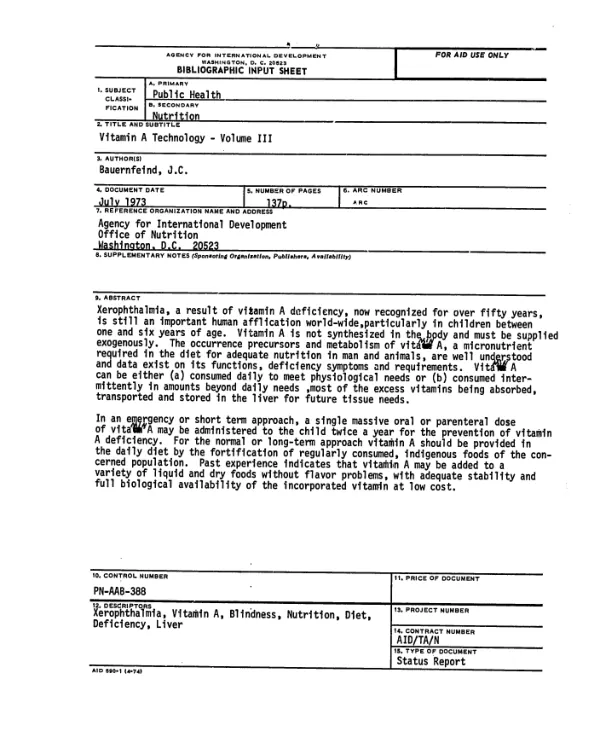
Xerophthalmia, a result of vitamin A deficiency, now recognized for over fifty years, is still an important human affliction worldwide, particularly in children between one and six years of age.
Bauernfeind, J. C. · 1970
Sign in to readA free account is required to download.
Abstract
Vitamin A is not synthesized in the body and must be supplied exogenously. The occurrence precursors and metabolism of vitamin A, a micronutrient required in the diet for adequate nutrition in man and animals, are well understood and data exist on its functions, deficiency symptoms and requirements. Vitamin A can be either (a) consumed daily to meet physiological needs or (b) consumed intermittently in amounts beyond daily needs, most of the excess vitamins being absorbed, transported and stored in the liver for future tissue needs. In an emergency or short-term approach, a single massive oral or parenteral dose of vitamin A may be administered to the child twice a year for the prevention of vitamin A deficiency. For the normal or long-term approach vitamin A should be provided in the daily diet by the fortification of regularly consumed, indigenous foods of the concerned population. Past experience indicates that vitamin A may be added to a variety of liquid and dry foods without flavor problems, with adequate stability and full biological availability of the incorporated vitamin at low cost.
Connected topics
Related documents
Documents in this collection
 1970
1970USAID DEC
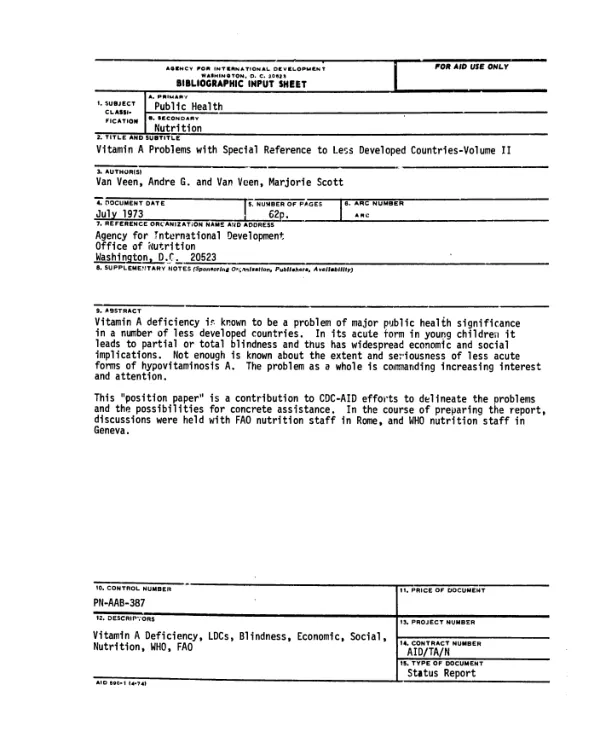
Vitamin A problems, with special reference to less developed countries
Open record 2002
2002USAID DEC
![Vitamin A capsule distribution after the NIDs [national immunization days] : lessons learned from Cambodia](https://covers.devme.ai/gen/22521.webp)