USAID DEC
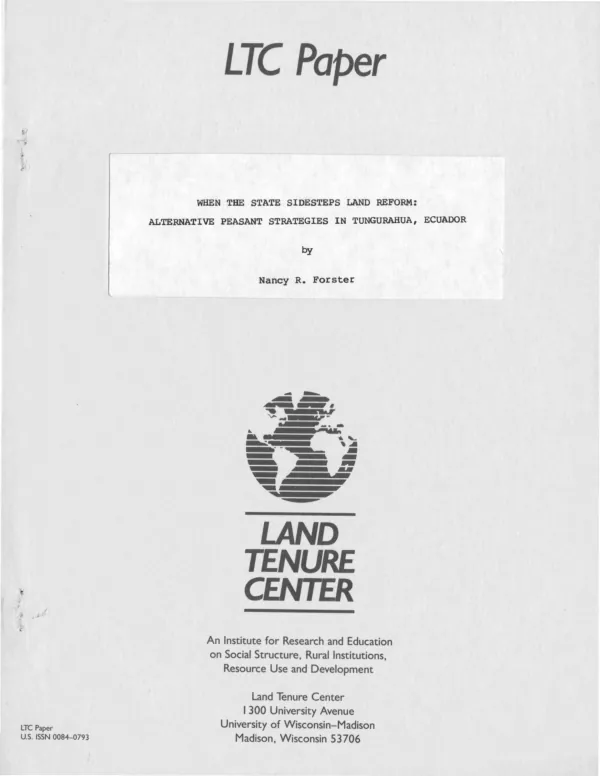
When the state sidesteps land reform : alternative peasant strategies in Tungurahua, Ecuador
Sign inUNIVERSITY OF WISCONSIN AT MADISON. LAND TENURE CENTER (LTC)
When the state sidesteps land reform : alternative peasant strategies in Tungurahua, Ecuador
Ecuador has not had a meaningful land reform, yet peasants have maintained a determined campaign to bring land into their own domain.
Forster, Nancy R. · 1989
Sign in to readA free account is required to download.
Abstract
This report focuses primarily on two generations of peasants in Santa Lucia Arriva, Tungurahua Province, who have acquired land primarily through conversion of common grazing land or with capital earned during periods of labor migration. According to the report, the experience of these peasants directly challenges the Marxist-Leninist theory that minifundio holdings are not economically viable. Primarily as a result of regional and national economic conditions, many of the peasants were able to purchase enough land to maintain their status over the generations under study. A primary factor in their survival has been the absence of subsidies for large-scale, capital-intensive agriculture, which has encouraged large landowners to sell their property and turn to urban occupations. Moreover, Ecuador"s limited industrial development has prevented the massive peasant exodus to the cities experienced by many other Latin American countries. However, the tightening of the land market in recent decades suggests that the free market is unlikely to provide enough land for the peasant class in the future. Furthermore, agricultural expansion into the paramo, high-altitude grazing lands, has had high environmental costs, and continued degradation could threaten agriculture in the entire region.
Connected topics