INTERNATIONAL CENTER FOR RESEARCH ON WOMEN (ICRW)
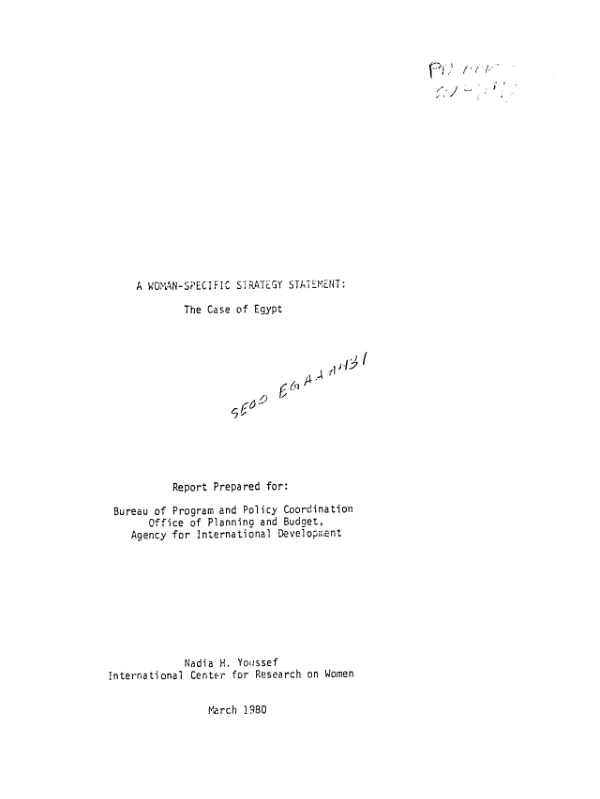
Woman - specific strategy statement : the case of Egypt
As half of developing country populations, women represent a potentially significant but largely untapped portion of the productive labor force.
Youssef, Nadia H. · 1980
Sign in to readA free account is required to download.
Abstract
This case study examines issues and strategies relevant to integrating women into the productive economy in Egypt. Current evidence on the relationship between female education, employment, and fertility is outlined, with stress on the Egyptian context. It is recommended that women"s often hidden economic activities be brought to light and measures taken to translate them into the wider economy, and suggested that improvement in women"s socioeconomic status can lower fertility rates. Educational trends are analyzed, showing that Egyptian women have become literate, participated in primary, secondary, and university education, and reduced school dropout rates more rapidly than men have, and evidence is presented on women"s increasing roles in agricultural and nonagricultural activities. Long-term targets for improving women"s condition are outlined, and the structural changes needed to integrate women into the Egyptian economy examined, especially - due to the declining importance of agriculture - in the industrial and service sectors. The paper concludes by outlining specific actions for absorbing women into Egypt"s employment structure and for targeting those women most in need of attention and those for whom integration into the economy is most feasible.
Connected topics