ABT ASSOCIATES
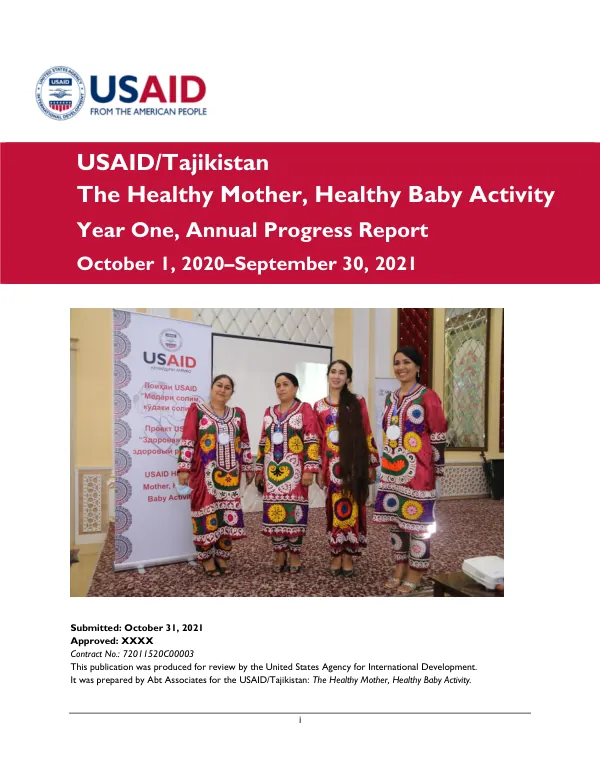
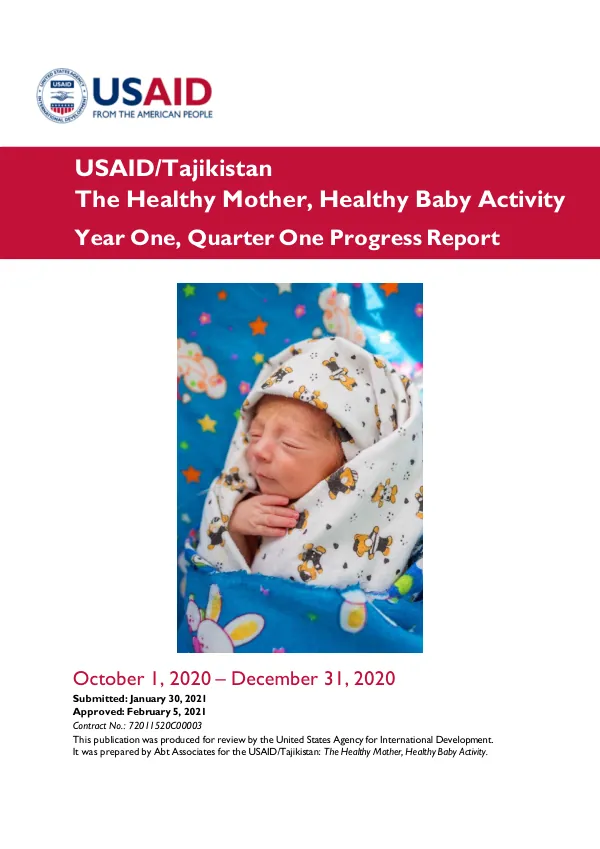
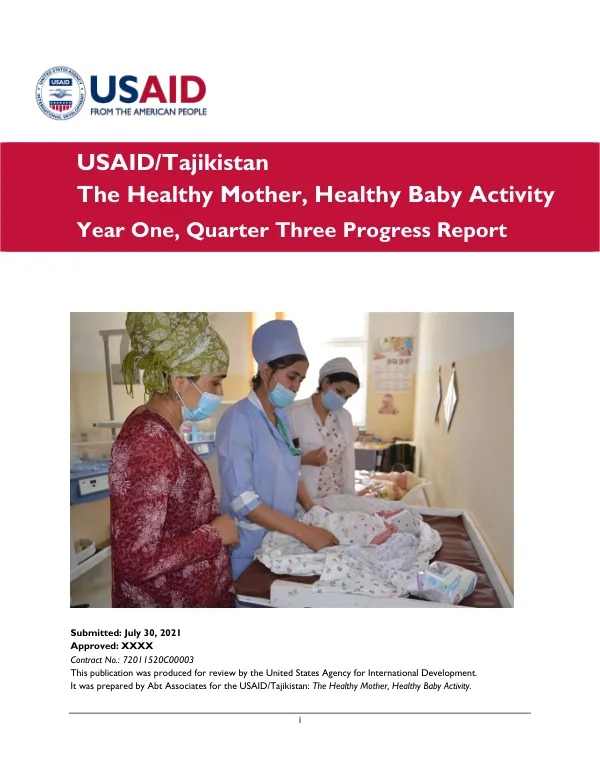
Year One, Quarter Three Progress Report: The Healthy Mother, Healthy Baby Activity
The Healthy Mother, Healthy Baby Activity in Tajikistan is a USAID-funded initiative aimed at improving maternal, newborn, and child health (MNCH) and nutrition outcomes.
2021 · 62 pages
Sign in to readA free account is required to download.
Abstract
The activity is being implemented in partnership with the Ministry of Health and Social Protection of the Population (MoHSPP) of the Republic of Tajikistan (RT). Despite recent achievements, Tajikistan continues to face significant challenges in MNCH and nutrition, including high rates of maternal and child mortality, stunting, wasting, and underweight children. The activity is working closely with the MoHSPP and donor/development partners to accelerate progress towards universal health coverage, coordinating MNCH and nutrition efforts. The initiative is focused on transforming the health of the population by putting communities at the center of health, in line with the 2018 Declaration of Astana. The activity is being implemented in 12 districts, with a focus on improving access to quality healthcare services, increasing the availability of essential medicines and equipment, and enhancing the capacity of healthcare workers. The activity has made significant progress in the first year, with a total of 2,500 healthcare workers trained in various aspects of MNCH and nutrition. The training included topics such as maternal and child health, nutrition, and infection control. The activity has also established 12 Nutrition Resource Centers (NRCs) in the 12 districts, which provide training and support to healthcare workers on nutrition and MNCH. The NRCs have been equipped with essential medicines and equipment, and have been staffed by trained healthcare workers. The activity has also implemented a digital data collection system using CommCare, which has improved the monitoring and evaluation of the activity's progress. The system has enabled the activity to track key indicators, including the number of healthcare workers trained, the number of patients treated, and the availability of essential medicines and equipment. The activity has also conducted regular monitoring visits to the NRCs to ensure that they are functioning effectively and providing high-quality services to the community. The activity has made significant progress in improving the availability of essential medicines and equipment in the 12 districts. The activity has distributed a total of 10,000 posters on MNCH and nutrition to the 12 districts, and has provided training to 500 community health promoters on social behavior change communication. The activity has also established a database of working healthcare workers, which has improved the tracking and monitoring of healthcare workers' performance. The activity has also made significant progress in improving the quality of healthcare services in the 12 districts. The activity has conducted a rapid health facility assessment (RHFA) in all 12 districts, which has identified gaps in the availability of essential medicines and equipment. The activity has also implemented a quality improvement (QI) program, which has improved the quality of healthcare services in the 12 districts. The QI program has included training for healthcare workers on infection control, maternal and child health, and nutrition. The activity has also made significant progress in improving the availability of therapeutic nutrition in the 12 districts. The activity has distributed a total of 10,000 packets of therapeutic nutrition to the 12 districts, and has provided training to 500 healthcare workers on the administration of therapeutic nutrition. The activity has also established a database of patients who have received therapeutic nutrition, which has improved the tracking and monitoring of patients' progress. The activity has also made significant progress in improving the availability of vitamin A in the 12 districts. The activity has distributed a total of 10,000 packets of vitamin A to the 12 districts, and has provided training to 500 healthcare workers on the administration of vitamin A. The activity has also established a database of patients who have received vitamin A, which has improved the tracking and monitoring of patients' progress. The activity has also made significant progress in improving the availability of essential medicines and equipment in the 12 districts. The activity has distributed a total of 10,000 packets of essential medicines to the 12 districts, and has provided training to 500 healthcare workers on the administration of essential medicines. The activity has also established a database of patients who have received essential medicines, which has improved the tracking and monitoring of patients' progress.
Related documents