ABT ASSOCIATES
USAID Transform: Primary Health Care, Y2 Q3 Report
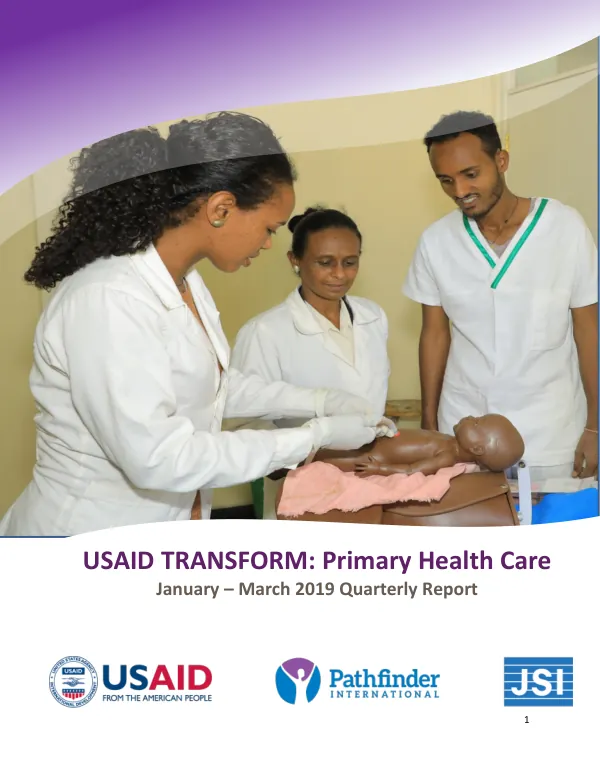
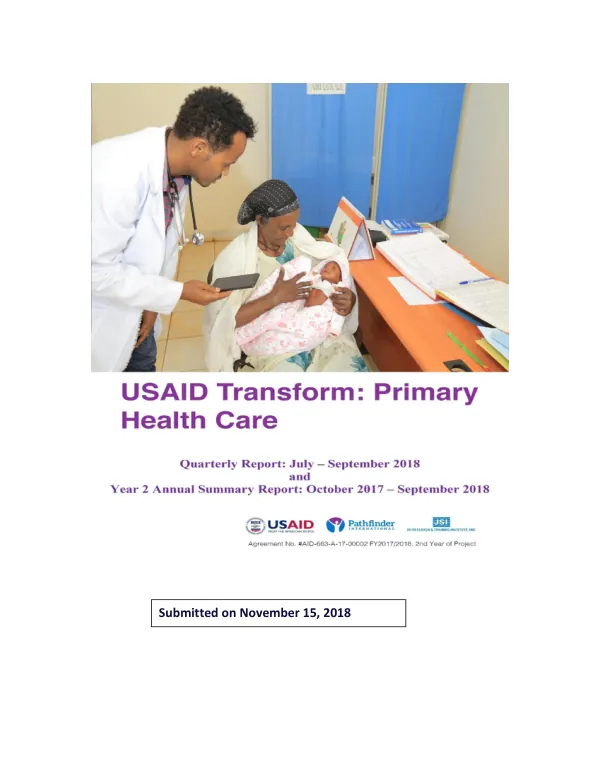
Transform: Primary Health Care is a USAID-funded health project, under cooperative agreement AID-663-A-17-00002, which seeks to contribute to Preventable Child and Maternal Deaths (PCMD) by supporting the implementation of the Government of Ethiopia's (GoE) Health Sector Transformation Plan (HSTP).
2018 · 63 pages
Sign in to readA free account is required to download.
Abstract
This project will support the attainment of four HSTP transformational agendas, namely: (1) Woreda Transformation; (2) Caring, Respectful, and Compassionate (CRC) Care; (3) Health Sector Transformation in Quality (HSTQ); and (4) Health Sector Transformation in Service Delivery (HSTSD). The project aims to improve the quality of primary health care services, increase access to essential health services, and enhance the capacity of the health system to deliver high-quality services. The project will focus on improving maternal and newborn health, child health, and adolescent and youth health and development. It will also support the implementation of the Ethiopian Health Center Reform Implementation Guidelines (EHCRIG) and the Ethiopian Hospital Service Transformation Guideline (EHSTG). The project will be implemented in 12 regions of Ethiopia, with a focus on 120 woredas. The project will work with the Federal Ministry of Health (FMOH), the Ethiopian Health Insurance Agency (EHIA), and other stakeholders to support the implementation of the HSTP. The project will also provide technical assistance to the health system, including training and capacity building for health workers, and support for the development of health information systems. The project has made significant progress in the first two years, with a focus on improving health system management and performance, sustainable quality of services along the continuum of care, individual and community behavior, and enhanced program learning to impact policy and programming. The project has also established partnerships with various stakeholders, including the Government of Ethiopia, international organizations, and local NGOs. Key achievements of the project include the establishment of 120 health centers, the training of over 1,000 health workers, and the provision of technical assistance to the health system. The project has also supported the development of health information systems, including the District Health Information System Version 2 (DHIS2). Additionally, the project has made significant progress in improving maternal and newborn health, child health, and adolescent and youth health and development. The project has also faced several challenges, including limited resources, inadequate infrastructure, and limited capacity of the health system. However, the project has taken various actions to address these challenges, including seeking additional funding, providing technical assistance to the health system, and supporting the development of health information systems. The project will continue to focus on improving health system management and performance, sustainable quality of services along the continuum of care, individual and community behavior, and enhanced program learning to impact policy and programming. The project will also continue to support the implementation of the HSTP and the EHCRIG, and will work with various stakeholders to improve the quality of primary health care services in Ethiopia. The project has made significant progress in improving health outcomes in Ethiopia, including a reduction in maternal and newborn mortality rates, and an increase in the number of children receiving essential health services. The project has also supported the development of a robust health information system, which will enable the health system to track health outcomes and make data-driven decisions. The project will continue to work with various stakeholders to improve the quality of primary health care services in Ethiopia, and to support the implementation of the HSTP and the EHCRIG. The project will also continue to provide technical assistance to the health system, including training and capacity building for health workers, and support for the development of health information systems. The project has a strong partnership with the Government of Ethiopia, international organizations, and local NGOs, which has enabled it to make significant progress in improving health outcomes in Ethiopia. The project has also established a robust monitoring and evaluation system, which will enable it to track progress and make adjustments as needed.
Related documents