ABT ASSOCIATES
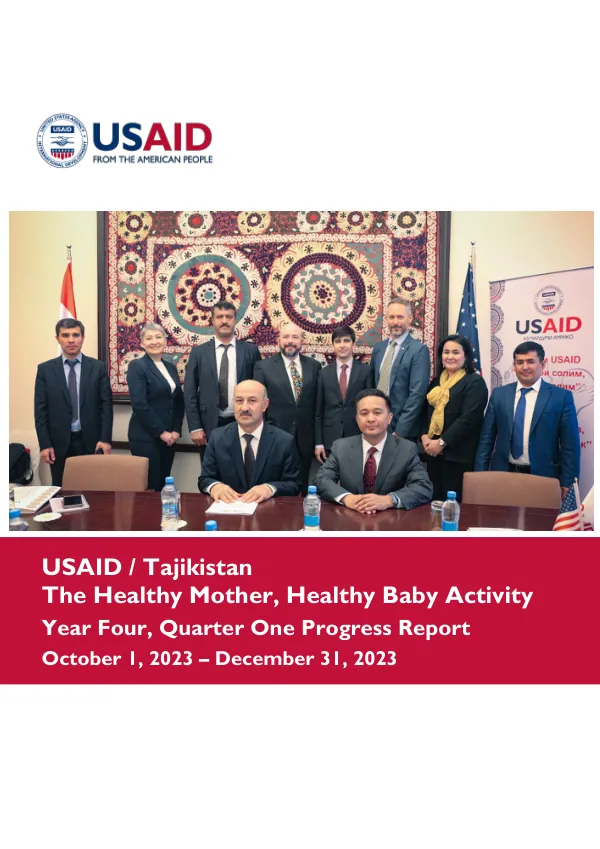
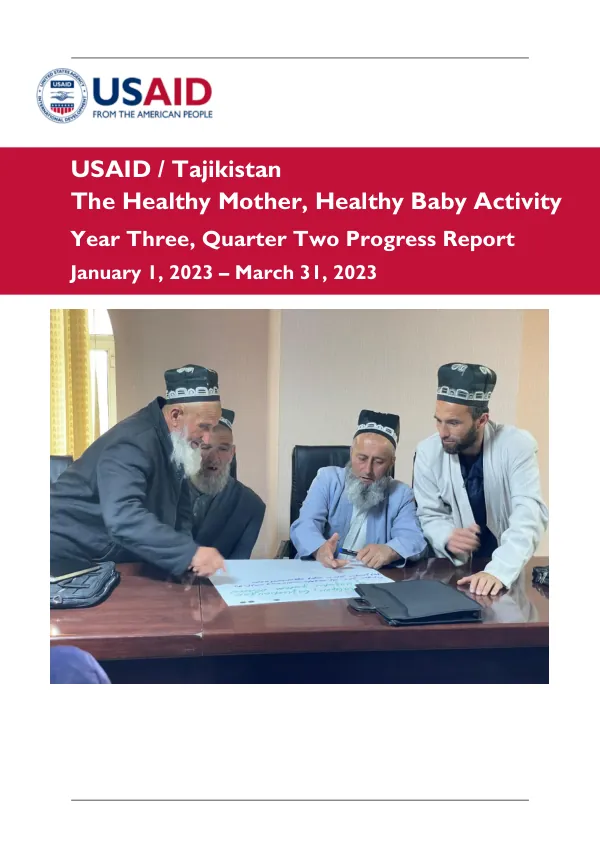
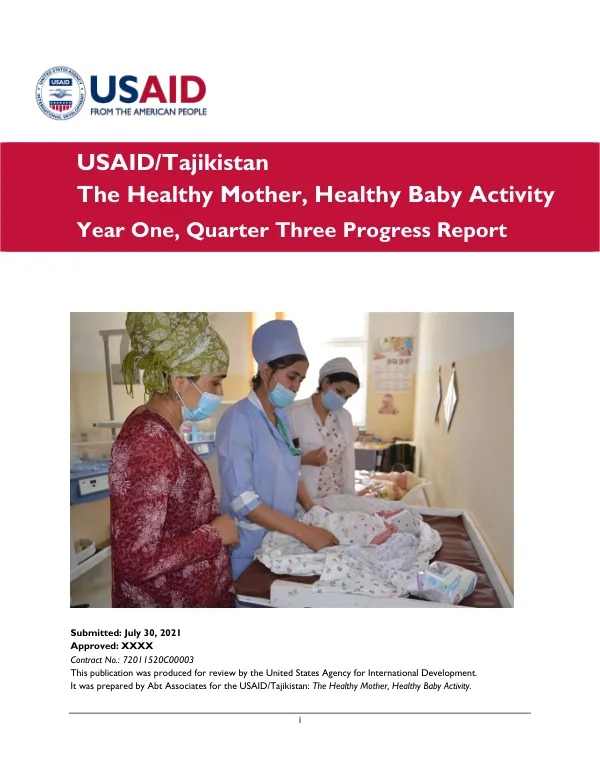
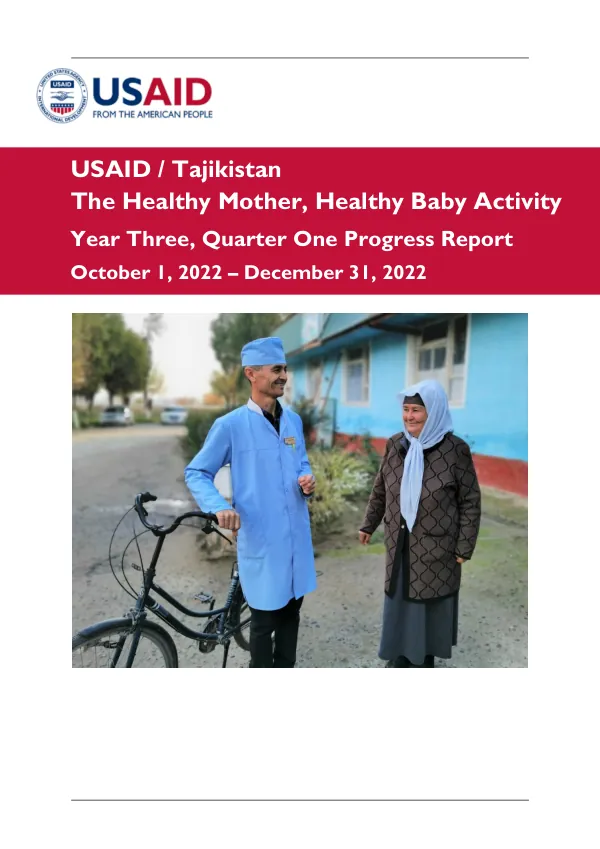
Year Three, Quarter One Progress Report: The Healthy Mother, Healthy Baby Activity
The Healthy Mother, Healthy Baby Activity in Tajikistan is a five-year initiative led by Abt Associates, with a budget of USD 17.3 million, to reduce maternal and child mortality and malnutrition in the 12 western districts of the Khatlon Region.
2023 · 65 pages
Sign in to readA free account is required to download.
Abstract
The activity supports the national strategies to improve health and nutrition for women and children by providing technical and organizational support to strengthen all levels of the health system. In Year Three, Quarter One, the activity achieved several key milestones. The Ministry of Health and Social Protection of the Population (MOHSPP) and the Khatlon District Health Facilities strengthened their collaborative quality improvement (QI) approaches, expanding QI activities and linking them with accreditation. The activity also promoted maternal, newborn, child, and nutrition (MNCH) and nutrition services through support in reviewing, updating, and implementing new clinical protocols and guidelines. The activity improved water, sanitation, and hygiene (WASH) and infection control in facilities, strengthened the capacity of healthcare workers on MNCH and nutrition, and increased the capacity of midwives and nurses through support of national midwives' and nurses' associations. Additionally, the activity supported the introduction of modern continuing medical education (CME) systems through nutrition resource centers. The activity also made progress in improving access, quality, and responsiveness of primary health care (PHC) services, data collection and data analysis skills on MNCH, and creating stronger linkages between levels of health services and engaging communities in quality improvement initiatives. Furthermore, the activity supported the Scaling Up Nutrition (SUN) movement in Tajikistan, the implementation of the Food Fortification Action Plan, and the Government of Tajikistan's National Communication Program – First 1,000 Golden Days. The activity also implemented social and behavior change communication (SBCC) interventions and approaches through large-scale awareness and family (LAF) campaigns to improve health and nutrition during the first 1,000 days. Additionally, the activity applied digital technologies to address anemia and prevent chronic malnutrition, promoted improved budgeting practices and increased decision making, budgeting, and business planning, and used creative, community-level approaches to engage communities and change social norms around selected MNCH and nutrition behaviors. The activity also made progress in monitoring, evaluation, and learning (MEL) and adaptive management, including the digitalization of surveys, midwives' assessment, well-being survey, CME and AMEE support, support to facilitators, and the launch of the MNCH v2&3 application. However, the activity anticipated several challenges, delays, and constraints, including the need for additional resources and support to overcome these challenges. The activity's expenditure for Year Three, Quarter One was reported in the activity's financial reports. The activity's organizational chart and year three work plan timeline are provided in Annex A and Annex B, respectively.