GLOBAL COMMUNITIES
Yemen Communities Stronger Together (YCST) Y1Q1 Report
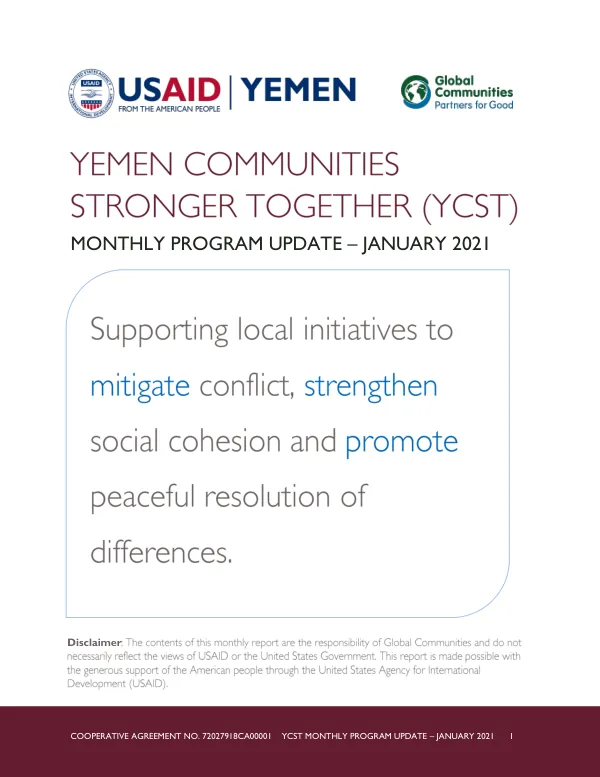
The Yemen Communities Stronger Together (YCST) program is a multi-faceted initiative aimed at mitigating conflict, strengthening social cohesion, and promoting peaceful resolution of differences in Yemen.
2018 · 16 pages
Sign in to readA free account is required to download.
Abstract
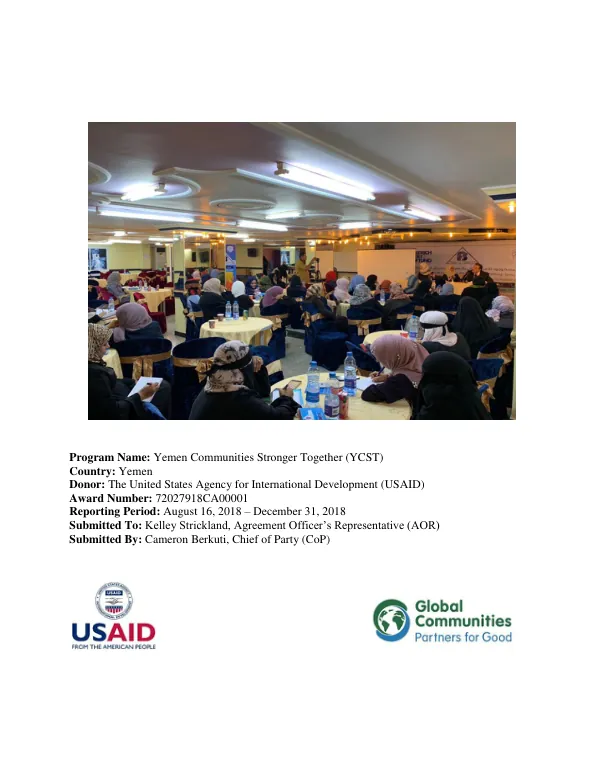
The program is funded by the United States Agency for International Development (USAID) and is implemented by Global Communities, a non-governmental organization with extensive experience in Yemen. The conflict in Yemen is characterized by its complexity and multi-layered nature, with various actors and interests at play. The country's infrastructure, livelihoods, and social services have been severely impacted, leading to decreased resilience among communities and governance systems. Historical divides, including competition over water resources, nutrition standards, and education rates, have contributed to the conflict. YCST's Theory of Change is based on the hypothesis that building local capacity to identify and address conflict stressors and threats to social cohesion will increase the resilience of Yemeni communities and institutions. The program aims to support local-level initiatives that promote peaceful resolution of differences, strengthen social cohesion, and capitalize on stabilization opportunities in Yemen. During the reporting period of August 16, 2018, to December 31, 2018, YCST established offices in both Aden and Sana'a. The program's implementation focused on several key areas, including program support, start-up progress, program performance, coordination and collaboration, and challenges. Program support involved procurement and logistics, human resources, and finance. The program also established sub-agreements with the Ministry of Planning and International Cooperation (MoPIC) in Aden and the National Authority for Management and Coordination for Humanitarian Affairs and Disaster (NAMCHA) in Sana'a. YCST also awarded sub-grants to local organizations and selected targeted communities for the program. The baseline assessment was conducted to establish a foundation for measuring program progress. The assessment aimed to identify the current situation in the target communities, including their needs, capacities, and challenges. The methodology involved focus group discussions, key informant interviews, and household surveys. YCST also engaged in coordination and collaboration with various stakeholders, including peacebuilding and stabilization actors, and participated in the First Feminist Summit. The program faced several challenges, including disruptions in salary payments, lack of public services, and competition for resources such as water. The program's plan for the next quarter focused on finalizing program plans, conducting a midterm evaluation, and implementing program activities. YCST aimed to leverage the legitimacy of traditional leaders to prevent further erosion of social cohesion and the spread of violent conflict. The program also sought to include marginalized groups, such as women, youth, and those who favor southern independence, in the national peace process. Overall, YCST's efforts during the reporting period laid the foundation for a sustainable national peace process and enhanced local-level management of violent conflict in Yemen. The program's focus on building local capacity, promoting peaceful resolution of differences, and strengthening social cohesion is critical to addressing the complex challenges facing Yemen.