USAID
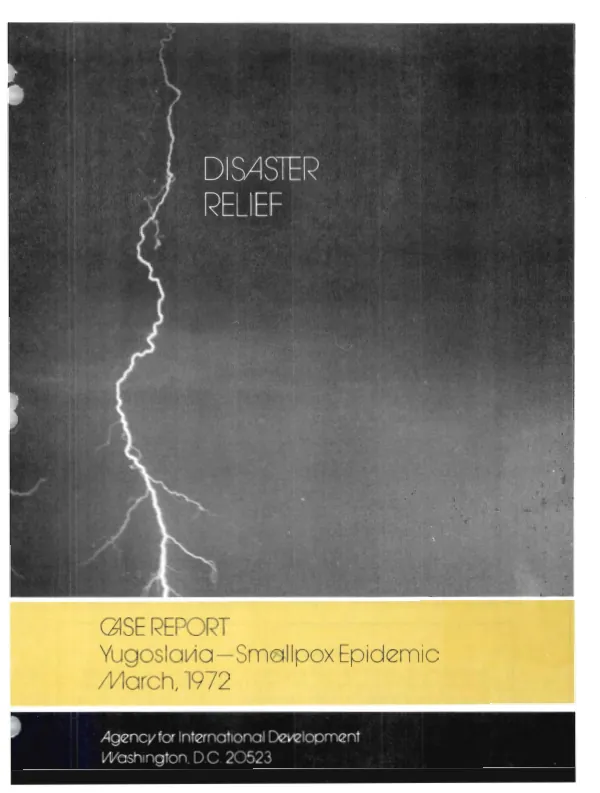
Yugoslov-Smallpox Epidemic
The smallpox epidemic in Yugoslavia began in March 1972, triggered by a group of Yugoslav Moslems who had recently returned from a pilgrimage to Mecca.
2010 · 7 pages
Sign in to readA free account is required to download.
Abstract
The travelers, who had not undergone the required health checks, brought the highly contagious form of smallpox, known as variola major, back to the country. The disease spread rapidly, infecting 174 people and claiming 35 fatalities. The Yugoslav Government authorities were initially unprepared to handle the outbreak, but they quickly moved to contain the epidemic. Health officials from Belgrade and other areas were sent to the affected region, where they implemented a vaccination campaign. However, the initial vaccine used in Kosovo was of low quality and several years old, and the vaccinators were not trained for mass vaccinations. The Yugoslav Government sought assistance from the World Health Organization (WHO) in Geneva and the U.S. Government. The U.S. Government, through its Foreign Disaster Relief Coordinator, responded by providing 3,250,000 doses of smallpox vaccine and 24 jet injector guns. A CDC medical team from the Center for Disease Control in Atlanta, Georgia, was also dispatched to Yugoslavia to assist in the vaccination campaign. The CDC team, consisting of six epidemiologists and one gunsmith, worked closely with the Yugoslav health authorities to implement a mass vaccination campaign. The team trained Yugoslav medical personnel in the use of the jet injector guns, which were used to administer the vaccine. The vaccination campaign was conducted in several provinces, including Kosovo, Belgrade, and others. The total number of vaccinations administered is not known, but it is estimated that over 3,250,000 doses of vaccine were provided by the U.S. Government. The Yugoslav Prime Minister, Dzemal Bijedic, announced on May 10 that the smallpox outbreak had been overcome, and the country was declared free of the disease. The last new case of smallpox was reported on April 12. The U.S. Government's assistance was widely praised by the Yugoslav authorities, who expressed gratitude for the prompt and generous aid provided. The assistance enabled the effective containment of the epidemic, and it had no adverse impact on the country's tourism industry, which is its largest source of foreign exchange. The smallpox epidemic in Yugoslavia was a significant public health crisis that required a swift and effective response. The response was facilitated by the assistance provided by the U.S. Government, which included the provision of vaccine and medical personnel. The epidemic was eventually brought under control, and the country was declared free of the disease. The assistance provided by the U.S. Government was not limited to the provision of vaccine and medical personnel. The CDC team also worked closely with the Yugoslav health authorities to develop a plan for a mass vaccination campaign. The plan was implemented in several provinces, including Kosovo, Belgrade, and others. The U.S. Government provided a total of $5,632.62 in assistance to Yugoslavia to combat the smallpox epidemic. The assistance included the provision of vaccine, medical personnel, and personnel to assist in the implementation of a mass vaccination campaign. The assistance was widely praised by the Yugoslav authorities, who expressed gratitude for the prompt and generous aid provided.
Related documents