Global Waters
Improving Handwashing and Food Hygiene Behaviors for Infant and Young Child Feeding in Rural Malawi
Sign inGLOBAL WATERS
Improving Handwashing and Food Hygiene Behaviors for Infant and Young Child Feeding in Rural Malawi
Hands are central to the fecal-oral contamination pathway, transmitting pathogens from contaminated environments to the mouth through hand contact and the feeding of contaminated foods.
2024
Sign in to readA free account is required to download.
Abstract
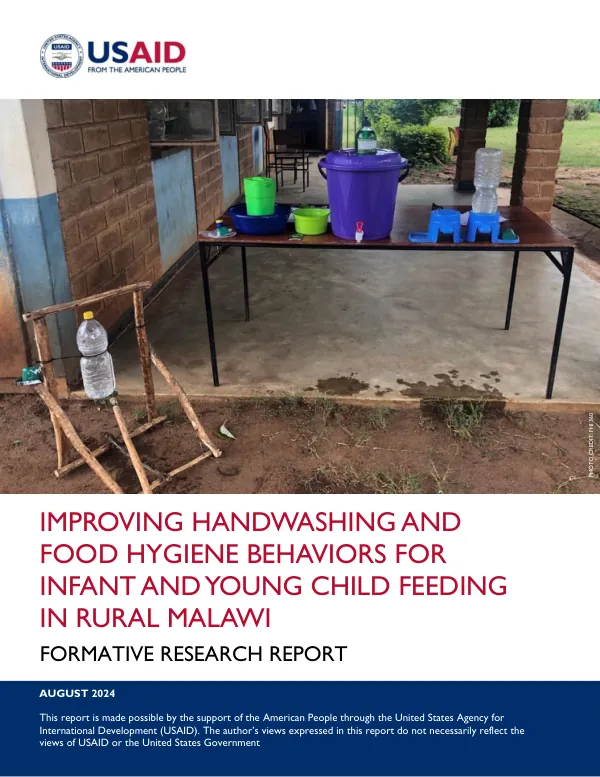
Pathogen consumption from contaminated food causes significant health problems, especially in low-income settings, and children are especially vulnerable when they start consuming complementary foods, around six months of age. This USAID Water, Sanitation, and Hygiene Partnerships and Learning for Sustainability (WASHPaLS) #2 study focused on handwashing (HW) and food hygiene (FH) during complementary feeding, an under-researched area critical to infant and young child (IYC) health, with little existing evidence on effective interventions. The formative research study aimed to identify an acceptable, feasible, and desirable intervention package to support caregivers’ improved performance of HW and FH behaviors concerning preparation and feeding of complementary foods for IYC.
Connected topics