USAID DEC
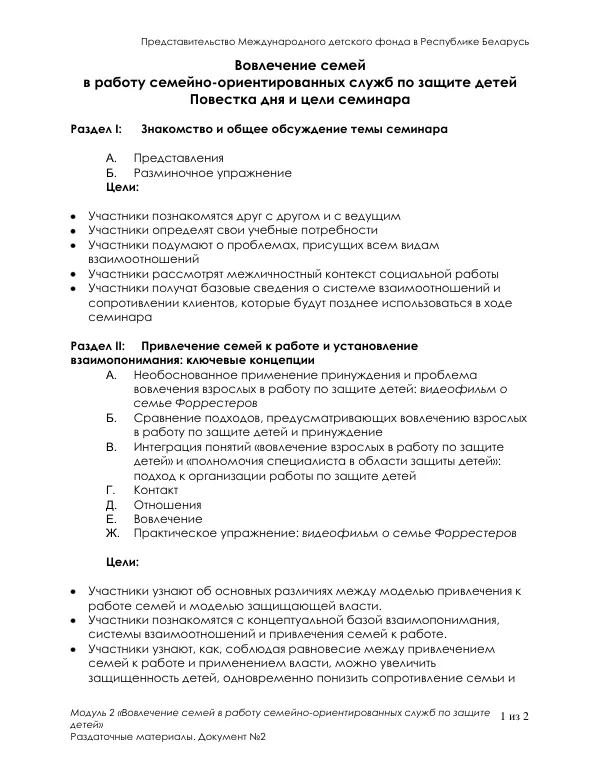
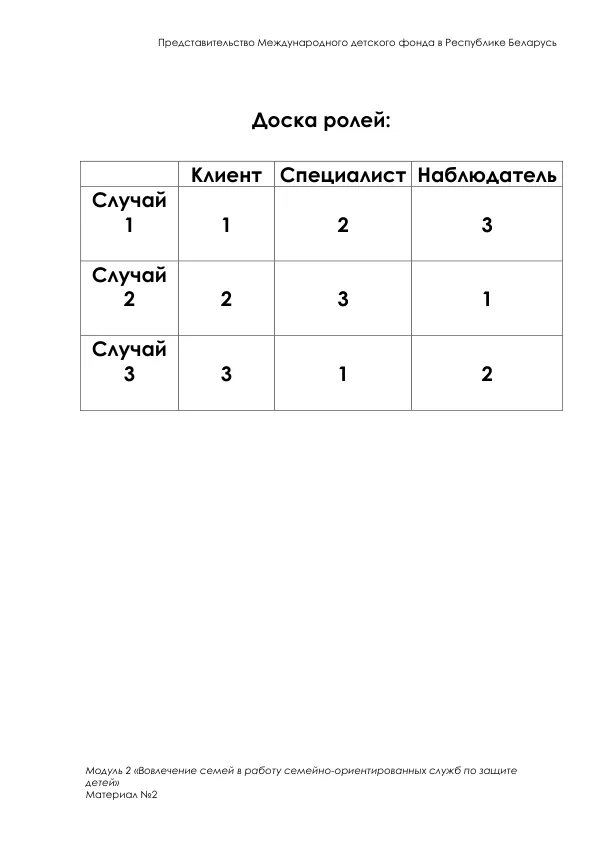
Доска ролей: Модуль 2 «Вовлечение семей в работу семейно-ориентированных служб по защите детей»
Sign inПРЕДСТАВИТЕЛЬСТВО МЕЖДУНАРОДНОГО ДЕТСКОГО ФОНДА В РЕСПУБЛИКЕ БЕЛАРУСЬ
Доска ролей: Модуль 2 «Вовлечение семей в работу семейно-ориентированных служб по защите детей»
The Family Strengthening Program in Belarus is a key component of the International Children's Fund's efforts to support vulnerable families.
1 pages
Sign in to readA free account is required to download.
Abstract
The program focuses on engaging families in the work of family-oriented child protection services. A critical aspect of this initiative is the development of family-centered approaches that prioritize the needs and strengths of families. A key tool in this effort is the "Doska Roli" or "Role Board," a visual representation of the roles and responsibilities of various stakeholders involved in the child protection process. The Role Board is designed to facilitate communication and collaboration among family members, service providers, and other stakeholders. The board typically includes three key roles: the Client, the Specialist, and the Observer. In the context of the Family Strengthening Program, the Client is the family member or caregiver who is seeking support and services. The Specialist is the trained professional who provides guidance, counseling, and support to the family. The Observer is a neutral third party who provides an objective perspective and helps to facilitate the decision-making process. The Role Board is used to map out the relationships and interactions between these stakeholders in specific cases. For example, in Case 1, the Client is the primary caregiver, the Specialist is the social worker, and the Observer is the family's advocate. In Case 2, the Client is the child, the Specialist is the therapist, and the Observer is the teacher. In Case 3, the Client is the family member, the Specialist is the counselor, and the Observer is the community leader. The use of the Role Board in the Family Strengthening Program is designed to promote a more collaborative and family-centered approach to child protection. By visualizing the roles and relationships between stakeholders, service providers can better understand the needs and strengths of families and develop more effective support strategies. This approach has the potential to improve outcomes for vulnerable children and families in Belarus.
Related documents