USAID DEC
Методы проведения расследований в семейно-ориентированной социальной работе по защите детей
Sign inПРЕДСТАВИТЕЛЬСТВО МЕЖДУНАРОДНОГО ДЕТСКОГО ФОНДА В РЕСПУБЛИКЕ БЕЛАРУСЬ
Методы проведения расследований в семейно-ориентированной социальной работе по защите детей
The purpose of the document is to provide a comprehensive guide on conducting investigations in family-oriented social work for child protection.
3 pages
Sign in to readA free account is required to download.
Abstract
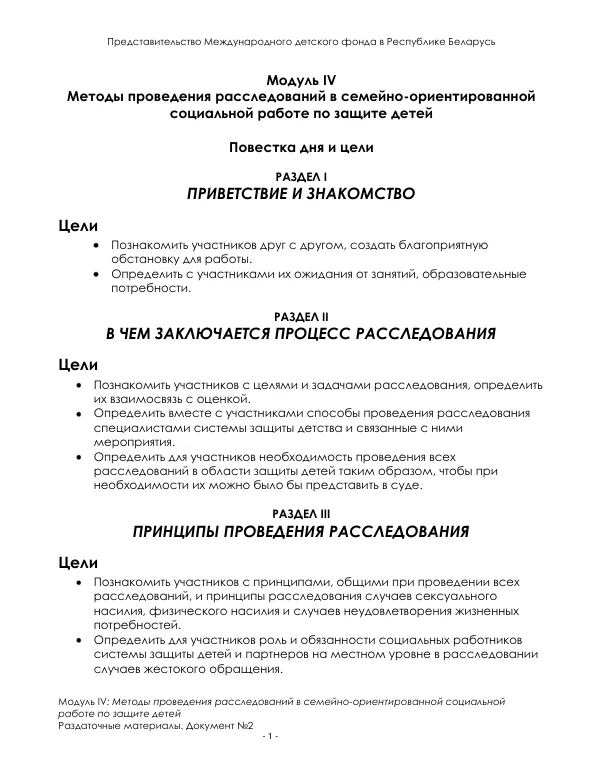
The document is divided into six sections, each focusing on a specific aspect of the investigation process. The first section, "Welcome and Introduction," aims to familiarize participants with each other and create a conducive environment for work. It also seeks to identify participants' expectations and educational needs. The second section, "What is Included in the Investigation Process," introduces participants to the objectives and tasks of the investigation, as well as its relationship with assessment. It also involves participants in determining the methods of conducting investigations by specialists in child protection and related measures. The third section, "Principles of Conducting Investigations," acquaints participants with the principles common to all investigations and those specific to cases of sexual violence, physical violence, and neglect. It also clarifies the roles and responsibilities of social workers in child protection systems and local partners in investigating cases of child abuse. The fourth section, "Planning an Investigation," introduces participants to the conditions that need to be considered when planning an investigation, including the necessary information, who should be present, where the interview should take place, how to ensure the child's safety, and how to plan the social worker's safety. It also familiarizes participants with the complementary roles of team members during the investigation process and the importance of documenting interviews. The fifth section, "Conducting an Investigation," introduces participants to the characteristics common to all types of investigations. It also acquaints participants with specific characteristics of investigations into physical violence, sexual violence, and neglect. Additionally, it introduces participants to methods of conducting investigations that can justify them from a legal perspective. Participants are also involved in identifying the tasks and questions that need to be considered during an interview with the affected child, the second parent, and the alleged perpetrator. The sixth and final section, "Planning Further Actions, Evaluation, and Seminar Completion," aims to identify with participants the areas in which they require further practice and assistance.
Related documents