ELIZABETH GLASER PEDIATRIC AIDS FOUNDATION
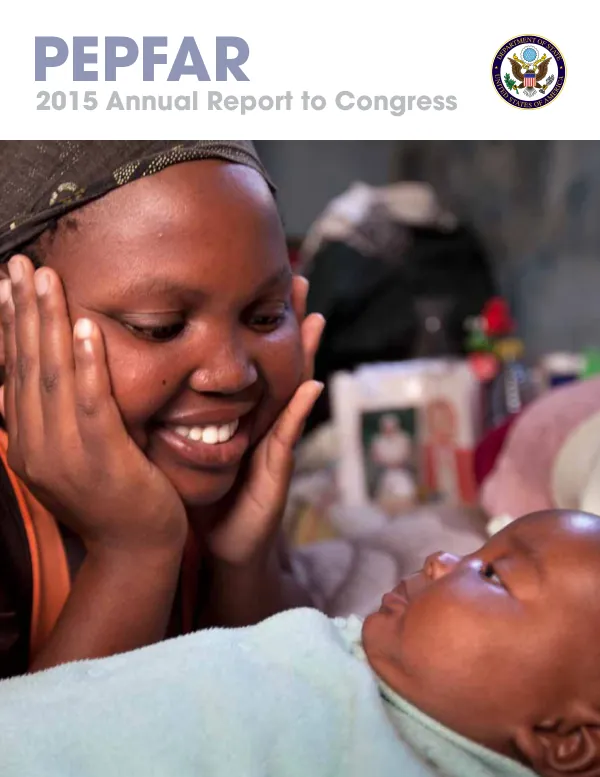
2015 Annual Report to Congress
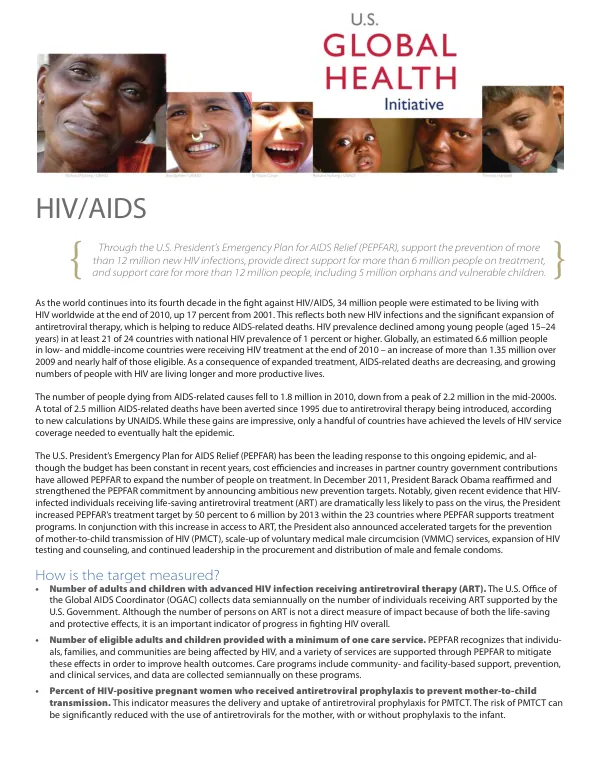
The President's Emergency Plan for AIDS Relief (PEPFAR) was established in 2003 as a response to the devastating impact of HIV/AIDS on families and communities worldwide.
2015 · 30 pages
Sign in to readA free account is required to download.
Abstract
The initiative was a catalyst for investment and collaboration across communities and among nations, driven by the leadership of President George W. Bush and the U.S. Congress. PEPFAR's historic investment has yielded an extraordinary return, saving millions of lives and preventing millions more HIV infections through lifesaving prevention, care, and treatment services. PEPFAR has kept over a million babies from being born with HIV and provided compassionate care and support for millions of AIDS orphans and vulnerable children. The initiative has built infrastructure, strengthened local health systems, and provided invaluable lessons and experience that will inform and improve responses to unforeseen health crises in the future. PEPFAR's impact far exceeds the reduction of suffering, death, and despair caused by one disease, demonstrating the compassion of the American people and becoming an iconic brand of U.S. government engagement in health, development, and diplomacy. The initiative's contribution to ending the HIV/AIDS epidemic is far from over. President Barack Obama emphasized the need for continued leadership and commitment, stating that no other country has done more than the United States to combat the disease. The hard-won gains of the last decade can easily be lost without increased and focused commitment and thoughtful stewardship of investments to ensure maximum impact. PEPFAR has the knowledge, tools, and experience needed to achieve the dream of an AIDS-free generation. PEPFAR's support has been applied to individual- and site-based indicators, with a focus on core, near-core, and non-core activities. The initiative has transformed the global landscape of HIV/AIDS, halting the relentless escalation of new infections and climbing mortality rates. PEPFAR has provided life-saving medicines, built and strengthened the capacity of country-specific responses, and fostered collaboration among the U.S. government, key global partners, and national governments around the world. The initiative has also provided hope, healing, and the possibility of health and life in place of sickness, suffering, and death. PEPFAR has been instrumental in changing lives and saving lives, thanks to ongoing generous support from the U.S. Congress and the strong commitments of both the Bush and Obama administrations. The initiative remains the largest commitment in history by any nation to combat a single disease, demonstrating the power of collective action and the importance of continued investment in global health and development. In 2003, HIV/AIDS was devastating families and communities worldwide, with disastrous social and economic consequences. The reports from those on the front lines of the epidemic were fraught with despair, and gains in global health and development were being lost. Infant mortality doubled, child mortality tripled, and the relentless escalation of new infections and climbing mortality rates threatened to overwhelm healthcare systems. However, PEPFAR's historic investment has helped to turn the tide, providing life-saving medicines, building and strengthening local health systems, and fostering collaboration among governments, partners, and grassroots organizations. The initiative's impact has been felt across the globe, with significant reductions in new HIV infections and AIDS-related deaths. PEPFAR has also made significant strides in prevention of mother-to-child transmission (PMTCT), voluntary medical male circumcision (VMMC), and treatment coverage. The initiative's geographic refocusing has also led to improved health outcomes in key countries, including Kenya, where PMTCT and VMMC programs have shown significant success. PEPFAR's evaluation standards of practice emphasize the importance of rigorous monitoring and evaluation to ensure the effectiveness and efficiency of programs. The initiative's commitment to transparency and accountability has helped to build trust and credibility with partners and stakeholders. As PEPFAR continues to evolve and adapt to changing global health needs, its legacy as a catalyst for investment and collaboration will endure, inspiring future generations to work towards a world free from the scourge of HIV/AIDS.