USAID DEC
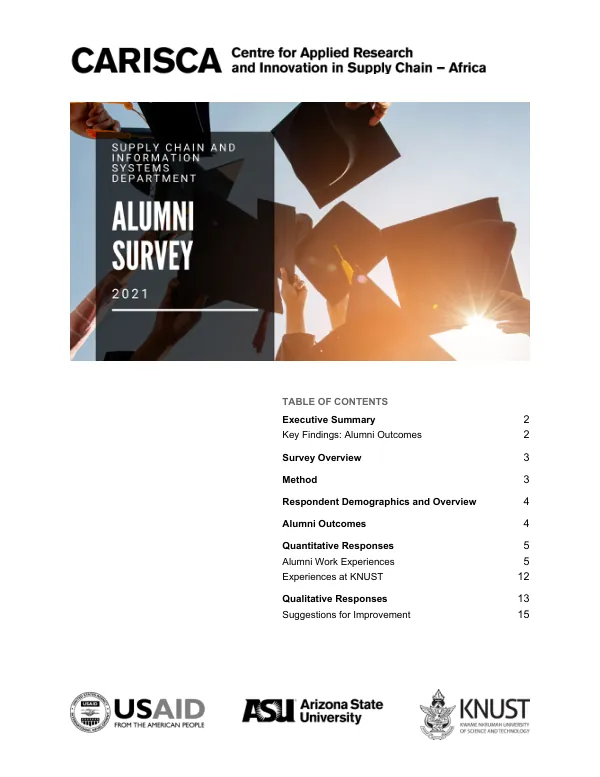
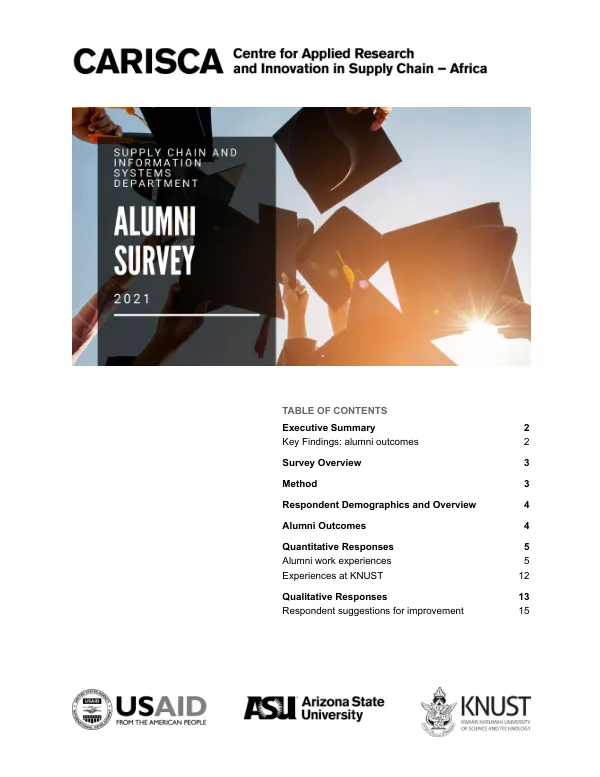
2021 Supply Chain Management Alumni Survey
The Supply Chain and Information Systems program at KNUST in Ghana has a strong track record of preparing students for successful careers in the workforce.
2021 · 17 pages
Sign in to readA free account is required to download.
Abstract
According to the 2021 Alumni Survey, 69% of graduates work at least 31 hours per week, and 88% are employed full-time, with 35 hours or more per week. Additionally, 79% of alumni are in leadership roles, and 30% have been promoted since starting their job. The survey also found that 78% of alumni believe their job is closely related to their studies at KNUST, with 19% saying it is somewhat related. Furthermore, 79% of graduates reported that their degree prepared them for their present job in the workforce. The most important skills and knowledge learned at KNUST, according to alumni, are critical thinking skills, subject matter expertise, ability to work in teams and independently, and leadership and management skills. In terms of work experience, 30% of employed alumni participated in an internship with their company, and 30% have been promoted since starting their job. The majority of graduates, 99%, work in Ghana, with the remaining 1% working in Zambia. The sectors in which alumni work include private sector, government agency, educational institution, medical institution, NGO, oil and gas, and mining. The survey also highlighted the importance of hands-on learning experiences for KNUST students. Alumni expressed a desire for more supportive instruction and hands-on learning opportunities, including internships, applied projects, field trips, and better linkages to industry. They also emphasized the need for more mentorship and networking opportunities. The KNUST Supply Chain and Information Systems program has a strong reputation for producing graduates who are well-prepared for the workforce. The program's focus on practical skills and knowledge, as well as its emphasis on leadership and management skills, has contributed to the success of its graduates. However, there is still room for improvement, particularly in terms of providing more hands-on learning experiences and better linkages to industry. The survey's findings suggest that KNUST's Supply Chain and Information Systems program is well-positioned to meet the needs of the Ghanaian workforce. The program's strong reputation and high job placement rates are a testament to its effectiveness. However, the program's administrators should consider the alumni's suggestions for improvement, particularly in terms of providing more hands-on learning experiences and better linkages to industry. The survey's results also highlight the importance of ongoing evaluation and assessment of the program's effectiveness. By continuing to survey alumni and gather feedback, KNUST can ensure that its Supply Chain and Information Systems program remains relevant and effective in preparing students for successful careers in the workforce.
Related documents