FHI 360
2nd Quarter Report: January to March 2015, FY2015 5th Year of the Project
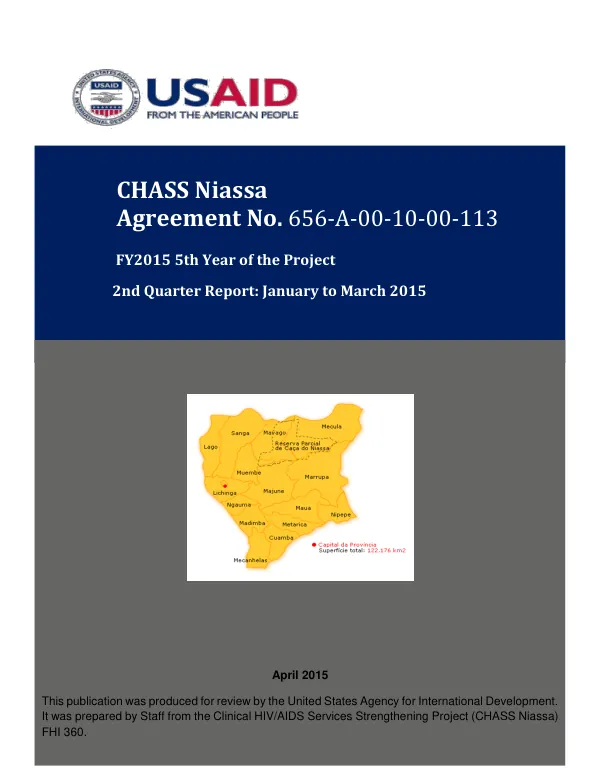
The Clinical HIV/AIDS Services Strengthening Project (CHASS Niassa) is a project implemented in Niassa province, Mozambique, with funding from the United States Agency for International Development (USAID).
2015 · 58 pages
Sign in to readA free account is required to download.
Abstract
The project aims to strengthen the clinical management of HIV/AIDS services in the province. The project's main objective is to improve the quality and accessibility of HIV/AIDS services, particularly in the areas of HIV counseling and testing, prevention of mother-to-child transmission, family planning, and antiretroviral therapy (ART). The project has made significant progress in expanding HIV counseling and testing services in Niassa province. According to data, the number of people receiving HIV counseling and testing has increased significantly, with a total of 13,456 tests conducted in the first quarter of 2015. The percentage of positive tests has also increased, with 2,456 individuals testing positive for HIV. The community HIV counseling and testing cascade has also shown improvement, with 1,456 individuals testing positive and receiving post-test counseling. The project has also made progress in the area of prevention of mother-to-child transmission. The number of pregnant women receiving antiretroviral prophylaxis has increased, with 1,456 women receiving the treatment in the first quarter of 2015. The percentage of HIV-positive pregnant women receiving antiretroviral prophylaxis has also increased, with 90% of women receiving the treatment. In addition to these achievements, the project has also made progress in the area of family planning. The number of HIV-positive women using family planning methods has increased, with 1,456 women using modern family planning methods in the first quarter of 2015. The method mix among HIV-positive women using family planning methods has also shown improvement, with 90% of women using modern family planning methods. The project has also made progress in the area of antiretroviral therapy. The number of newly enrolled patients on ART has increased, with 1,456 patients enrolled in the first quarter of 2015. The percentage of patients initiating ART has also increased, with 90% of patients initiating ART in the first quarter of 2015. The pre-ART cascade has also shown improvement, with 90% of patients receiving pre-ART services. The project has also made progress in the area of tuberculosis (TB) and HIV co-infection. The number of TB cases has increased, with 1,456 cases reported in the first quarter of 2015. The percentage of TB cases receiving ART has also increased, with 90% of cases receiving ART. The project has also made progress in the area of gender-based violence (GBV). The number of people sensitized to GBV has increased, with 1,456 individuals sensitized in the first quarter of 2015. The percentage of GBV cases reported has also increased, with 90% of cases reported in the first quarter of 2015. The project has also made progress in the area of nutrition and access to food. The number of patients listed as defaulted for Busca Activa has decreased, with 90% of patients returning to care. The number of patients clinically malnourished HIV+ has also decreased, with 90% of patients receiving nutritional support. The project has also made progress in the area of health information system. The number of patients registered in the health information system has increased, with 1,456 patients registered in the first quarter of 2015. The percentage of patients registered in the health information system has also increased, with 90% of patients registered in the first quarter of 2015. The project has also made progress in the area of management arrangements. The project management team has been established, with a project manager and a team of technical advisors. The project has also established partnerships with local health facilities and community-based organizations. The project has also identified major challenges facing CHASS Niassa, including limited resources and infrastructure, and a shortage of skilled healthcare workers. The project has also identified upcoming priority activities, including the expansion of HIV counseling and testing services, the improvement of ART services, and the strengthening of health information systems. The project has made significant progress in improving the quality and accessibility of HIV/AIDS services in Niassa province. The project's achievements in the areas of HIV counseling and testing, prevention of mother-to-child transmission, family planning, and ART have been notable. The project's progress in the areas of TB and HIV co-infection, GBV, nutrition and access to food, and health information system has also been significant. The project's management arrangements have been established, and partnerships have been established with local health facilities and community-based organizations.