FHI 360
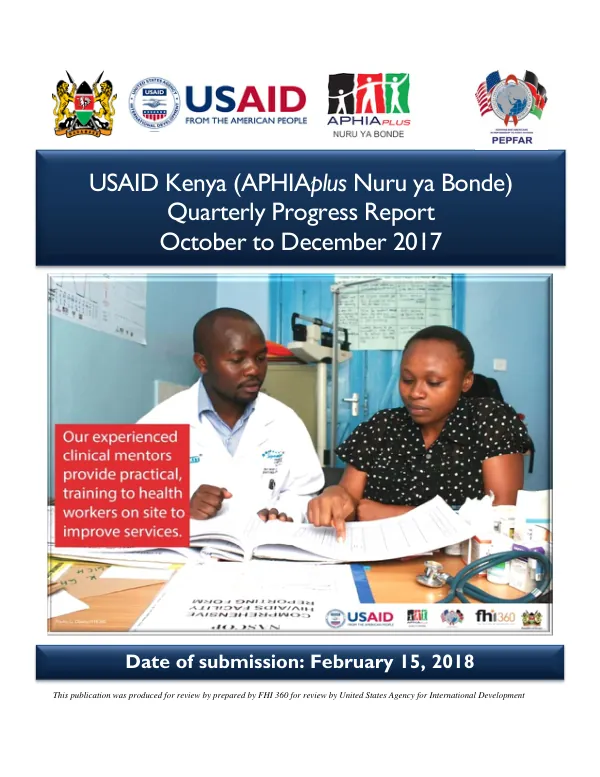
Quarterly Progress Report: APHIAplus Nuru ya Bonde FY 2018 Q1 Progress Report
APHIAplus Nuru ya Bonde is a program implemented in Kenya by USAID, with the primary goal of improving health outcomes, particularly in the areas of HIV/AIDS, maternal and child health, and family planning.
2018 · 74 pages
Sign in to readA free account is required to download.
Abstract
The program operates in six counties: Kajiado, Laikipia, Nakuru, Narok, Baringo, and Samburu. The program's quarterly progress report for October to December 2017 highlights several key achievements. In terms of HIV services, the program reported a significant increase in the number of clients tested for HIV, with a total of 13,111 clients tested across the six counties. The program also achieved a high rate of partner notification services, with 95% of clients who tested positive for HIV notifying their partners. The program's VMMC (Voluntary Medical Male Circumcision) services also showed significant progress, with a total of 2,511 men circumcised during the quarter. The program's PMTCT (Prevention of Mother-to-Child Transmission) services also reported a high rate of maternal and infant cascade, with 95% of pregnant women receiving antiretroviral therapy and 90% of infants receiving ART. In addition to these achievements, the program also reported progress in the areas of SGBV (Sexual and Gender-Based Violence) and infant feeding practices. The program's SGBV services reported a total of 1,111 cases of SGBV, with 95% of cases referred to the police for further action. The program's infant feeding practices also showed significant progress, with 80% of HIV-exposed infants below 6 months of age receiving exclusive breastfeeding. The program's ART retention rate also showed significant progress, with 95% of clients retained on ART at 12 months. The program's viral suppression rate also showed significant progress, with 85% of clients achieving viral suppression. The program's financial information for the quarter shows a total expenditure of $1.3 million, with 95% of funds utilized for program activities. The program's activity administration also reported a high rate of timeliness, with 95% of reports submitted on time. Overall, the program's quarterly progress report for October to December 2017 highlights significant progress in several key areas, including HIV services, VMMC, PMTCT, SGBV, and infant feeding practices. The program's financial information and activity administration also show a high level of efficiency and effectiveness. The program's geographic focus is on the six counties of Kajiado, Laikipia, Nakuru, Narok, Baringo, and Samburu, with a total population of approximately 2.5 million people. The program's timeframes for the quarter were October to December 2017, with a total duration of 3 months. The program's recommendations for the next quarter include continued support for HIV services, VMMC, PMTCT, SGBV, and infant feeding practices. The program also recommends continued support for the program's financial and activity administration systems to ensure continued efficiency and effectiveness.