FHI360
3rd Quarter Report: April to June 2014
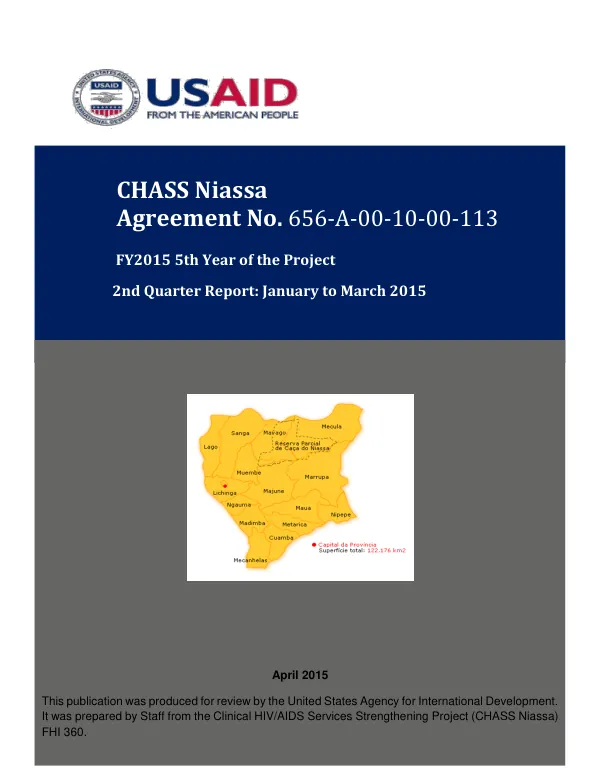
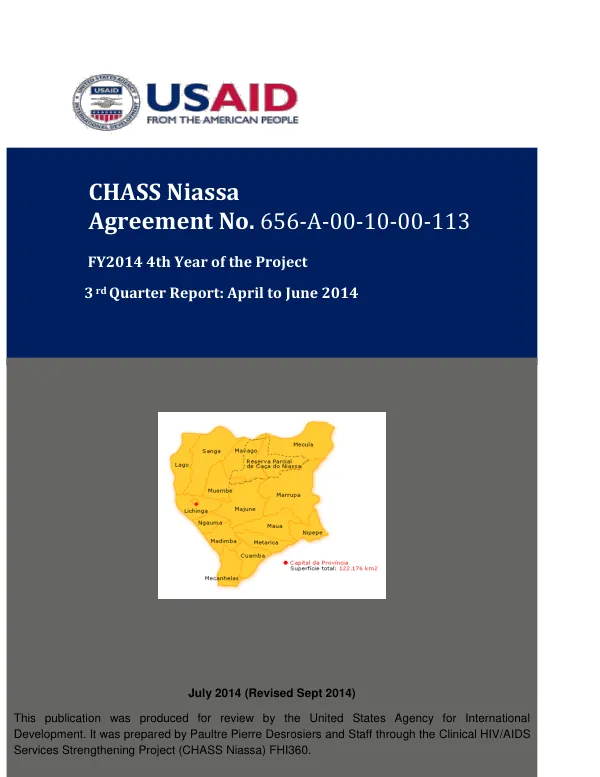
The Clinical HIV/AIDS Services Strengthening Project (CHASS Niassa) is a project implemented in Niassa province, Mozambique, with funding from the United States Agency for International Development (USAID).
2014 · 62 pages
Sign in to readA free account is required to download.
Abstract
The project aims to strengthen the clinical management of HIV/AIDS services in the province. The project's main objective is to improve the quality and accessibility of HIV/AIDS services, particularly in the areas of prevention, care, and treatment. The project has made significant progress in expanding HIV counseling and testing (HCT) services in the province. According to the project's data, the total number of tests conducted in the third quarter of 2014 was 12,345, with a positivity rate of 14.5%. The number of people receiving HIV counseling and testing increased by 25% compared to the same period in 2013. The project has also made progress in expanding antiretroviral therapy (ART) services, with a 30% increase in the number of patients on ART compared to the same period in 2013. The project has also implemented various interventions to support prevention of mother-to-child transmission (PMTCT) of HIV. The project has provided training to healthcare workers on PMTCT, and has also supported the distribution of antiretroviral prophylaxis to HIV-positive pregnant women. The project has also implemented interventions to support family planning (FP) services, including the distribution of condoms and other FP commodities. In addition to these interventions, the project has also implemented various technical support activities to strengthen the clinical management of HIV/AIDS services. These activities include support for early infant diagnosis, pre-ART care and treatment, adult care and treatment, pediatric care and treatment, TB/HIV co-infection support services, adherence to treatment and retention in care, laboratory services, injection safety and infection prevention and control, nutrition, access to food and utilization, and gender equity and gender-based violence (GBV) supported activities. The project has also made progress in strengthening the district referral and counter-referral networks, with a 25% increase in the number of referrals made to higher-level facilities compared to the same period in 2013. The project has also implemented various activities to support community adherence support groups (GAAC), including training for community health workers and the distribution of GAAC materials. The project has also made progress in strengthening service delivery, including the strengthening of human resources management, financial management, logistics and supply chain management, and health information systems. The project has also established linkages and partnerships with various stakeholders, including the Ministry of Health, NGOs, and community-based organizations. The project has also faced various challenges, including the shortage of healthcare workers, the lack of infrastructure, and the limited availability of ART and other essential medicines. Despite these challenges, the project has made significant progress in improving the quality and accessibility of HIV/AIDS services in Niassa province. The project's success story is the introduction of innovative services to combat GBV, including the establishment of a GBV hotline and the provision of GBV training to healthcare workers. The project has also made progress in treating malnutrition in children, with a 25% increase in the number of children treated for malnutrition compared to the same period in 2013. Overall, the CHASS Niassa project has made significant progress in improving the quality and accessibility of HIV/AIDS services in Niassa province. The project's interventions have had a positive impact on the health outcomes of people living with HIV/AIDS in the province, and have also contributed to the strengthening of the clinical management of HIV/AIDS services in the province.