USAID
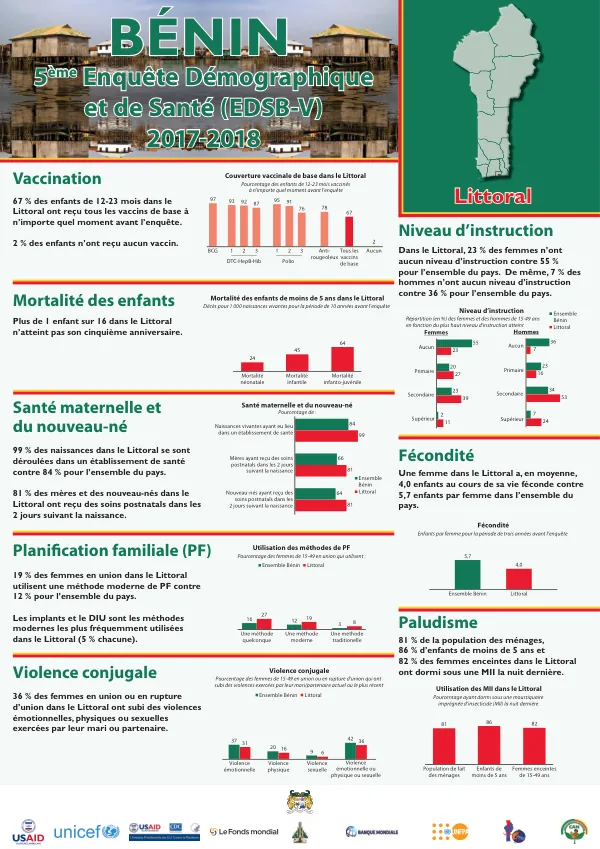
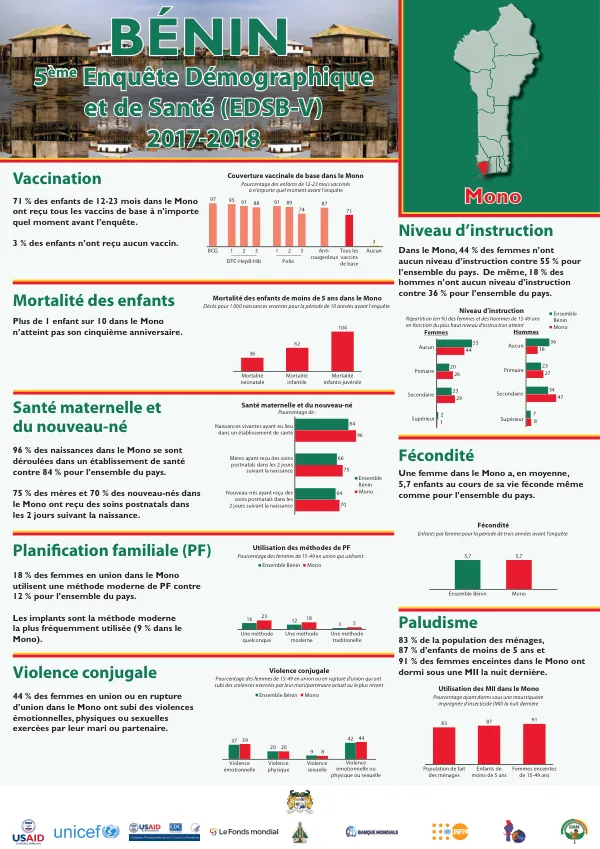
5ème Enquête Démographique et de Santé (EDSB-V) 2017-2018
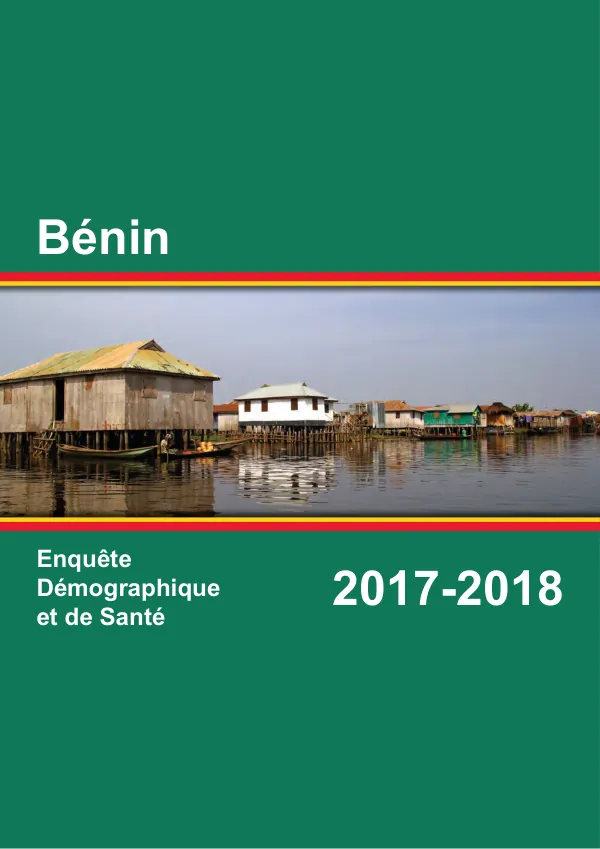
The 5th Demographic and Health Survey (EDSB-V) in Benin was conducted between 2017 and 2018.
2018 · 1 pages
Sign in to readA free account is required to download.
Abstract
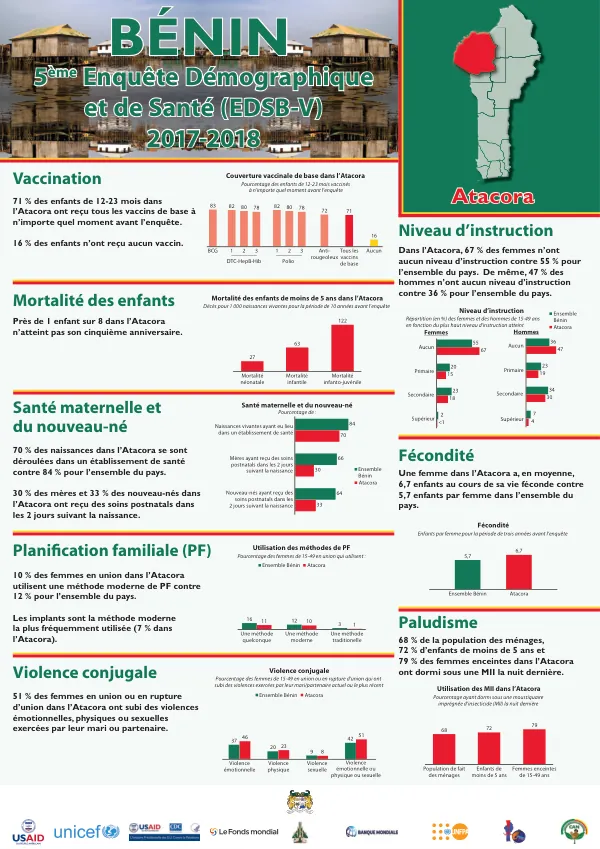
The survey focused on the Atacora region, which is one of the departments in Benin. The region has a unique set of demographic and health indicators that differ from the national average. In the Atacora region, 12% of women in union use a modern method of family planning (PF), compared to 16% for the entire country. The most commonly used modern method is the implant, with 7% of women in the Atacora region using this method. In contrast, 67% of women in the Atacora region have no formal education, compared to 55% for the entire country. The survey also found that 71% of children aged 12-23 months in the Atacora region have received all basic vaccinations at some point before the survey. However, 16% of children in the region have not received any vaccinations. Furthermore, nearly 1 in 8 children in the Atacora region do not reach their fifth birthday. In terms of maternal and child health, 70% of births in the Atacora region took place in a healthcare facility, compared to 84% for the entire country. Additionally, 30% of mothers and 33% of newborns in the Atacora region received postnatal care within two days of birth. The survey also highlighted the issue of violence against women in the Atacora region. 51% of women in union or in a relationship in the region have experienced emotional, physical, or sexual violence at the hands of their partner or spouse. In terms of household and child health, 68% of households, 72% of children under the age of 5, and 79% of pregnant women in the Atacora region slept under a bed net the night before the survey. The average woman in the Atacora region has 6.7 children throughout her reproductive life, compared to 5.7 children per woman for the entire country. The survey also found that the coverage of basic vaccinations in the Atacora region is lower than the national average. For example, only 83% of children aged 12-23 months in the region have received the BCG vaccine, compared to 92% for the entire country. Overall, the survey highlights the unique demographic and health challenges faced by the Atacora region in Benin. The region has lower levels of education, vaccination coverage, and maternal and child health outcomes compared to the national average. Addressing these challenges will be crucial to improving the health and well-being of the population in the Atacora region.
Related documents