USAID
5ème Enquête Démographique et de Santé (EDSB-V) 2017-2018
The 5th Demographic and Health Survey (EDSB-V) in Benin was conducted between 2017 and 2018.
2018 · 1 pages
Sign in to readA free account is required to download.
Abstract
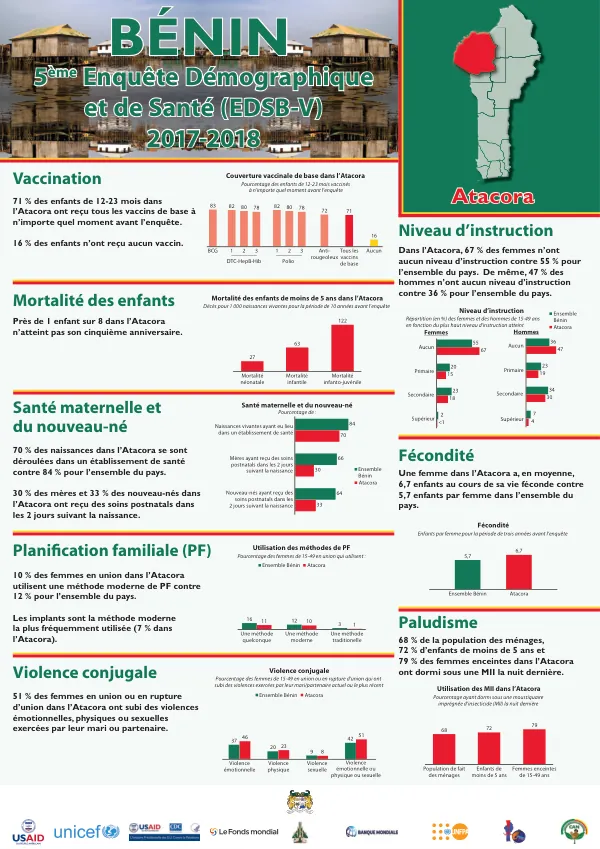
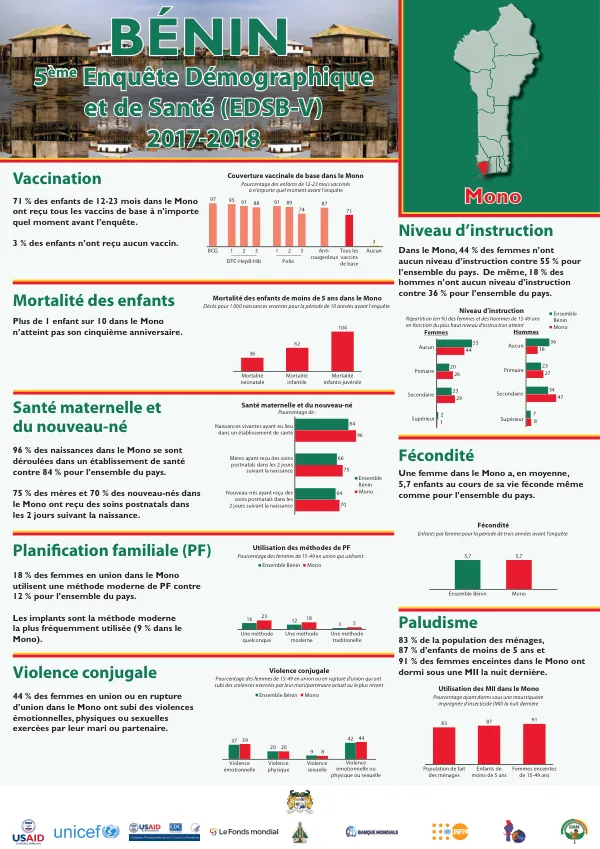
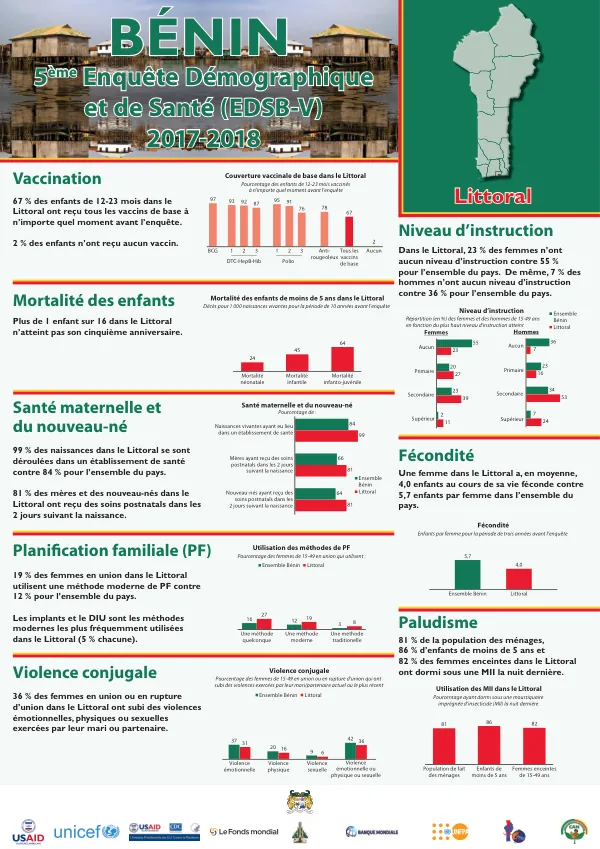
The survey focused on the Littoral region, which showed distinct disparities in various health and demographic indicators compared to the national average. In the Littoral, 19% of women in a union used a modern family planning method, significantly lower than the 12% national average. Implants and intrauterine devices (IUDs) were the most frequently used modern methods in the Littoral, with 5% of women using each. The Littoral region had a higher percentage of women with no formal education, at 23%, compared to the national average of 55%. Similarly, 7% of men in the Littoral had no formal education, whereas the national average was 36%. The vaccination coverage in the Littoral was relatively high, with 67% of children aged 12-23 months having received all basic vaccines at some point before the survey. However, 2% of children in the Littoral had not received any vaccinations. The Littoral region had a higher percentage of children who did not reach their fifth birthday, with more than one child in 16 not surviving to this age. In contrast, 99% of births in the Littoral took place in a healthcare facility, significantly higher than the national average of 84%. Furthermore, 81% of mothers and newborns in the Littoral received postnatal care within two days of birth. The survey also highlighted the prevalence of violence against women in the Littoral. 36% of women in a union or in a relationship had experienced emotional, physical, or sexual violence from their partner. The region also had a higher mortality rate among children under five, with 24 deaths per 1,000 live births over the 10-year period preceding the survey. In terms of education, the Littoral region had a lower percentage of women and men with secondary or higher education compared to the national average. The average number of children per woman in the Littoral was 4.0, significantly lower than the national average of 5.7. The survey also found that 81% of households, 86% of children under five, and 82% of pregnant women in the Littoral slept under an insecticide-treated bed net the previous night.
Related documents