USAID DEC
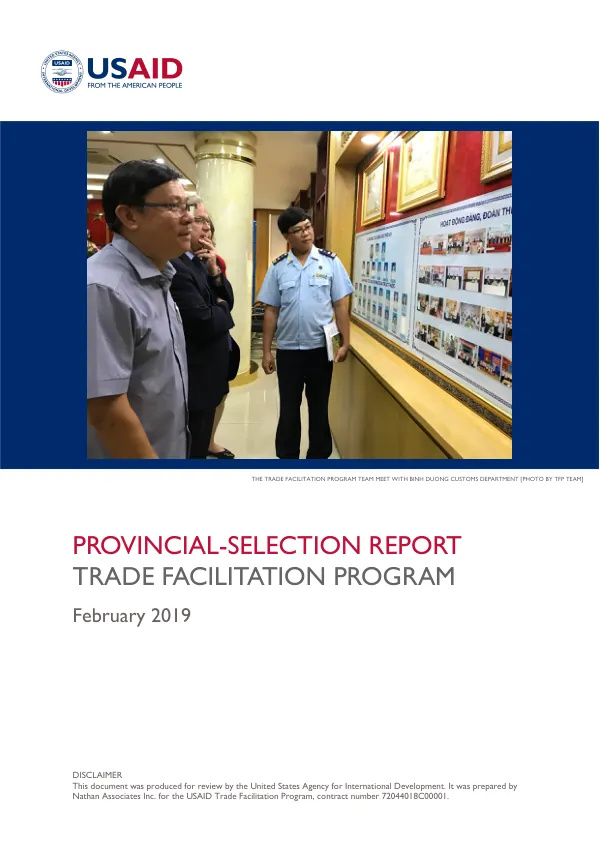
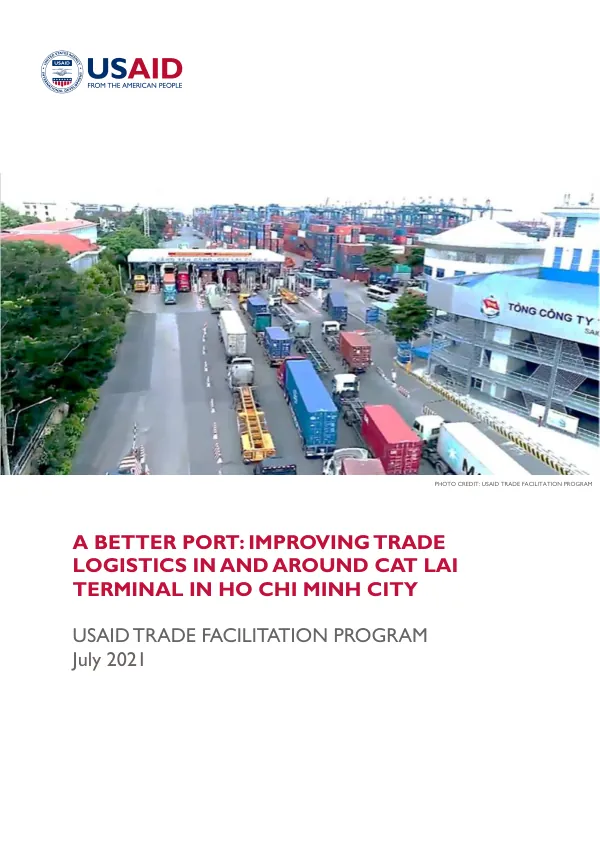
A Better Port: Improving Trade Logistics in and Around Cat Lai Terminal in Ho Chi Minh City
Sign inBANK FOR WEST AFRICAN DEVELOPMENT
A Better Port: Improving Trade Logistics in and Around Cat Lai Terminal in Ho Chi Minh City
The United States Agency for International Development's (USAID) Trade Facilitation Program is a five-year project that supports Vietnam's adoption and implementation of a risk management approach to customs in accord with the World Trade Organization's Trade Facilitation Agreement.
2021 · 217 pages
Sign in to readA free account is required to download.
Abstract
The Program is working with the General Department of Vietnam Customs (GDVC), other government agencies, and the private sector to enable Vietnam to implement WTO TFA commitments. The efficient movement of commerce is vital to Vietnam's economic competitiveness. About 44 million jobs, or just over 79 percent of Vietnam's workforce, depend on freight. The movement of freight impacts employment across many industry sectors from manufacturing, mining, and agriculture to construction, wholesale, and retail trades, representing 57 percent of Vietnam's economy. Freight transport systems connect factories, stores, and consumers to global markets around the world, with Vietnam's ports, airports, highways, pipelines, and rails moving 315.2 million tons of international freight valued at $518 billion per year. Cat Lai, a mid-size port on the Soai Rap River, is a crucial port for international trade, despite being too small to berth deep water ships. Although a reasonably well-functioning port, Cat Lai faces imminent challenges that threaten to overwhelm the port and dampen economic activity throughout the region. The Cai Mep and Cat Lai port system is in the midst of a transformation, driven by changing shipping practices and cargo growth. To ensure a bright future for Cat Lai and the trading system in which it operates, USAID, in close collaboration with GDVC, has undertaken in-depth analysis to present top recommendations for solving the problems of Cat Lai. The report has identified four primary challenges threatening the stability and effectiveness of Cat Lai. The first challenge is street congestion around the port, caused by the large number of trucks arriving at the Cat Lai terminal every day. On average, 16,400 trucks arrive at the Cat Lai terminal every day, with trucks waiting two to three hours before even reaching the port gates, clogging traffic along the port's access routes. The need to address congestion is made more dire given Cat Lai's expected container growth. To address street congestion, the report recommends the implementation of the Street Turn System, which makes use of an ICT solution to make traffic flows more efficient. The system would allow trucks to turn around and exit the port without having to wait in line, reducing congestion and improving traffic flow. Additionally, the report recommends the implementation of a Truck Appointment System, which would allow trucks to schedule appointments to enter the port, reducing congestion and improving efficiency. The report also identifies the challenge of taking customs to the next level, which involves streamlining all customs operations to handle the anticipated doubling of container volumes by 2030. The report recommends completing the move away from paper-based systems, effective pre-arrival processing, the use of import deferment accounts to reduce payment delays, and reporting average release times to spur continuous improvement. Furthermore, the report assesses the ability of all the other ICT systems at the port to fluidly process cargo in and out of Cat Lai. The trade community relies on several legacy ICT systems to process cargo, but these systems are often outdated and inefficient. The report recommends the implementation of a new ICT system that would allow for seamless processing of cargo, reducing delays and improving efficiency. The report also identifies the challenge of closing the digital gap, which involves bridging the gap between the port's ICT systems and the trade community's systems. The report recommends the implementation of a new ICT system that would allow for seamless communication between the port's systems and the trade community's systems, reducing delays and improving efficiency. Overall, the report presents a comprehensive analysis of the challenges facing Cat Lai and recommends a range of solutions to address these challenges. The report provides a blueprint for Cat Lai to face and surpass the challenges of twenty-first century trade, ensuring a bright future for the port and the trading system in which it operates.
Related documents