USAID DEC
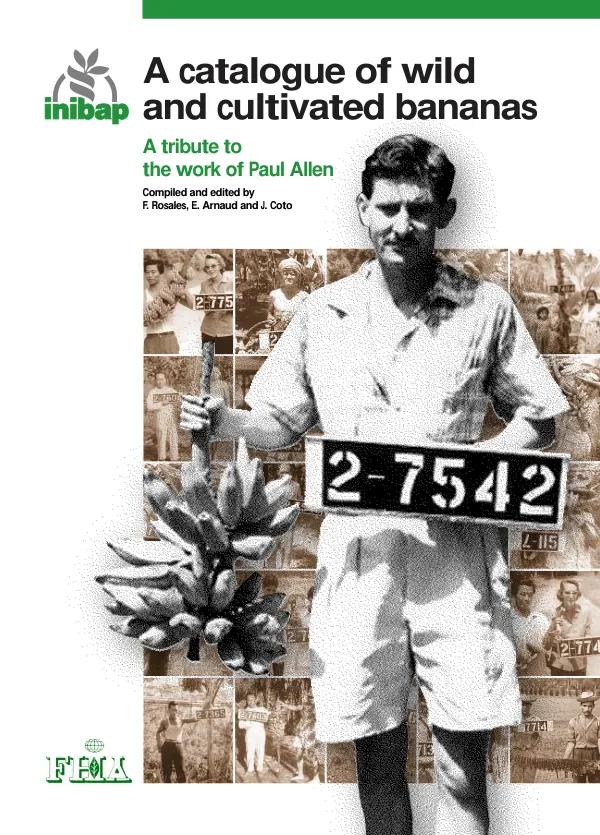
A catalogue of wild and cultivated bananas: A tribute to the work of Paul Allen
The catalogue of wild and cultivated bananas is a comprehensive collection of data on 337 accessions of banana collected by Dr.
367 pages
Sign in to readA free account is required to download.
Abstract
Paul H. Allen during missions in South East Asia and New Guinea in the 1960s. These varieties formed the basis of a unique germplasm collection established by the United Fruit Co. in Honduras, and which is now maintained by FHIA. The collection includes a wide range of banana species and cultivars, including diploids, triploids, and tetraploids. The diploid cultivars are further divided into groups AA, AAA, AAB, and ABB, with sub-groups within each group. The triploid cultivars are also divided into groups AAA and AAB, with sub-groups within each group. The tetraploid cultivars are divided into group AAAB, with sub-groups within this group. The catalogue provides detailed information on each accession, including passport data, collecting number, site of collection, country of origin, and recorded agronomic characteristics. The morpho-taxonomic description of each accession is also provided, including any complementary information recorded by Allen on the accession's performances and classification. The catalogue is organized into three main sections: diploid cultivars, triploid cultivars, and wild species. Within these sections, the accessions are sorted according to the alphabetical order of species or group and sub-species or sub-group. The table of contents provides a guide for the location of cultivars of the same group. The Indexes at the end of the book provide an access by accession name and by country of collection. Dr. Paul H. Allen was a gifted and enthusiastic botanist who spent most of his life working in Central America. He was chosen as a leader of plant exploration expeditions to gather and assemble the most complete collection of banana genetic material for the United Fruit Company. During his collecting missions, he visited various countries in South East Asia and New Guinea, collecting a wide range of banana species and cultivars. The materials collected by Dr. Allen formed the basis of a hugely successful banana breeding programme in Honduras, which has continued uninterrupted since 1959. The programme has produced improved banana varieties acceptable by farmers for widespread production, and the wealth of genetic material at its disposal is largely due to the efforts of Dr. Allen. This book is published in memory of Dr. Paul H. Allen and in recognition of his invaluable contribution to banana research. The information provided is that collected by Dr. Allen himself, both in the field during the collecting missions and later during his studies in Honduras. The editors of this monograph have made every effort to reproduce the work of Dr. Allen and have maintained the taxonomic classifications suggested by him. The catalogue of wild and cultivated bananas is a valuable resource for researchers, breeders, and farmers interested in banana research and production. It provides a comprehensive collection of data on banana accessions, including passport data, collecting number, site of collection, country of origin, and recorded agronomic characteristics. The morpho-taxonomic description of each accession is also provided, including any complementary information recorded by Allen on the accession's performances and classification.
Related documents