FOOD AND AGRICULTURAL ORGANIZATION
A Primer on Pastoralism in Africa
Pastoralism in Africa is a specialized livelihood system practiced by some of the most marginalized and underserved populations on the continent.
2024 · 30 pages
Sign in to readA free account is required to download.
Abstract
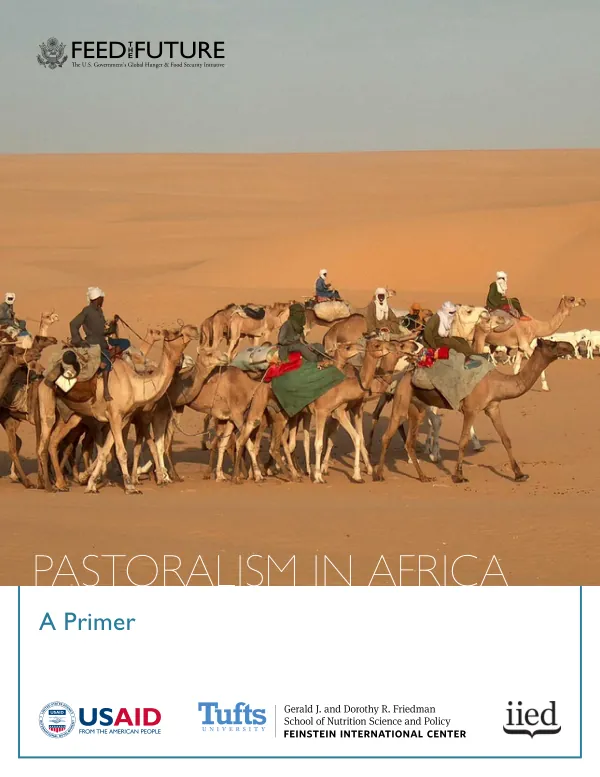
It generates substantial economic benefits, but is often hindered by policies and programs that are not guided by evidence and overlook the knowledge and aspirations of pastoralist peoples. Pastoralism is an animal production system that takes advantage of the characteristic instability of rangeland environments, where key resources such as nutrients and water for livestock become available in short-lived and largely unpredictable concentrations. The diversity of pastoral systems in Africa reflects the complex interactions between humans, animals, and the environment. Pastoralists can be found across the continent, from the mountains of Morocco and Algeria to the rangelands of the Sahel and Rift Valleys in East Africa. However, pastoralism is most prevalent in dryland environments, especially arid and semi-arid areas. Pastoralist households often move in and out of crop production depending on circumstance, and many communities specialize in the rearing of single species and breeds, highly adapted to thrive in their environments. Estimates suggest that pastoralism supports the livelihoods of over 50 million people in Africa, although the African Union estimated the number of pastoralists at 268 million. The wide variation in estimates reflects the challenges of counting pastoralists due to their mobility and reluctance to participate in censuses. Despite decades of research and a plethora of policies and pastoral development programs, pastoralism remains one of the least understood and poorly supported livelihood systems in Africa. The failure of development policy to keep pace with scientific understanding of the drylands as environments that are inherently variable and unstable has contributed to this paradox. Development and climate policy and practice have been framed by narratives based upon a presumed limitation of the natural resource base due to variable and low annual rainfall. These narratives justify interventions to "modernize" pastoralism based on western modes of animal husbandry, seeking to eliminate variability from the production process. However, whether variability is a constraint to productivity or not depends on the strategy of production. Pastoralists have institutions and strategies such as strategic mobility, and reciprocal and controlled grazing arrangements, to take advantage of the variable, scattered, and highly unpredictable opportunities that the rangelands can provide. Their nature-based management strategies protect rangeland plant species diversity and tree cover, facilitating biodiversity and optimizing the health and productivity of their livestock and the rangelands that sustain them. The African Union's Policy Framework for Pastoralism in Africa recognizes the economic, social, and cultural contributions of pastoralism to the continent's development, and highlights the ecological and economic rationale for pastoralist livestock systems and the critical importance of mobility to enable these systems to function. The USAID Policy on Promoting the Rights of Indigenous Peoples (Pro-IP) calls for strengthened engagement with indigenous groups and concerted efforts to advocate for and exercise their rights. The primer on pastoralism in Africa is aligned with this policy, and provides basic information on the core aspects of pastoralism as a livelihood and production system. It is designed for personnel at USAID and its partners with limited or no prior experience of African pastoralism, and covers aspects that newcomers can find counterintuitive.