HELLEN KELLER INTERNATIONAL
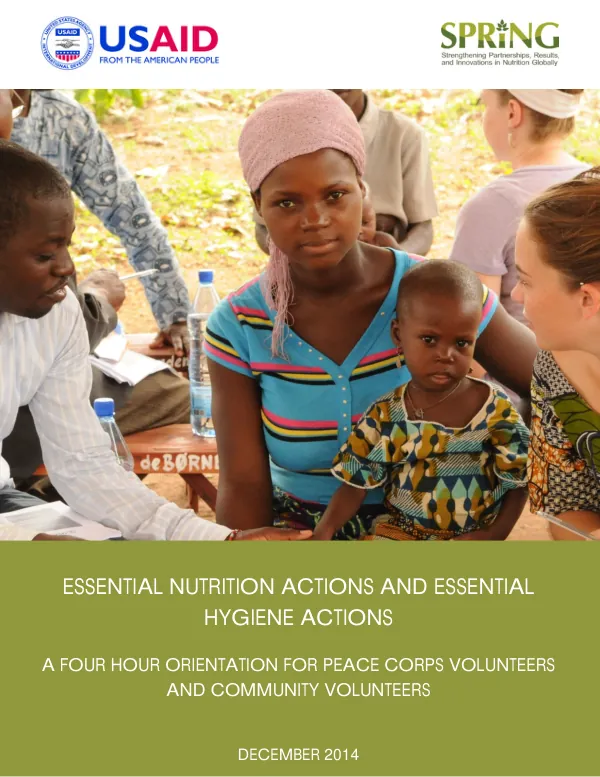
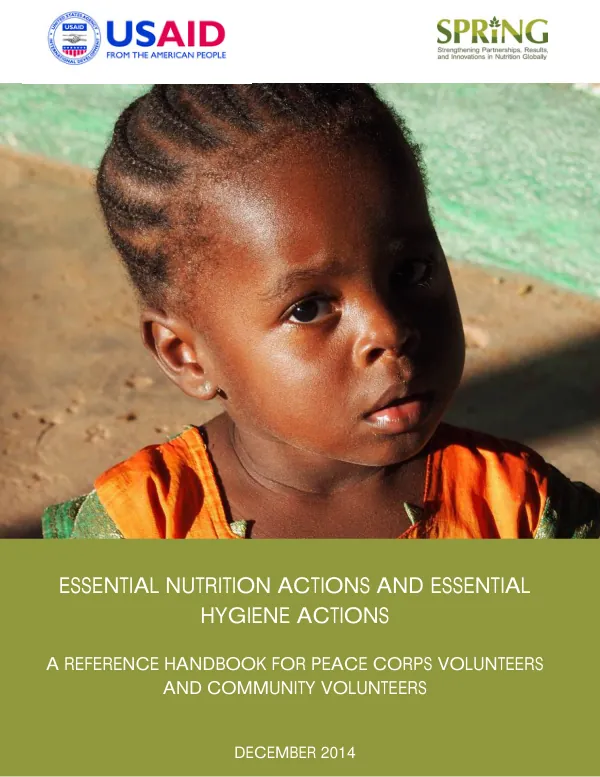
A Reference Handbook for Peace Corps Volunteers and Community Volunteers
Global Nutrition Efforts have been underway to address the issue of undernutrition, which affects approximately two billion people worldwide.
2014 · 42 pages
Sign in to readA free account is required to download.
Abstract
Chronic undernutrition, as manifest by stunting, wasting, and severe wasting, affects more than 200 million children under the age of five. When undernutrition affects the 1,000-day window from conception to a child's second birthday, one of the consequences is mental impairment that affects the child's entire life cycle. Children affected by stunting are more susceptible to sickness, fare poorly in school, and enter adulthood more prone to noncommunicable diseases. The world community is reacting with increasing urgency to the gravity of this situation and its effects for the long term. The Scaling Up Nutrition (SUN) Movement, endorsed by more than 100 government, civil society, and university groups since 2010, focuses on global undernutrition, especially among pregnant women and children under two years of age. The SUN framework and roadmap are grounded in nutrition actions endorsed by The Lancet in its landmark series Maternal and Child Undernutrition, published in 2008 with an update in 2013. These nutrition actions have been proven to combat malnutrition during the critical first 1,000 days. Peace Corps has identified nutrition as a key focus area of its interventions under Feed the Future, the United States government's global hunger and food security initiative. In 2011, Peace Corps and USAID signed the Global Food Security Agreement and USAID/West Africa Regional Mission, and the Peace Corps established the USAID/Peace Corps West Africa Food Security Partnership (WAFSP). This partnership facilitates opportunities for synergistic food security programming between West African Feed the Future focus countries and other West African countries targeted by Peace Corps programs. The Essential Nutrition Actions (ENA) framework is a key component of the SUN Movement. ENA is a set of 30 essential nutrition actions that have been proven to combat malnutrition during the critical first 1,000 days. These actions include nutrition practices such as exclusive breastfeeding, early initiation of breastfeeding, and introducing complementary feeding. The ENA framework is grounded in the latest scientific evidence and has been endorsed by The Lancet and other global health organizations. The Essential Hygiene Actions (EHA) framework is another key component of the SUN Movement. EHA is a set of 21 essential hygiene actions that have been proven to prevent the spread of diseases and promote good health. These actions include handwashing, keeping the environment clean, and washing food and food containers. The EHA framework is also grounded in the latest scientific evidence and has been endorsed by The Lancet and other global health organizations. The Peace Corps and USAID have partnered to develop a reference handbook for Peace Corps Volunteers and community volunteers on Essential Nutrition Actions and Essential Hygiene Actions. The handbook provides a comprehensive guide to the ENA and EHA frameworks, including the 30 essential nutrition actions and 21 essential hygiene actions. The handbook also provides guidance on how to implement these actions in community settings and how to monitor and evaluate their effectiveness. The handbook has been tested in Benin during Peace Corps in-service training (IST) in February 2013. The handbook is a valuable resource for Peace Corps Volunteers and community volunteers working on nutrition and hygiene projects in West Africa. It provides a comprehensive guide to the ENA and EHA frameworks and offers practical guidance on how to implement these actions in community settings.