WORLD BANK
AC Newsletter April - June 2016
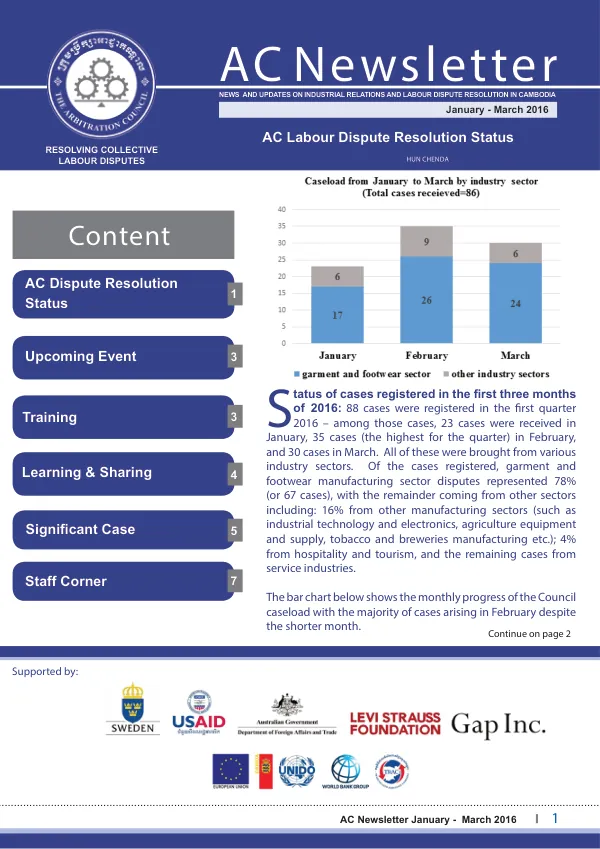
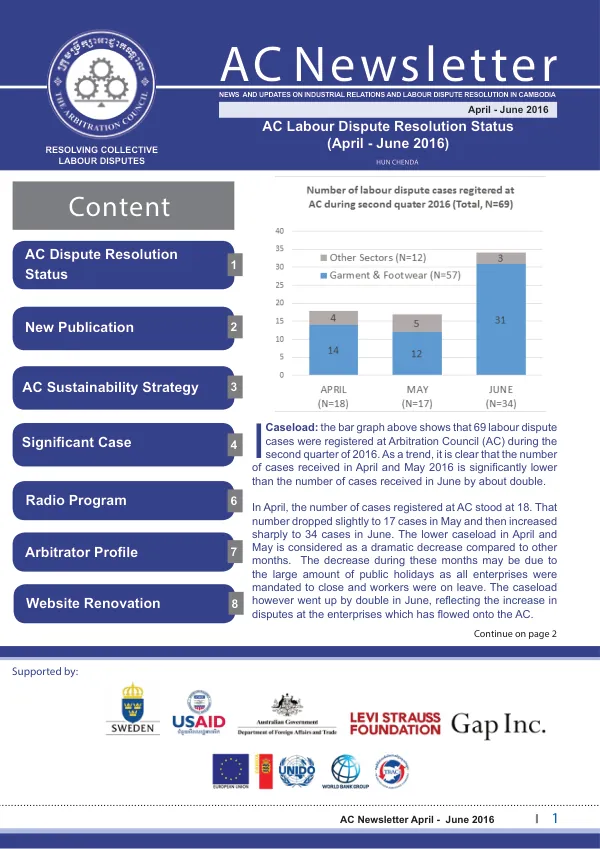
The Arbitration Council (AC) in Cambodia resolved 69 labour dispute cases during the second quarter of 2016.
2016 · 8 pages
Sign in to readA free account is required to download.
Abstract
The majority of cases originated from the garment and footwear sector, accounting for 57 cases or 83% of the total cases received. The remaining cases came from other sectors such as education, manufacturing, laundry, and printing. The AC resolved cases through conciliation, arbitration, and other means. Among the cases received, 25 were resolved through conciliation, with the parties reaching agreement or deciding to withdraw their case during the AC process. The majority of cases, 39, were brought to arbitration and resolved through arbitral awards issuance. Two cases were closed due to workers taking strike action during the AC process, and one case ended because of the claimants' failure to attend the hearing. The AC received 9 cases involving striking workers and issued 4 Return-to-Work Orders (RTWOs) to assist with the resolution of these cases. Three cases complied with the RTWOs, and one case was rejected as workers failed to comply with the order. Five other registered cases involving strikes were resolved without issuing an RTWO, as the parties decided to withdraw the case or cease strike action before the AC process commenced. The Arbitration Council Foundation (ACF) released a booklet on Guide to Case Preparation for Arbitration Council Hearing in both Khmer and English versions in April 2016. The guide provides information to assist in preparing a case before the Arbitration Council and explains the steps to take to prepare a case for proceedings to settle disputes at the AC. The publication is available at the Secretariat of the Arbitration Council. The Arbitration Council (AC) was established in May 2003 to provide free labour dispute resolution services to both workers and employers. During its 13 years of service, the AC has assisted over one million workers and employers and resolved more than 2,500 collective labour disputes. The AC operates with financial support from international donors through the Arbitration Council Foundation (ACF) and the Royal Government of Cambodia (RGC). ACF provides technical and management support to the AC, including fundraising. The AC has a unique, efficient, and effective system for resolving labour disputes, making valuable contributions to Cambodia's economy, labour law application, good governance, and respect for the rule of law. The AC has saved over $100 million per year through its services. The AC's sustainability strategy includes financial support from international donors and tripartite contributions from government, employers, and employees. The Arbitration Council Foundation appeals to all stakeholders to make their respective contributions to ensure the long-term sustainability of the AC services.
Related documents
Documents in this collection
 2017
2017USAID DEC
The Enabling the Business of Agriculture Index (EBA): An Introduction to Benchmarking for Agricultural Development under Feed the Future
Open record 2016
2016USAID DEC