USAID. MISSION TO MALI
Action Riz-Sorgho, 688-0206 : end of project report
Provides final Mission report (1976-12/83) on a project to support Mali's Action Riz-Sorgho (ARS) program to increase grain production in the Gao area.
Fuller, Kurt · 1984
Sign in to readA free account is required to download.
Abstract
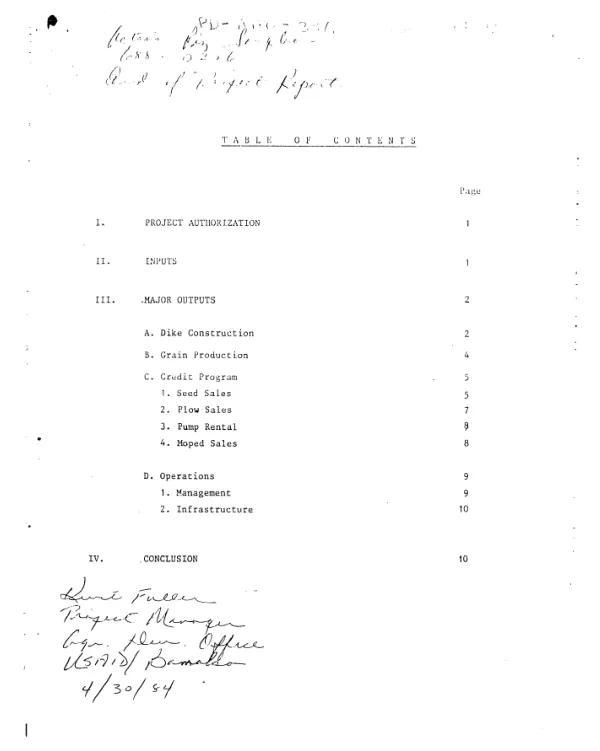
Although its objectives were not achievable in the five (orginally programmed) or seven (actual) years of implementation, the project has successfully developed the infrastructure needed to increase grain production. A dike and canal system constructed along the Niger River, and servicing 2,383 ha, has prevented flood waters from drowning rice crops; screens have been installed at the flood control gates to keep out fish that feed on rice seedlings. Also, the gates have been constructed to retain enough water to allow the soil to absorb moisture for the sorghum crop. Actual impact on grain production is unknown, however, as available statistics are of dubious quality. ARS has provided credit and extension services to about 6,500 farmers. The credit program's sales of rice seed, which are repaid in kind plus interest, have had an improved rate of repayment, but further improvements are needed to fully serve the ARS market and to avoid stock depletion in case of disaster. Sales of plows and rentals of irrigation pumps to farmers and sales of mopeds to extension agents have been made on a limited basis and have for the most part been successful. A.I.D. support of the credit program was suspended due to lack of internal controls and standardized procedures; these problems have been corrected and the program will be implemented again by ARS during the 1984 season. Substantial improvements have been made in ARS ability to manage the project. A new accounting system which was introduced in 1982 has helped to ease the longstanding cash flow problem. However, the lack of experienced accounting personnel and water management specialists may constrain future growth. A research station was developed near Gao, but its activities were limited due to lack of pumps and cash at critical times. A.I.D.'s decision to terminate the ARS project was made primarily because of the remoteness of the Gao area (15 hours by car) and the shrinking availability of USAID/M staff to adequately monitor the project.
Related documents