USAID DEC
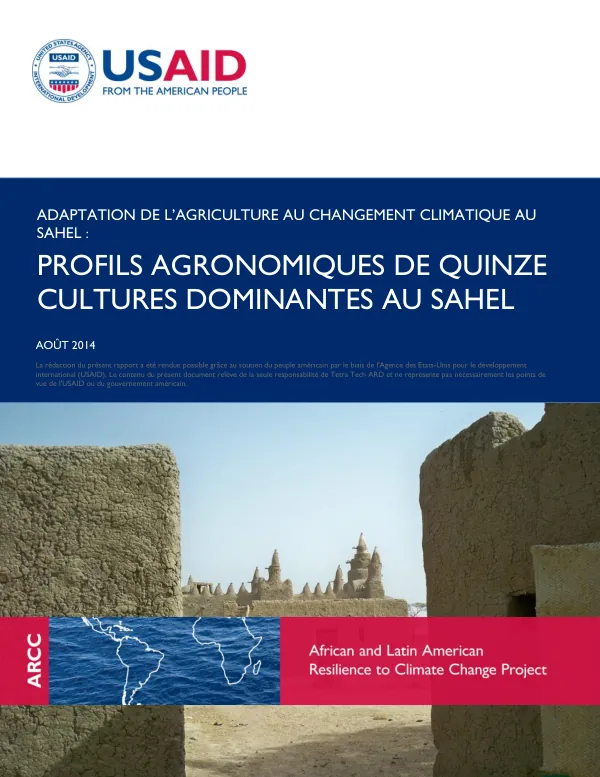
Adaptation de l'Agriculture au Changement Climatique au Sahel : Profils Agronomiques de Quinze Cultures Dominantes au Sahel
Sign inTETRA TECH ARD, INC.
Adaptation de l'Agriculture au Changement Climatique au Sahel : Profils Agronomiques de Quinze Cultures Dominantes au Sahel
The agricultural development initiative in the Sahel region focuses on adapting crops to climate change.
2014 · 118 pages
Sign in to readA free account is required to download.
Abstract
The study examines the profiles of fifteen dominant crops in the region, including maize, millet, rice, sorghum, cotton, and others. Maize is a widely cultivated crop in the Sahel, with a brief overview of its culture indicating that it is a staple food crop. The crop is grown in various regions, with a general level of importance that varies across different areas. The maize crop cycle consists of several stages, including planting, growth, and harvesting. Key production parameters include soil type, climate, and irrigation, which significantly impact crop yields. Millet is another important crop in the Sahel, with a brief overview highlighting its cultural significance. The crop is grown in various regions, with a general level of importance that varies across different areas. The millet crop cycle consists of several stages, including planting, growth, and harvesting. Key production parameters include soil type, climate, and irrigation, which significantly impact crop yields. Rice is a significant crop in the Sahel, with a brief overview highlighting its cultural importance. The crop is grown in various regions, with a general level of importance that varies across different areas. The rice crop cycle consists of several stages, including planting, growth, and harvesting. Key production parameters include soil type, climate, and irrigation, which significantly impact crop yields. Sorghum is a widely cultivated crop in the Sahel, with a brief overview of its culture indicating that it is a drought-tolerant crop. The crop is grown in various regions, with a general level of importance that varies across different areas. The sorghum crop cycle consists of several stages, including planting, growth, and harvesting. Key production parameters include soil type, climate, and irrigation, which significantly impact crop yields. Cotton is an important cash crop in the Sahel, with a brief overview highlighting its cultural significance. The crop is grown in various regions, with a general level of importance that varies across different areas. The cotton crop cycle consists of several stages, including planting, growth, and harvesting. Key production parameters include soil type, climate, and irrigation, which significantly impact crop yields. The study provides detailed information on the profiles of fifteen dominant crops in the Sahel, including their cultural significance, growth cycles, and production parameters. The information is essential for agricultural development initiatives in the region, which aim to adapt crops to climate change and improve crop yields.