INTERNATIONAL CONFEDERATION OF MIDWIVES
Advocacy Approaches to Promote Midwives and the Profession of Midwifery
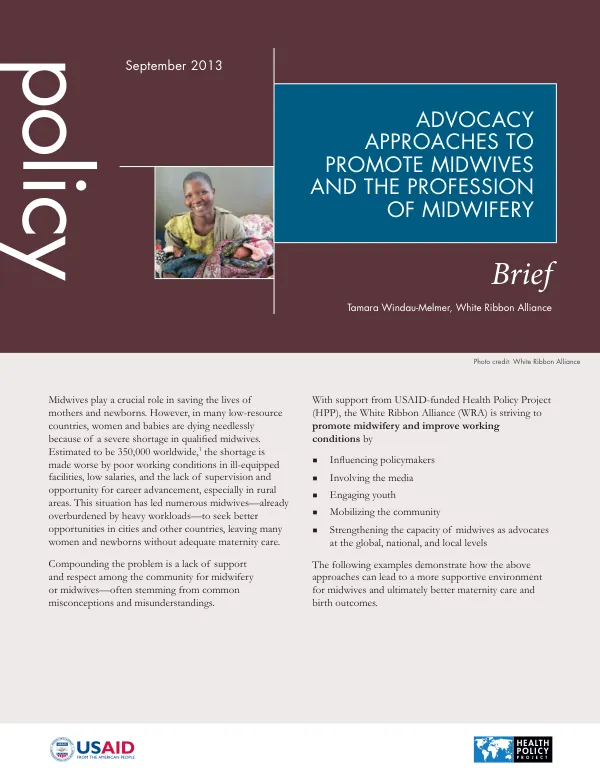
Midwives play a crucial role in saving the lives of mothers and newborns.
2013 · 8 pages
Sign in to readA free account is required to download.
Abstract
However, in many low-resource countries, women and babies are dying needlessly due to a severe shortage of qualified midwives. Estimated to be 350,000 worldwide, the shortage is exacerbated by poor working conditions in ill-equipped facilities, low salaries, and the lack of supervision and opportunity for career advancement, particularly in rural areas. This situation has led numerous midwives to seek better opportunities in cities and other countries, leaving many women and newborns without adequate maternity care. The White Ribbon Alliance (WRA) is working to promote midwifery and improve working conditions through various approaches. One of these approaches is influencing policymakers to allocate necessary resources to promote and improve midwifery. The WRA is working at both national and global levels to advocate for investments in midwives by raising policymakers' awareness and understanding of the value of midwives and what they need to perform their job well. For example, the White Ribbon Alliance for Safe Motherhood in Tanzania (WRATZ) established the Parliamentarians Group for Safe Motherhood (PGSM) to discuss the challenges midwives face and explore potential solutions. As a result, Members of Parliament now have a better understanding of midwifery in Tanzania and are advocating for midwives during Parliamentarian sessions. Another approach is involving the media to promote the vital work of midwives in saving women and newborns. The WRA is working with the media to focus on positive stories and clear up any misunderstandings and misconceptions the public may have regarding midwifery. For example, WRATZ developed a short film and public service announcement (PSA) titled What I Want Is Simple, which features women describing the conditions of a health facility in which they wish to deliver their children. These women are also midwives, and the film aims to promote the vital work of midwives and improve the public's perceptions of midwifery. The WRA is also engaging youth to promote the profession of midwifery. In Tanzania, WRATZ leveraged additional support from the Merck and Bertarelli Foundations to promote a midwife career among secondary school students in three regions. This effort also involved engaging their parents, peers, and community leaders to promote the value of midwifery and encourage young men and women to pursue a career in midwifery. The WRA believes that by engaging youth, they can help to address the shortage of midwives and improve maternity care in low-resource countries. The WRA is also working with other organizations to put pressure on world leaders to take action for midwives. The WRA jointly organized the Health Workers Count campaign, which called for 3.5 million more health workers, including 350,000 midwives and 1 million community health workers, as well as better working conditions and support. In collaboration with 300 participating organizations, more than 1 million people worldwide have shown support to the campaign. The WRA is also working with the Frontline Health Workers Coalition to urge the United States (U.S.) to invest in frontline health workers and create concrete targets and timetables to support and train 250,000 new health workers and improve the capacity and impact of existing health workers.