USAID DEC
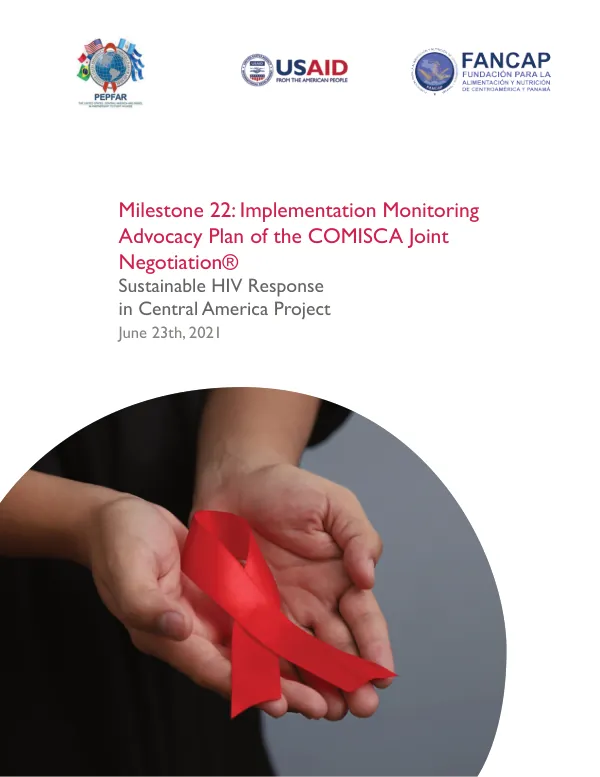
Advocacy Plan of the COMISCA Joint Negotiation for the Sustainable HIV Response in Central America Project
Sign inUSAID
Advocacy Plan of the COMISCA Joint Negotiation for the Sustainable HIV Response in Central America Project
The Sustainable Response to HIV in Central America Project is part of the Regional Development Cooperation Strategy (RDCS) 2015-2019, implemented by the Food and Nutrition Foundation of Central America and Panama - FANCAP - with funding from USAID.
2021 · 37 pages
Sign in to readA free account is required to download.
Abstract
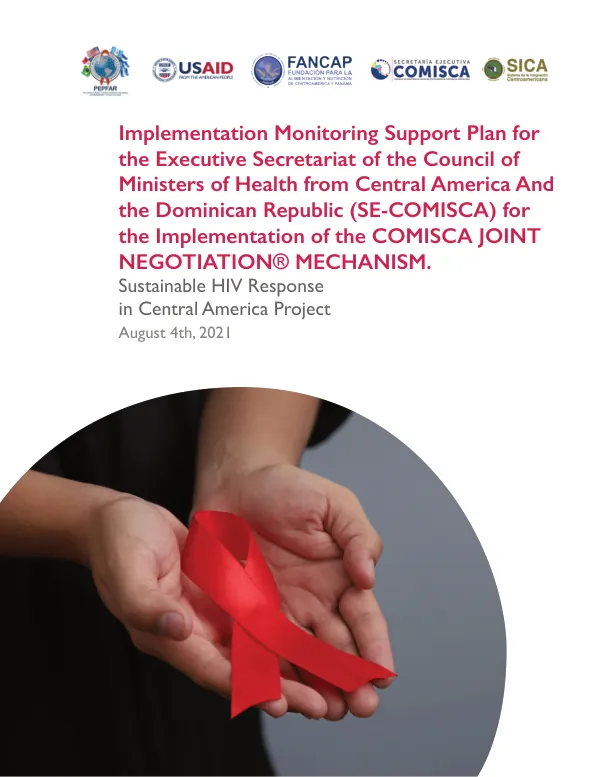
The project aims to support Central American countries towards a technically, politically, and financially sustainable stage to contain the HIV epidemic and meet the "95-95-95" goals set for 2030. The project's main objective is to support the Executive Secretariat of the Council of Ministers of Health of Central America and the Dominican Republic (SE-COMISCA) in the implementation of the COMISCA Joint Negotiation mechanism to improve access to medicines, reagents, and other inputs necessary for the HIV response in SICA member states. Between August and September 2020, SE-COMISCA worked with the support of a consultant hired by the Sustainable Response to HIV in Central America Project to develop an Advocacy Plan that will allow positioning the COMISCA Joint Negotiation as the preferential mechanism for the procurement of medicines and other health technologies in the region. As part of the activities outlined in the advocacy plan, training for personnel from health institutions on the processes and procedures of the COMISCA Joint Negotiation was defined. To carry out the first monitoring of the progress of the implementation of the Advocacy Plan, the focus was centered on the COMISCA Joint Negotiation regional virtual course, taking advantage of it to identify technical assistance needs in each of the health institutions that participated in which SE-COMISCA could assist. The aspects to be monitored were knowledge of the officials from the health institutions regarding processes and procedures of the COMISCA Joint Negotiation and uses of the SINERP-GIA platform, as well as sensitization of directors, technicians of HIV programs, and heads of logistics or planning units on the COMISCA Joint Negotiation mechanism. On October 15th of 2020, SE-COMISCA set in motion the first Regional Virtual Course on COMISCA Joint Negotiation with officials from health institutions in the region. The virtual course was divided into five modules, with sessions of three hours each, and ended on December 10th of the same year with the participation of representatives from health institutions from eight countries, including Guatemala, El Salvador, Honduras, and Panama. The application of the knowledge learned by officials from health institutions in regards to processes and procedures of the COMISCA Joint Negotiation mechanism will be monitored, which was taught in the training sessions of the COMISCA Joint Negotiation Regional Virtual Course in the following modules: general information on the COMISCA Joint Negotiation, technical evaluation of product, administrative-legal evaluation of manufacturing or distribution companies, and management of the SINERP-GIA platform. The monitoring of this aspect will be carried out through focus group and case study techniques. The results of the monitoring will be used to identify technical assistance needs in each of the health institutions that participated in the training, which will allow SE-COMISCA to provide support and guidance to the institutions to ensure the successful implementation of the COMISCA Joint Negotiation mechanism. The monitoring will also provide valuable information on the effectiveness of the training and the level of knowledge and understanding of the officials from the health institutions regarding the processes and procedures of the COMISCA Joint Negotiation mechanism. The monitoring of the implementation of the Advocacy Plan will be an ongoing process, and the results will be used to make adjustments and improvements to the plan as needed. The ultimate goal of the monitoring is to ensure the successful implementation of the COMISCA Joint Negotiation mechanism and to improve access to medicines, reagents, and other inputs necessary for the HIV response in SICA member states.